Eleven down in today’s New Yorker puzzle by Wyna Liu is the best clue/answer I’ve seen in weeks. The clue was “Unfortunate first base choice.” (9 letters) The answer: BAD KISSER. Get it? Think dating — “getting to first base.”
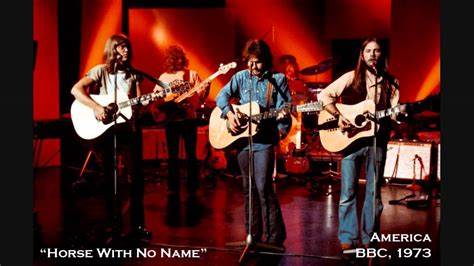
But in the NYTXW, 10 down today unleashed a torrent of comments, including a rare posting by yours truly on Rex’s blog. The clue was “Desert wanderer’s mount in a 1972 hit by America.” (15 letters) Maybe this lyric will help:
After two days in the desert sun
My skin began to turn red
Still no?
Ok, it was HORSE WITH NO NAME. (Of course!)
It unleashed a raging battle among the commentariat between the camp that thought it was one of the most ridiculous idiotic songs of all time, and the camp that found artisitic merit in it. It was a very big hit, but I have to say, I belong to the former. Here are some of the lyrics:
On the first part of the journey
I was lookin’ at all the life
There were plants and birds and rocks and things
There was sand and hills and rings
The first thing I met was a fly with a buzz
And the sky with no clouds
The heat was hot and the ground was dry
But the air was full of sound
I’ve been through the desert on a horse with no name
It felt good to be out of the rain
In the desert, you can remember your name
‘Cause there ain’t no one for to give you no pain
OK, let’s take a look at it: “There were plants and birds and rocks and things.” Things? Things? That’s the best you can come up with? Leonard Cohen would agonize for weeks over a single word. How long do you think “things” took?
And then, “sand and hills and rings.” What rings are in the desert? The rings are only there because they rhyme with things — admit it.
A fly with a buzz? A fly with a buzz? Seriously?
The heat was hot. — Hard to mount a case against that one.
And, finally, you are able to remember what your name is because “there ain’t no one for to give you no pain.”
Maybe it’s me, but the genius part is eluding me.
Here’s what I posted on Rex’s blog:
Did the horse know that it had no name? Did it wonder why it was never summoned? Or was it summoned with “Hey You,” or “Hey you, horse?”
Did it have a name in the past, so you could refer to it as “the horse with no name, formerly known as Rusty,” like we had to do with Prince?
Could it be identified via its parents – “Horse with no name, son of Fleet of Foot and Bushy Tail?”
Or was it referred to as “Horse With No Name,” so that, paradoxically, that became its name?
[I got two positive responses! — made my day.]
But the puzzle was all about birds, not horses. And birds with names. You know the expression “Birds of a feather flock together?” Well, BIRDS was up in the NW corner at 1D, and FLOCK was in the SE corner at 51D. And FEATHER ran across dead center, and each letter of FEATHER — all seven — was part of a different bird. I’ll get pictures of each one for you as I share them.
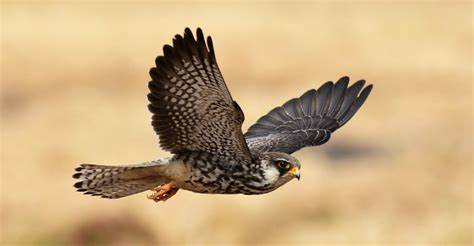
The F was for FALCON. (“Its peregrine variety is the world’s fastest avian.”)
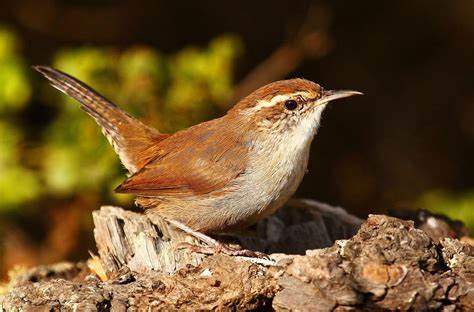
The E was the E in WREN. (“Small brown passerine that holds its tail upright.”)
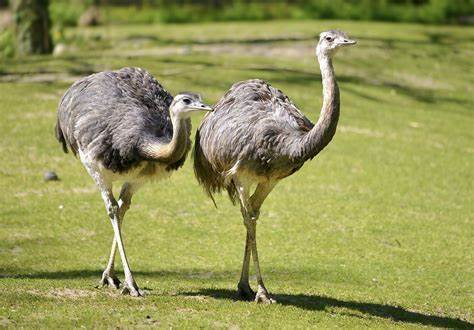
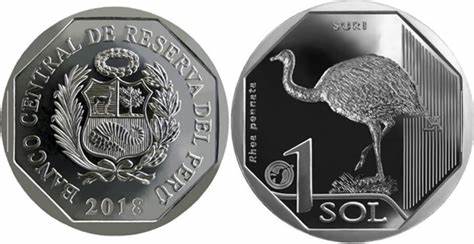
The A was from RHEA. (“Ratite featured on Uruguayan currency.”) (Peru too. See below.)
The T was in KESTREL. (“American raptor that’s the size of a mourning dove.”)

The H was for HAWK. (“Iconic metaphor for keen-eyed watchfulness.”)
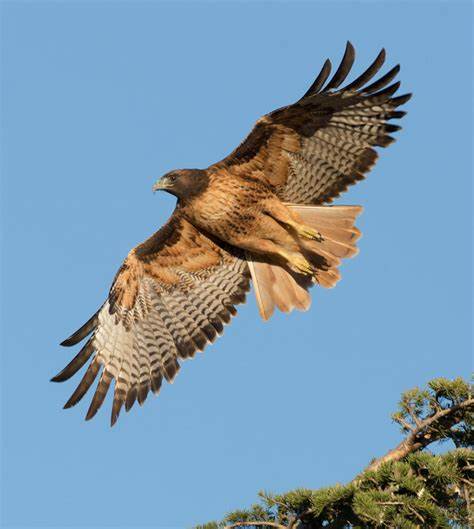
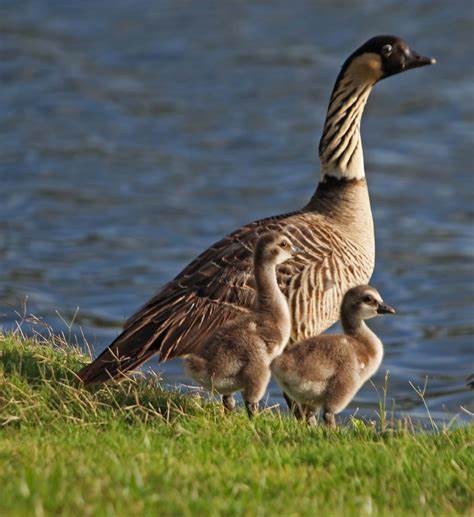
The E was from NENE. (“Goose that might nest on volcanic ash.”)
Finally, the R was the R in CONDOR. (“Its Andean variety has the largest wingspan among all raptors.”) I had no idea it was so ugly.

And the constructor, David Rockow, wasn’t done. Pigeons and finches were mentioned in other clues. Even a long down answer: COOL AS A CUCUMBER had a feather-related clue: “unruffled.”
Here’s a RHEA on a coin from Peru:
Enough.
How about this? For those of you who don’t believe in the power of puzzles, 55 across on Tuesday predicted the score of the USA victory over Iran before the match even started: ONE NIL! Eerie.
Monday’s puzzle reminded me of an old Carl Zack story (Hi Carl!) Carl was a hospital administrator for many years up in Somerville, MA, and he told us about one poor fellow who went in for stomach surgery but due to a dreadful mixup, had a leg amputated instead. OMG! I said, “Carl, what happened when he woke up and found out?” Carl said, “He was hopping mad.”
That was the theme of Monday’s puzzle: HOPPING MAD. Different terms for being mad “hopped” over a black square. So, e.g., we had SHEBANG [black square] RYE SEED, and the ANG hopped over the black square and joined the RY to form ANGRY. Kind of neat — didn’t tickle me as much as the birds. But it did conjure up the Carl story, so I can’t complain (much).
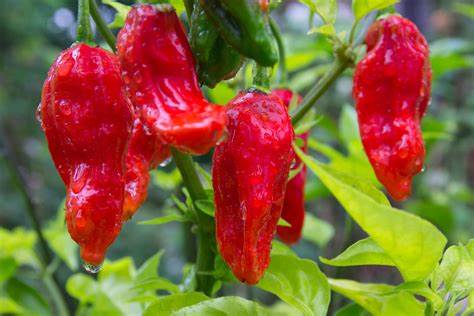
Monday’s puzzle also sizzled with a GHOST CHILI — “Pepper measuring over 1 million on the Scoville scale.”
Here’s what a commenter had to share: “The Ghost Chili isn’t the hottest chili pepper on the Scoville Scale. That would be the Carolina Reaper, coming in at about twice the heat of the Ghost Chili. The absolute hottest of the super hot peppers, though, is literally off the Scoville chart. It’s the Guatemalan Insanity Pepper, a.k.a. the Merciless Pepper of Quetzalacatenango.
“This mind altering pepper was featured in an episode of The Simpsons. Homer ate several at a CHILI Cook-Off and began to hallucinate that he was wandering in the desert where he met a coyote who claimed to be his spirit guide.” (Note: This was a different desert from the one with the horse, above.)
Someone else added: “From New Mexico, ‘the Chile Capital of the World:’ Yes, that phrase is actually on our license plates. The answer should be “ghost CHILE.” CHILE with an ‘e’ at the end denotes the pepper; CHILI with an ‘i’ is for the dish made with the peppers. Your spelling lesson for today!”
Wikipedia says that Scoville measurements are now calculated by chromatography but, amazingly, were subjective before 2011:
“The Scoville scale is a measurement of the pungency (spiciness or ‘heat’) of chili peppers, as recorded in Scoville heat units (SHU), based on the concentration of capsaicinoids, among which capsaicin is the predominant component. The scale is named after its creator, American pharmacist Wilbur Scoville, whose 1912 method is known as the Scoville organoleptic test. The Scoville organoleptic test is a subjective assessment derived from the capsaicinoid sensitivity by people experienced with eating hot chilis.
“An alternative method, the high-performance liquid chromatography (HPLC) can be used to analytically quantify the capsaicinoid content as an indicator of pungency. As of 2011, the subjective organoleptic test has been largely superseded by analytical methods such as HPLC.”
Here are some ghost chilis. Look away if you’re sensitive.
And here’s a Guatemalan Insanity Pepper.

Thanks for visiting!
 The Wellington Files