We continue to be surprised that China’s spy pinata is still wafting across the states. Here it is, sighted by Owl Chatter in the sky above New Mexico.

Maybe Biden was too busy with his big important speech to take a swing at it? Anyway, I can’t recall anything like this happening since the Israelis released their spy knishes over Lebanon back in 1982. Here’s one just before launching.

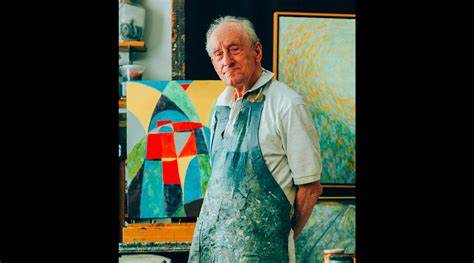
Fred Terna’s last name at birth was Taussig, but his parents adopted the name Terna and assumed false identities to hide from the Nazis in the Czech countryside. It worked for awhile but they were discovered in the fall of 1941 and sent to concentration camps. In Theresienstadt, Fred began to draw, using any materials he could find. He drew scenes of everyday life in the camp, like people lining up for soup. He buried his drawings in a tin box under the barracks floor. Before he was transferred to Auschwitz he turned the drawings over to another prisoner. He had not signed them in case they were found by the guards. After only two months, he was transferred again, to Dachau and was liberated by U.S. troops on April 27, 1945. He was ill and weighed 70 pounds but was alive. No one else in his family survived.
Terna said the prisoners made a promise to each other — if they lived they would “tell what it was like.” Terna honored the promise through his art. He studied art in Paris after the war, “informally,” he said, and eventually moved to NY where he supported himself with his artwork. Whenever possible, he also searched libraries and archives for the drawings he left behind. You can see his paintings and read about him on his website: fredterna.com, and a book was written about his work and life by Julia Mayer, “Painting Resilience.” His work is in the Holocaust Museum in DC, Yad Vashem, and other sites devoted to the Holocaust.
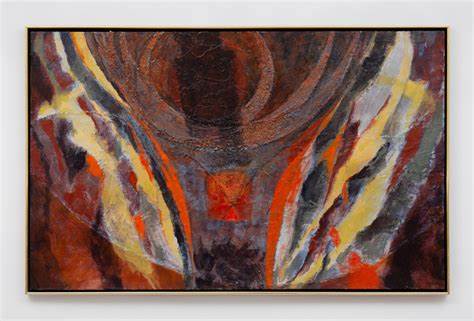
Below is one of his works, many of which portray the flames of the incinerators.
He died last December 8, at age 99, survived by his son Daniel, and his second wife Rebecca, a child of survivors. They married in 1982 and honeymooned in Israel. They visited a kibbutz that had a museum dedicated to the memory of the victims of Theresienstadt. The curator allowed them to look through boxes of material from the camp. One box contained a file of unidentified art, in the middle of which they found six of Fred’s drawings from the camp.
This poem by Ted Kooser is from Winter Morning Walks.
The long, December shadows
of bare trees
run far away from the woods.
At sunrise, they cross a red pasture
and, though softened and torn
by stones and weeds,
strike out into the trees
on the opposite side,
leaving dark trails through the forest.
 The Wellington Files