When the answer to 1A today turned out to be DUNBAR, as in Dunbar’s number: “the cognitive limit to how many relationships a person can maintain,” my first thought was that it was some crackpot theory propounded by the character Dunbar in Catch-22. But it’s a real thing. It’s 150, BTW. It was first proposed in the 1990s by British anthropologist Robin Dunbar, who found a correlation between primate brain size and average social group size. By using the average human brain size and extrapolating from the results of primates, he proposed that humans can comfortably maintain 150 stable relationships. Dunbar explained it informally as “the number of people you would not feel embarrassed about joining uninvited for a drink if you happened to bump into them in a bar.” It has become to be known as “Dunbar’s number.”
In David Wong’s 2012 novel This Book Is Full of Spiders, the character Marconi explains to David the effect Dunbar’s number has on human society. In Marconi’s explanation, the limit Dunbar’s number imposes on the individual explains phenomena such as racism and xenophobia, as well as apathy towards the suffering of peoples outside of an individual’s community.
Malcolm Gladwell discusses the Dunbar number in his 2000 book The Tipping Point. By trial and error, the leadership in a company discovered that if more than 150 employees were working together in one building, different social problems could occur. The company started building company buildings with a limit of 150 employees and only 150 parking spaces. When the parking spaces were filled, the company would build another 150-employee building.
In the modern military, operational psychologists seek info such as this to support or refute policies related to maintaining or improving unit cohesion and morale.
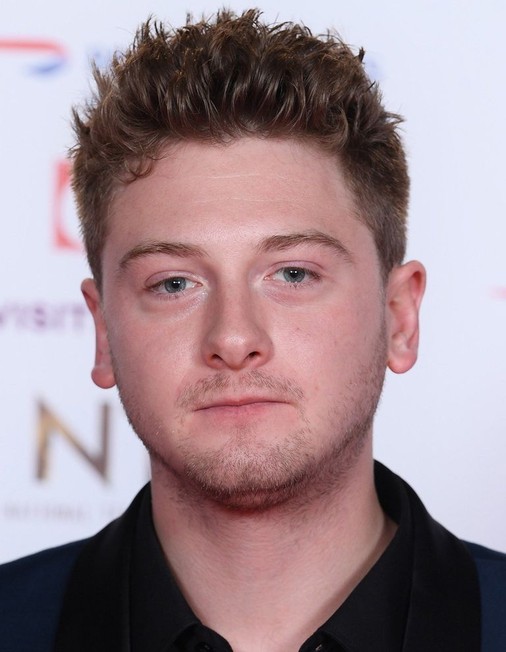
Here’s Josh Bolt. He played Dunbar in the 2018 mini-series version of Catch-22. It has nothing to do with Dunbar’s number, but he’s cute.
OK, I give up. I’m an Aaron Judge fan. Besides all the home runs, here’s a falling-through-the-fence catch he made yesterday against the Dodgers. I’ve held out against all the hoopla long enough. All rise!
Randall Goosby is a young violinist (26) who performed Tchaikovsky’s Violin Concerto for us last night with the NJ Symphony and blew the roof off the house. Since Owl Chatter sits way up front it was quite an experience. He studied at Julliard and with Itzhak Perlman, and has already appeared with several major orchestras. His mom is Korean and his dad is African-American and he was born in San Diego. Here’s, first, what he looks like, and next what he sounds like. (He’s playing a jaunty “Louisiana Blues Strut,” which was the encore he performed last night after the Tchaikovsky, when the audience wouldn’t let him leave.)
Take care of yourself, Goosby. The future is bright.

The puzzle today, by Rafael Musa, threw itself into the battle for gay rights. Two linked answers were PRIDE FLAG, and it contained six colored “stripes” representing that flag. For example, a series of squares shaded orange were clued with “Olympics no-nos” and the answer was STEROIDS. Then, since steroids are also called “juice,” and the squares were shaded in orange, the answer next to it was ORANGE JUICE, clued with “Screwdriver component?” Get it? That happened six times so there were six colored stripes running across the grid to comprise the pride flag. (Also George TAKEI was a guest in the grid, the actor and gay activist.) Take that DeSantis! Crossworld rises against you!
Harummmmmph.

Thanks for popping in. See you tomorrow!
 The Wellington Files