The puzzle today contained a “checklist” of things you need to remember to bring with you when you go out, built into longer answers. So, e.g., there was KEYS built into “whisKEY Sour.” The other items were taxI Driver, volcaniC ASH, and keeP HONEst (ID, CASH, and PHONE).
Commenter JD shared his mother’s “checklist:”
My 89-year-old mother’s suitcase-size purse contains her checkbook-wallet (containing a checkbook, cash, credit cards, photos, and her probably-expired license since she shouldn’t be driving), lipstick, gum, coupons (those expired and those doomed to expire), numerous crumpled tissues that she swears are unused, a change purse that weighs at least a pound, and keys that she’ll take forever to find because they’re beneath all of the above. Her checklist is “purse.”
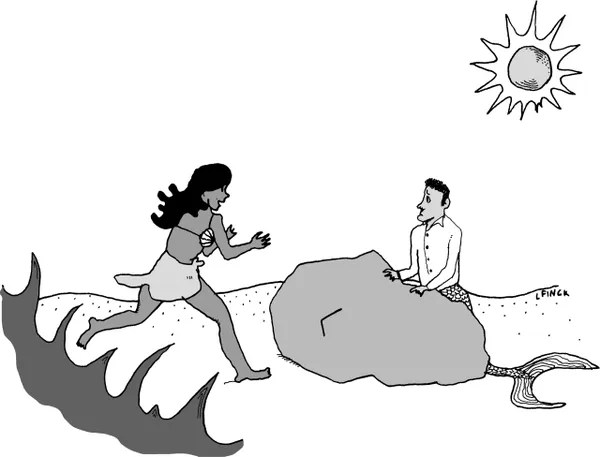
We can be together now, Elias! I got legs!
The New Yorker of June 19 has a review of Taylor Swift’s concert at Met Life Stadium in NJ by Amanda Petrusich, noting in the subtitle its “startling intimacy.” Here are some egg-zerpts.
“My daughter, who is about to turn two, had picked out my socks, which had cats all over them — a little wink to the fans, I thought. (Swift loves cats.) Let me tell you: no one was looking at my socks.
The pavement outside the stadium was dappled with thousands of fallen sequins. Forearms were wrapped in bracelets featuring Swift-isms spelled out in lettered beads. I was seated in front of two people dressed as fully decorated Christmas trees. (Swift was brought up on a Christmas-tree farm in PA.)
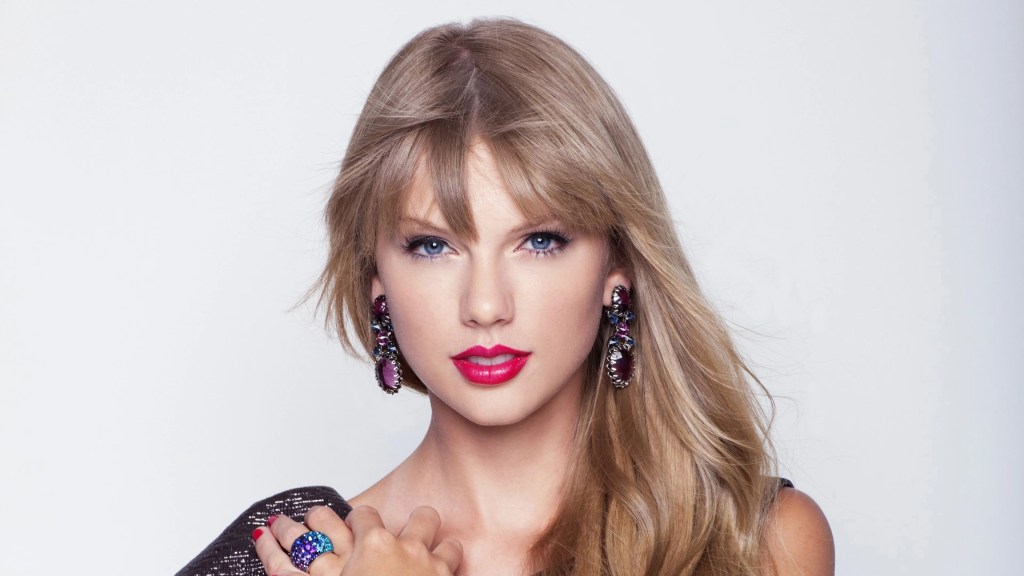
When Swift addressed the seventy-four thousand people who had gathered to see her, I felt as though she was not only speaking directly to me but confessing something urgent. Maybe it’s her savvy use of what feels like the singular “you.” When I attempted to explain this feeling to other people, it sounded as though I had been conned. Yet I’d prefer to think of it as an act of kindness: Swift sees each of us (literally—we were given light-up bracelets upon entering) and wants us to know it.
Swift’s voice has become richer and stronger over the years; its clarity and tone foreground her lyrics.
The camaraderie in the audience invited a very particular kind of giddiness. My best friend from childhood had accompanied me, and when she returned from the concession stand carrying two Diet Pepsis so enormous that they required her to bear-hug them for safe transport, I started laughing harder than I have laughed in several years.
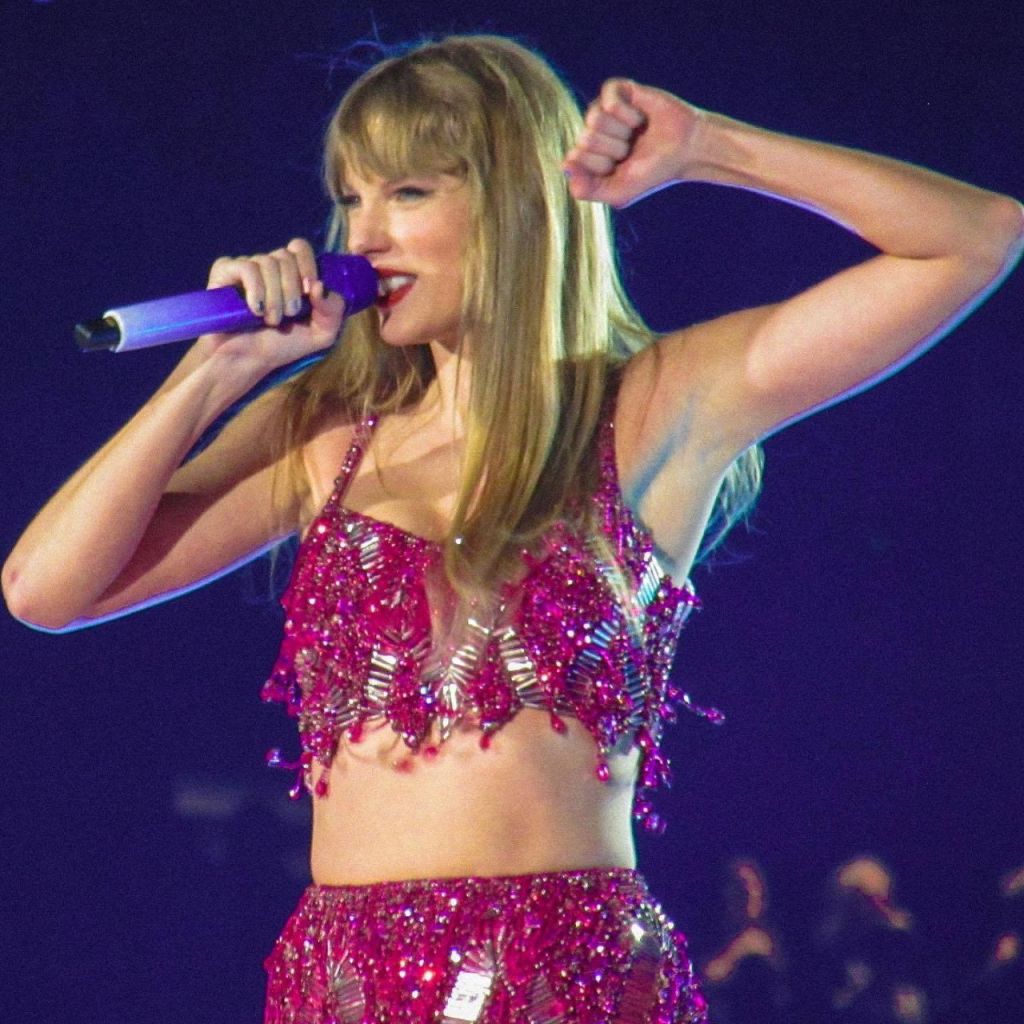
As the night went on, I began to understand how Swift’s fandom is tied to the primal urge to have something to protect and be protected by. In recent years, community, one of our most elemental human pleasures, has been decimated by covid, politics, technology, capitalism. These days, people will take it where they can get it. Swift often sings of alienation and yearning. She has an unusual number of songs about being left behind. Not by the culture—though I think she worries about that, too—but by someone she cared about who couldn’t countenance the immensity of her life. In her world, love is conditional and frequently temporary. (“You could call me ‘babe’ for the weekend,” she sings on “ ’tis the damn season,” a line I’ve always found profoundly sad.) On the chorus of “The Archer,” she sings, “Who could ever leave me, darling? / But who could stay?” Toward the end of the song, she adds a more hopeful line: “You could stay.”
As she sang that “you” on Saturday, she raised an arm and pointed directly to the audience. Swift has written many songs that describe her devotion as a punishment to be endured. “I love you, ain’t that the worst thing you ever heard?” she bellows on “Cruel Summer.” She believes that the force of her affection will push people away. But her fans have remained. They have buoyed her; in turn, she has given them everything.
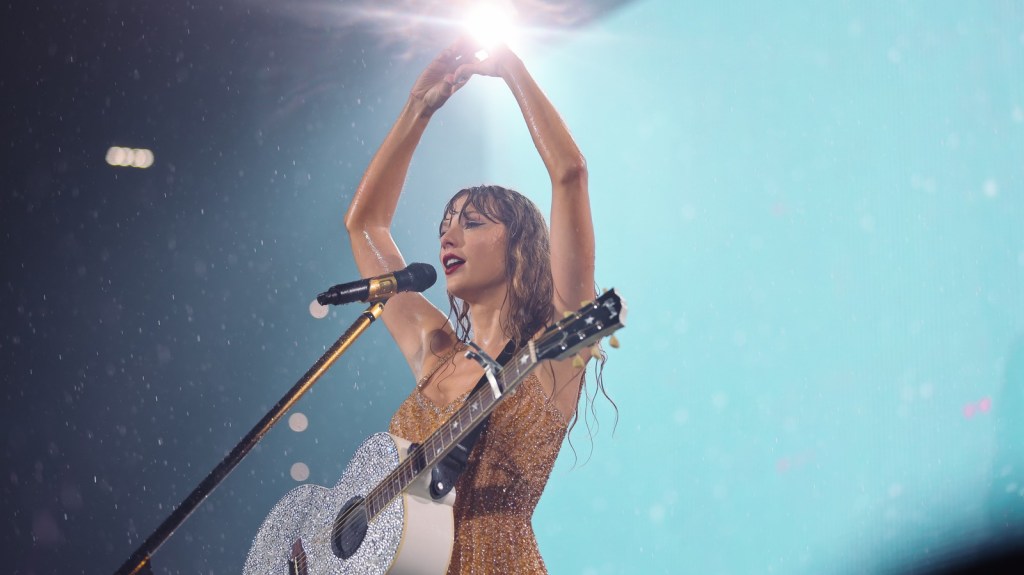
I’ve seen some phenomenal concerts over the years. I’ve got no complaints. Wish I was there, though.
See you tomorrow. Thanks for dropping by.
 The Wellington Files