Here’s a story for those of you who went to rock concerts back in the 60’s and 70’s.
So this anthropologist scored a real coup and got invited to visit and study a tribe in deep Africa that has had no contact with modern civilization ever. She somehow connected with one member of the tribe who was briefly away from the tribal homeland, learned a bit of English, and got permission from the elders for her to visit.
So she made the 9-hour flight to the nearest airport, took a rickety bus to the nearest village, and hiked 15 hours through difficult terrain to reach the tribal land. Her contact met her and showed her to a tent which was to be her home for the two-week stay. And he showed her around, including where she would have her meals with tribespeople as a respected guest. She thanked him heartily. He said she should call him Enyi, which means “friend” in the Igbo language.
As she was getting her bearings she noticed a persistent drumbeat. The next time she was with Enyi she asked him about it, but he just froze and said “Drums good. Drums no stop.” She said, “Is it religious in some way? or cultural?” But he cut her off and just insisted “Drums good” and walked away.
She had trouble sleeping that night since the drumbeats weighed on her mind, but she knew she couldn’t raise the issue again, and she quickly grew used to them. They became a pleasing background, day and night.
Her visit was extraordinary: an anthropologist’s dream. The people were wonderful — the children adored her and the women were fascinated with everything modern about her. She brought cosmetics and hair-care items and toys to distribute as gifts. The men were respectful and kind. She brought small tools and sports items for them. The days flew by.
On her last night there, as she was packing up her things for the trip back to civilization, she suddenly felt something fundamental had changed. It took her a few seconds to realize what it was: the drumming stopped. It had become such a comforting presence, its stopping unnerved her. She went to Enyi’s tent to find out what it meant, if they were in some sort of danger.
When she entered, she saw him sitting on the floor with a look of dread or terror on his face. She had never seen him like that, even when they faced various minor dangers together. She approached him carefully and said: “Enyi. The drumming stopped. What does it mean? What is the danger? What happens now?”
In a voice tinged with agony he said: “Guitar solo.”
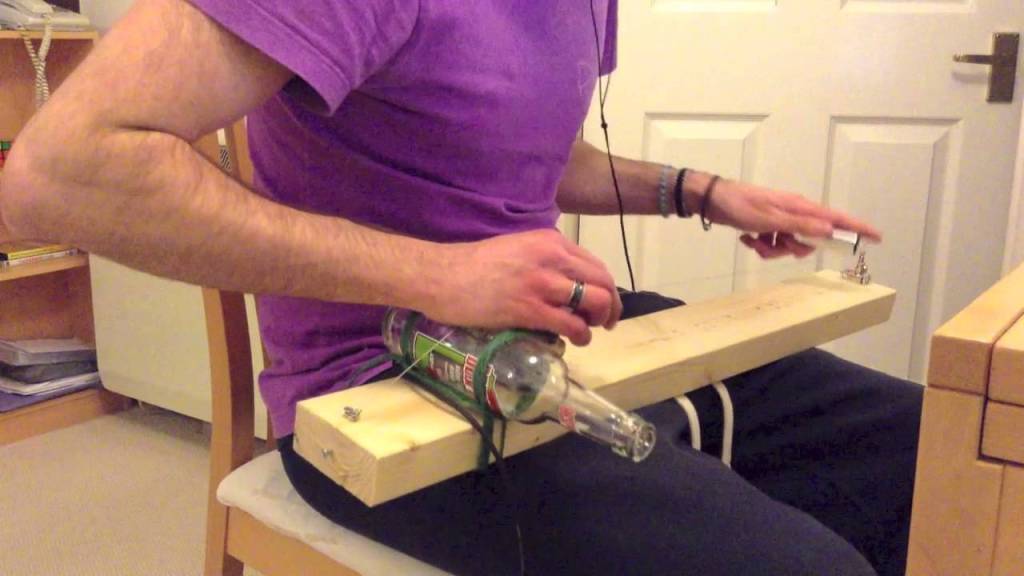
And speaking of guitarists, Buddy Guy was born on this date in Lettsworth, LA, back in 1936. He made his first guitar himself when he was 13 out of a two-stringed diddley bow, an instrument consisting of baling wire tensioned between two nails on a board over a glass bottle, which is used both as a bridge and to magnify the sound.
He learned to play by listening to John Lee Hooker records and other blues artists. His parents were sharecroppers and when he was young he picked cotton for $2.50 per hundred pounds.
Guy moved to Chicago when he was 21 and Muddy Waters took him under his wing. In the 70’s his career waned, until guitarists like Clapton, Keith Richards, Beck, and Hendrix said they owed their inspiration to Guy and other blues musicians. A resurgence followed. Clapton once called him “the best guitar player alive.” He’s 87 now and still touring. Holy Sh*t! — I can see him in Morristown in October. Here he is in Newport 30 years ago. According to him, he had the blues, — damn right — from his head down to his shoes.
This poem by Ellen Bass was in The Writer’s Almanac today. Those of you who have daughters (or sons) may relate to it, whether they are married or not. It’s called “After Our Daughter’s Wedding.”
While the remnants of cake
and half-empty champagne glasses
lay on the lawn like sunbathers lingering
in the slanting light, we left the house guests
and drove to Antonelli’s pond.
On a log by the bank I sat in my flowered dress and cried.
A lone fisherman drifted by, casting his ribbon of light.
“Do you feel like you’ve given her away?” you asked.
But no, it was that she made it
to here, that she didn’t
drown in a well or die
of pneumonia or take the pills.
She wasn’t crushed
under the mammoth wheels of a semi
on highway 17, wasn’t found
lying in the alley
that night after rehearsal
when I got the time wrong.
It’s animal. The egg
not eaten by a weasel. Turtles
crossing the beach, exposed
in the moonlight. And we
have so few to start with.
And that long gestation—
like carrying your soul out in front of you.
All those years of feeding
and watching. The vulnerable hollow
at the back of the neck. Never knowing
what could pick them off—a seagull
swooping down for a clam.
Our most basic imperative:
for them to survive.
And there’s never been a moment
we could count on it.
Do you like spoonerisms? That’s what today’s puzzle was about, by the wonderfully named John Kugelman. My favorite was 94A. The clue was “Enjoy your stay on our horse farm. Hope it’s not too noisy. You can expect …” And the answer was THREE MARE SQUEALS A DAY. Ha!
The most controversial was at 38A. The clue was: “I know they’ve had them on all day, but let the kids eat their candy. After all, a Ring Pop is a …” WEARABLE THING TO TASTE. Get it? It’s a play on [A mind is a] “terrible thing to waste.” But the issue is do “wearable” and “terrible” rhyme? If they don’t, it’s an imperfection and heads must roll. The comments came down all over the place on the issue. To my ear, they do not rhyme. It’s wearable as in warehouse, and terrible as in terrier. But in many regions of the country, apparently, they do.
Oddly, a comment from a Northeasterner said they were a perfect rhyme to his or her ears and noted that Merriam Webster has them identical in pronunciation. Hrrrrumph.
Another cute one had Hugh Hefner being called MISTER BUNNY MAGS.
Commenter Nancy, who also constructs puzzles, had her own puzzle using spoonerisms a few years ago. She noted: “Loved it. When comparing this to my Sunday Spoonerism puzzle of 3/15/20, it shows that there’s more than one way to kin a scat.”
Two three-letter answers were clued as the “counterpart” of each other and started with TI. I quickly put in TIC and TAC, as did many others. But the puzzle gods wanted TIT and TAT (as in “tit for tat”). The commentariat was on fire with complaints. Many thought tic and tac should have been considered correct too. Others thought the key was the word “counterpart” in the clues. Tit and tat are counterparts — one is exchanged “for” the other. And tic and tac have no such relationship, they argue. I’m in that camp and am accepting my DNF (did not finish).
ANA de Armas was in the puzzle today and was interestingly clued, which caused me to do some research. The clue was (at 46A): “De Armas who name-checked the New York Times crossword on ‘S.N.L.’” It turns out she hosted SNL. She told a neat story — her first movie role was in a film with Robert de Niro, called Hands of Stone. And de Niro was very supportive and welcoming and friendly. When he learned that Ana is from Cuba, he asked her about her family and he said he was going to be down there in a while and he’d be sure to visit them. She forgot all about it. Well, a few months later she got a call from her dad who was sky high and he told her Robert de Niro just dropped by where he worked to say hello.
Anyway, re the clue, above, she also mentioned in the monologue that she knew she “made it” when she learned she was in the NYT crossword. You got that right, babe! And Owl Chatter!
Hey, Bob — you talkin’ to me? Are you talkin’ to me?

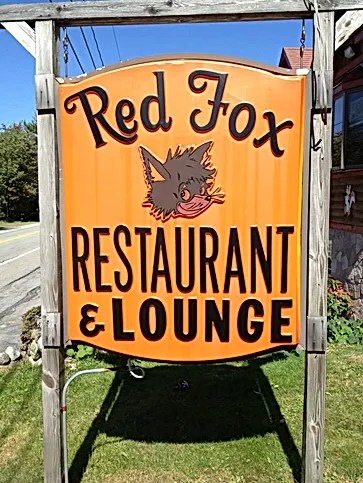
So, get this — on this date in 1975, Jimmy Hoffa vanished. He told friends he was going to meet with two “associates” at the Red Fox restaurant in Bloomfield Township, MI. When he didn’t return, his wife called the police, who found his car in the parking lot. That’s close to where my son Sam, and his wife Sarah and my grandson Mo live. Keep your eyes out for JH, guys. Could be anywhere.
Today’s “tiny love story” in the NYT Style section, “God’s Wife,” is by Caren Albers.
We called Dad “The Answerman.” He seemed to know the answer to every question. Mom accused him of thinking he knew more than God, which was funny since my father was agnostic. “I guess that makes me God’s wife,” she would say. She even went so far as to get a vanity license plate “GDSWF” (“God’s wife”). When she got it, she hadn’t considered any alternative meanings for “GDSWF,” like “Gay, Dominant, Single, White, Female.” When the honks and waves started coming, Mom laughed and waved back, celebrating the diversity of humankind, just as God’s wife would.
That guitar solo from the joke should be over by now — try to get some sleep. See you tomorrow.
 The Wellington Files