Merry Christmas, Owl Chatter guests. It’s so quiet here in our New Jersey headquarters. I slept very late, for me (9:30), and Wilma the owl is still out, with hubby Welly by her side, watching over her with his big kind eyes.
The poem by Maxine Kumin in today’s Writer’s Almanac is called “Rejoicing with Henry.”
Not that he holds with church, but Henry goes
Christmas morning in a tantrum of snow,
Henry, who’s eighty-two and has no kin
and doesn’t feature prayer, but likes the singing.
By afternoon the sun is visible,
a dull gun-metal glint. We come to call
bearing a quart of home-made wine a mile
and leading Babe, our orphaned hand-raised foal.
This gladdens Henry, who stumps out to see
Babe battle the wooden bridge. Will she
or won’t she? Vexed with a stick she leaps across
and I’m airborne as well. An upstate chorus
on Henry’s radio renders loud
successive verses of “Joy to the World.”
In spite of all the balsam growing free
Henry prefers a store-bought silver tree.
It’s lasted him for years, the same
crimped angel stuck on top. Under, the same
square box from the Elks. Most likely shaving cream,
says Henry, who seldom shaves or plays the host.
Benevolent, he pours the wine. We toast
the holiday, the filly beating time
in his goat shed with her restive hooves. That’s youth
says Henry when we go to set her loose,
Never mind. Next year, if I live that long,
she’ll stand in the shafts. Come Christmas Day
we’ll drive that filly straight to town.
Worth waiting for, that filly. Nobody says
the word aloud: Rejoice. We plod
home tipsily and all uphill to boot,
the pale day fading as we go
leaving our odd imprints in the snow
to mark a little while the road
ahead of night’s oncoming thick clubfoot.
There was a lovely back-and-forth among the comments to Rex’s blog today. At 12:27 am, okanaganer, after some puzzle chatter, wrote: ”Alone tonight, but hopefully tomorrow night will be spent with what remaining family I have.”
At 8:59, Anonymous posted: ”Never alone when you have the blog. Merry Christmas my friend.”
[Am I getting soft? That has me near tears.]
Rex was effusive about his daughter being home (from college in NYC) for the holiday. He reported (with three pics) on his wife’s and her “ridiculously complicated cookie-baking.” ”Why quilt cookies? Who knows how the girl thinks? I just eat.”
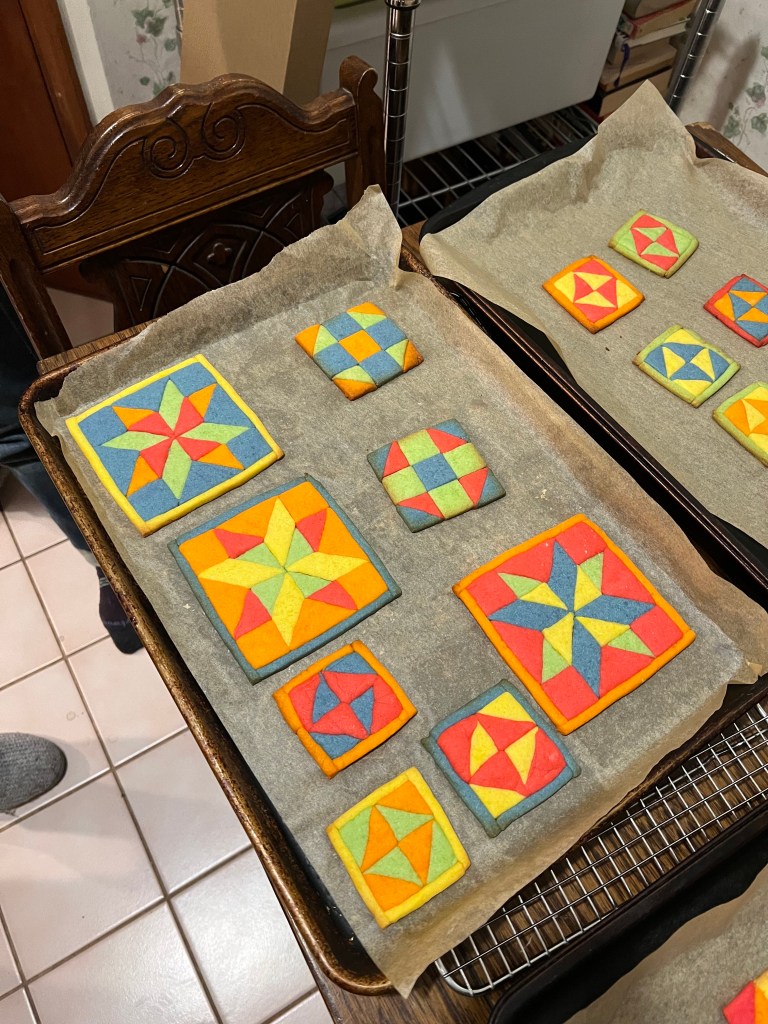
He also noted that he re-watched “Rear Window,” his favorite movie of all time. (“Edith Head + Grace Kelly = me fainting, every time.”) I suggested a good puzzle clue for Rear Window: Pane in the ass.
The puzzle theme today was “THAT’S MY JAM!,” which means that’s my song. And then three long answers were song titles with types of jam in them. ”CHERRY BOMB” by the Runaways was one of them.
It’s a very racy song, by a sexy girls band. (Have a look/listen.) I wonder if the NYT was aware of what it was offering us on this Christmas morn. Was it a little subversive plant by constructor Amie Walker? I bet she’s not telling.
The second “jam” song was STRAWBERRY WINE by Deanna Carter. Wow — it’s a beautiful, wrenching song. And the third was RASPBERRY BERET by Prince.
Yacouba Sawadogo passed away earlier this month, at the age of 77, in Ouahigouya, a northern provincial capital in Burkina Faso. A lean, taciturn man who never learned to read or write, he developed a water-conservation strategy that enabled him to create a forest with more than 60 species of trees and shrubs that had no equal in the Sahel, the semidesert region stretching across Africa’s upper third.
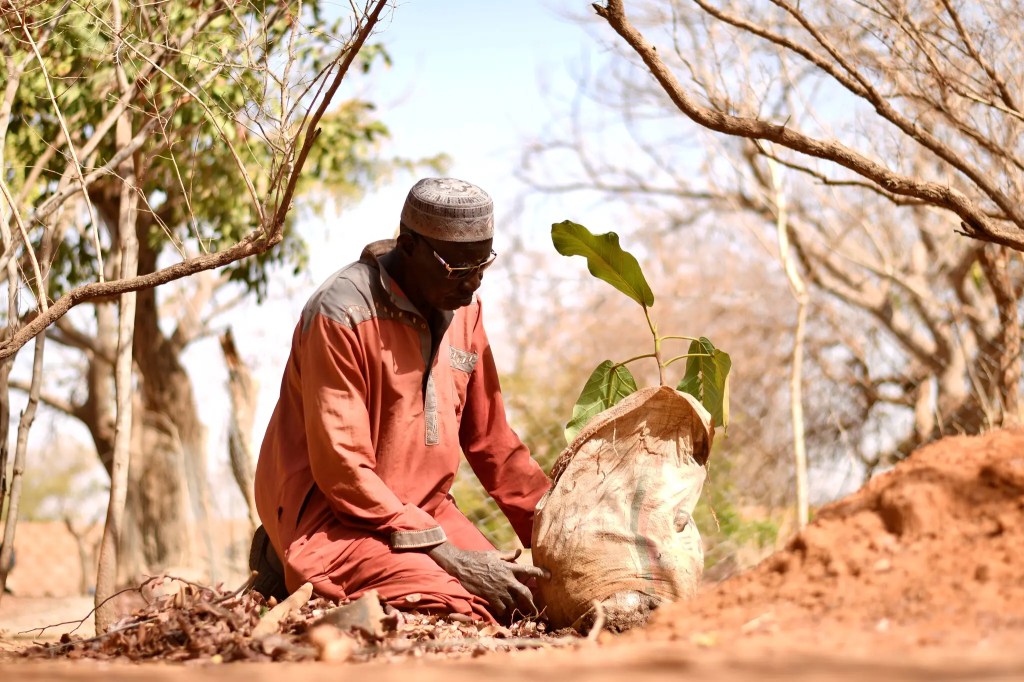
Sawadogo transformed the practice of what local farmers called zai — digging small pits to capture precious rainwater. The farmers typically waited until the rainy season, at the beginning of summer, to dig the zai. But Sawadogo began well before, when the earth was bone-dry. And he dug the pits wider and deeper. He put manure and rocks in the bottom. He used termites to help break up the land. The manure contained seeds. When the rain came, the rocks helped retain the water, and the water turned the seeds into seedlings, which he nurtured. The soil stayed moist for several weeks after the rainfall. The results were striking; the soil improved along with his crop yield. Sawadogo eventually helped the process along, planting trees himself. Trees protected crops from the wind.
When arsonists, jealous of Sawadogo’s success, torched his forest several times in the 2000s, his cousin Arouna said he was “an old man with a sad face; he stayed in the ashes for several days.” But he always bounced back. He told his son “Even if I have a little bit of force left, even for one minute, if there is a tree to plant, I will do it.” He had an almost mystical relationship to his trees — the marula, the acacia, the gum arabic, the desert date tree — he treated them like humans.
Farmers using his techniques have more than tripled their grain yields. Sawadogo won the UN Champions of the Earth award in 2020, as well as the Right Livelihood Award in Stockholm, which honors social and environmental activists.
Mr. Sawadogo is survived by his three wives, Safiata, Khaddar Su, and Raqueta, and 27 children (!), all of whom are well-hydrated.
Rest in peace, Yacoubo. You deserve it.
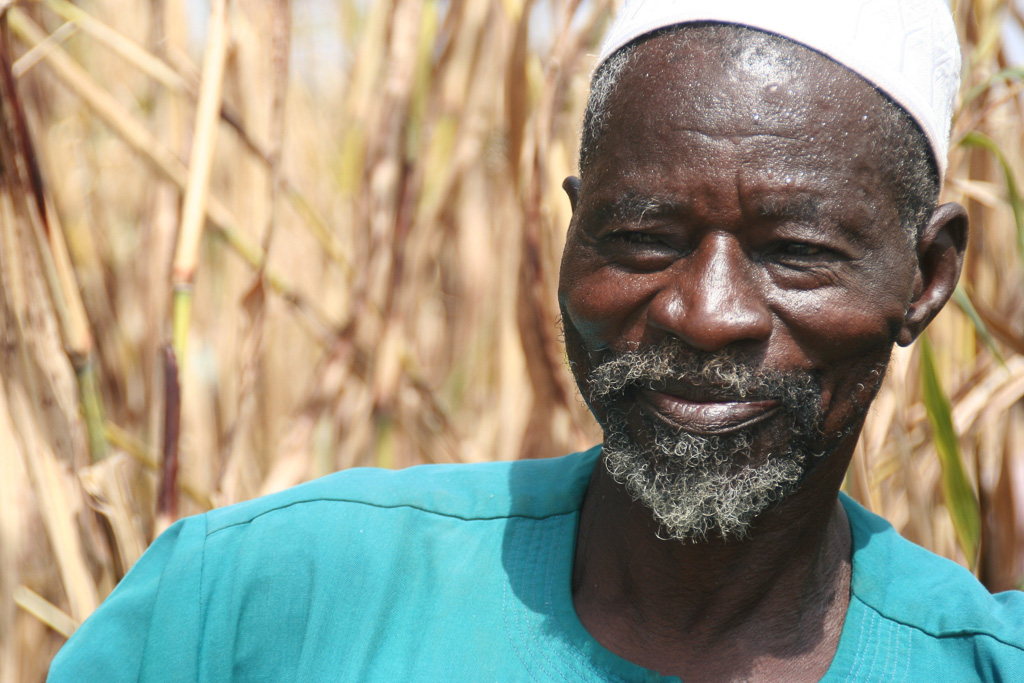
Troubles continue to mount for beleaguered Harvard Prez Claudine Gay. Photos have been released of Gay performing a pole dance at a local strip club, hardly appropriate conduct for an academician. Plus, you could pull something and wind up in a wheelchair, and for what? Here she is, disguised in a wig that, seriously, isn’t fooling anyone.

At 1D today “Physicist Ernst” was Ernst MACH, a major figure in 19th century physics, philosophy and psychology. He is probably best known for his MACH number for the speed of sound through air. He was also part of a group that studied the relationship of physical stimuli and our sensations and perceptions of them, an area known as psychophysics. He discovered that our visual system exaggerates the contrast between the edges of lighter and darker areas to enhance object detection and illustrated this with his MACH Bands illusion, below.

Although every bar is filled with one solid level of gray, we perceive narrow bands at the edges with increased contrast which does not reflect the physical reality of solid gray bars. Quod erat demonstrandum!
Good night. See you tomorrow!
 The Wellington Files