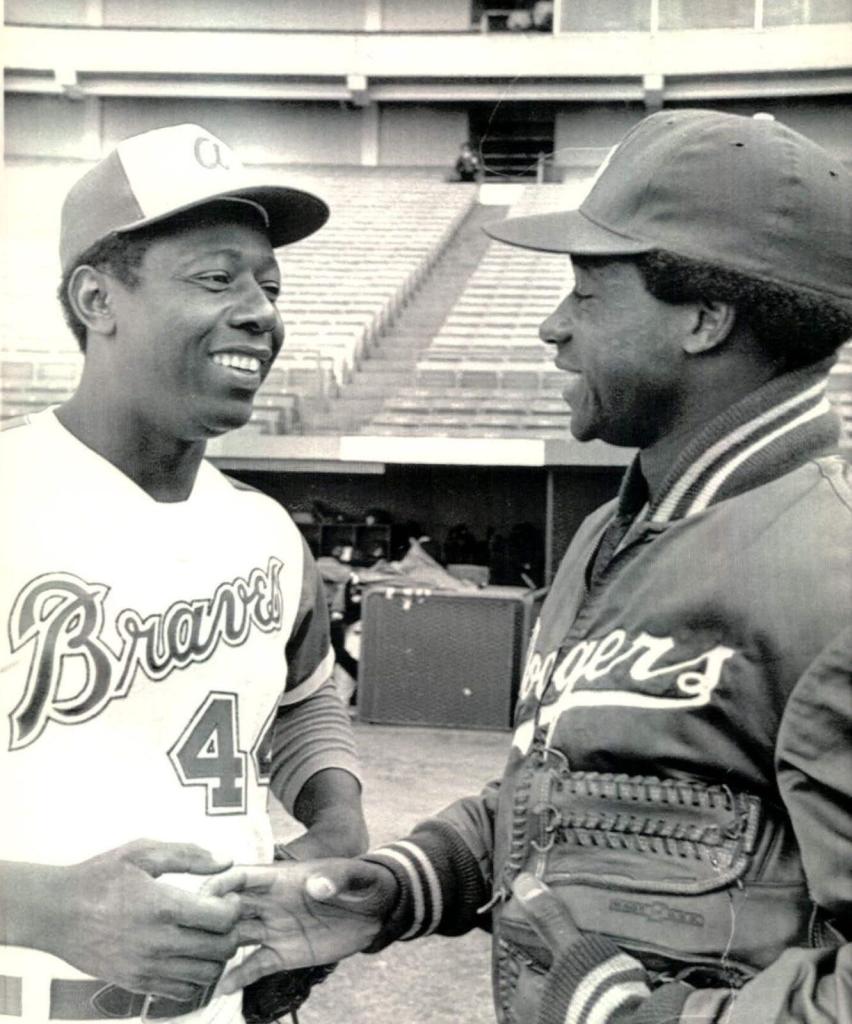
It didn’t take long for Hank Aaron to surpass Babe Ruth’s lifetime home run record in 1974. The season had just started. It was April 8th. Take a look:
It’s a good memory to start with today because Spring Training is starting up. But I posted it more for the pitcher who gave up the homer than for Aaron. That’s Al Downing, whom I remember mostly as a terrific left arm for the Yankees for nine seasons, starting in 1961. I just read a short piece honoring him as part of Black History Month. He’s one of the fifteen “Black Aces,” Black pitchers from the U.S. or Canada who had 20-win seasons.
He broke a barrier when he came up: He was the first Black pitcher to play for the Yankees. But Downing had his 20-win season with the Dodgers in 1971. He pitched 12 complete games that year and five shutouts. He came in third in the Cy Young Award voting behind Hall of Famers Ferguson Jenkins and Tom Seaver. He was a Dodger when he gave up Aaron’s historic shot too.
Here’s a nice photo of Al with Sandy Koufax and Maury Wills in LA on Opening Day, 2016.
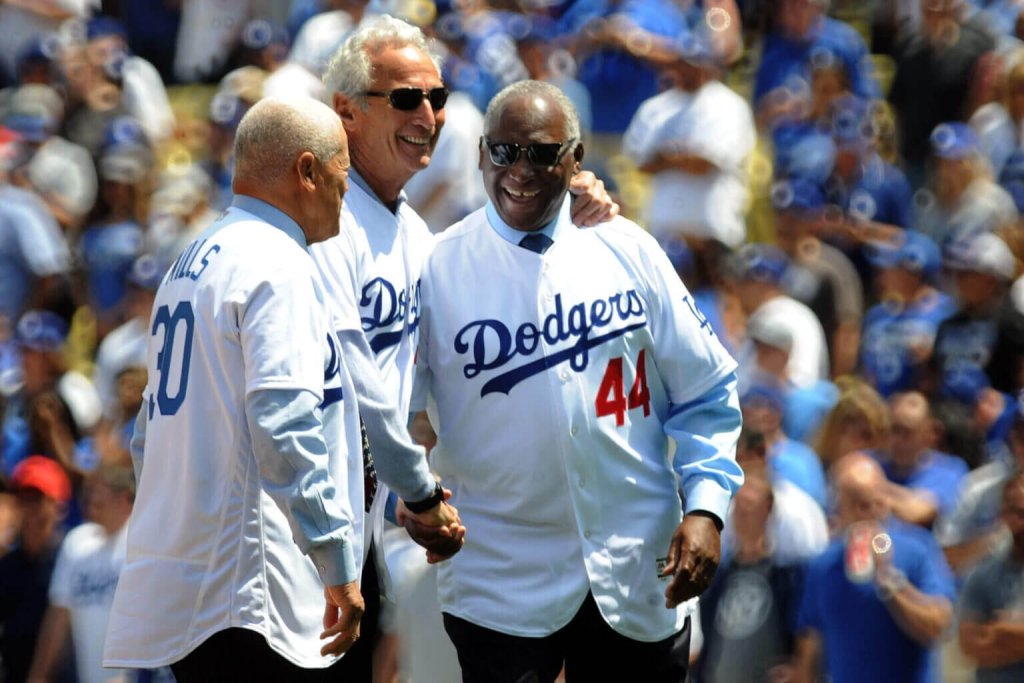
Downing said Aaron was always gracious when discussing the historic home run he hit off of Downing. When a reporter tried to needle Downing about it years later, Aaron jumped in to defend him.
“He said ‘I was going to hit that home run anyway, whoever was pitching. So, don’t make him out to be a bad guy,’” Downing recalled Aaron saying. “’That (home run) doesn’t take away from his career.’”
Downing is 82 years old now. He’s from Trenton NJ and went to Rider College in Jersey and Muhlenberg in PA. A lefty, his lifetime record was 123-107 with an ERA of just 3.22, and he notched 1,639 strikeouts.
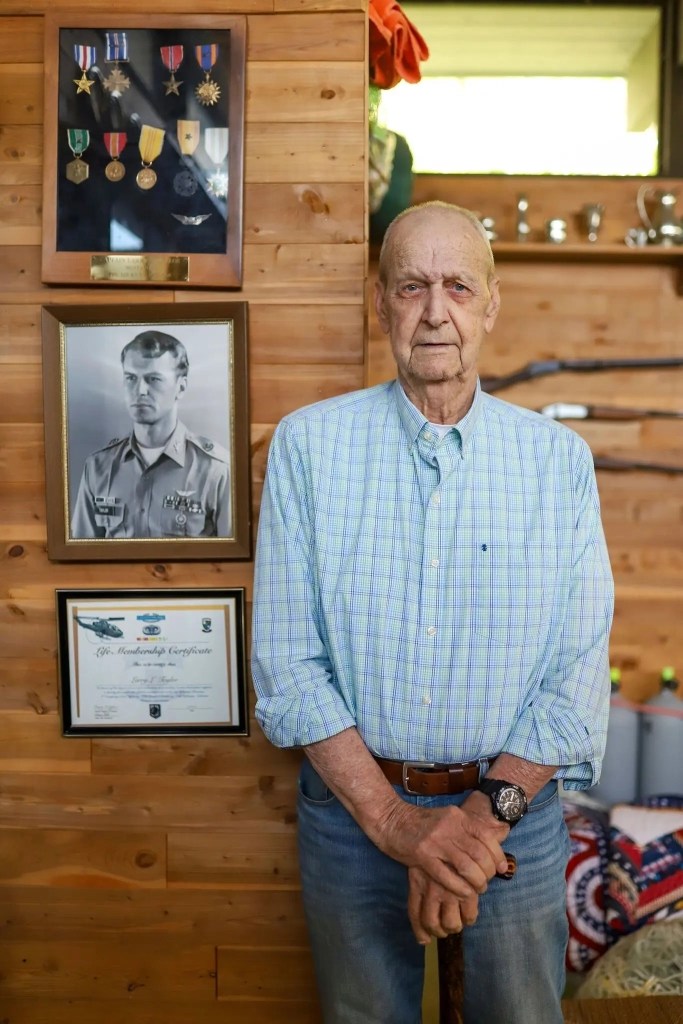
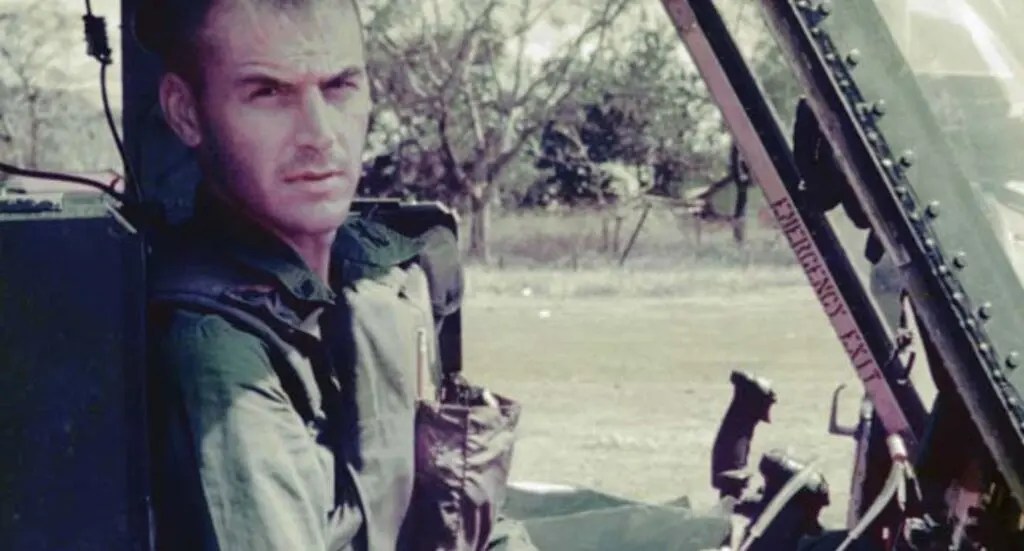
The action shifts now from the ballpark to the jungles of Vietnam. On June 18, 1968, Lt. Larry L. Taylor was piloting a helicopter gunship supporting a four-man reconnaissance patrol northeast of Saigon. As described by The Times, the Rangers were trudging through a rice paddy on a moonless night when they were surrounded by about 100 Vietcong guerillas. They were toast. A rescue mission involving two other copters was aborted as “hopeless.”
Taylor himself was coming under fire in his copter and was low on ammo and fuel. He was ordered to return to base. But it was an order he couldn’t obey. Taylor and his co-pilot James Ratliff couldn’t see leaving the soldiers behind like that, despite the seeming impossibility of rescue. They strafed the enemy as well as they could and used their landing lights as a diversion. They were going to employ a maneuver that had never been tried before. I should also note that Taylor and Ratliff were flying a Cobra, which has only two seats, one for the pilot and one for the co-pilot.
Taylor landed the copter 100 yards away from the action, giving the patrol only seconds to run over to it. And they did. When they got there, they “clambered aboard the craft’s skids and rocket pods and clung to them as the copter flew off to a secure landing area.” From that spot, they vanished into the forest and made their way safely back to their base. The Cobra made it back safely too, riddled with bullet holes.
Taylor was awarded the Silver Star for gallantry, but that didn’t sit well with Sgt. David Hill, one of the Rangers. He lobbied three times for Taylor’s medal to be upgraded to the Medal of Honor, the military’s highest award for valor. His third attempt was successful. Taylor was presented with the medal by President Biden in the White House on Sept. 5 of last year.
Lieutenant Taylor passed away on January 28 at his home in Signal Mountain, TN at the age of 81, five months after receiving his medal. He is survived by his wife, two sons, his sister, five grandchildren, and that segment of our nation capable of appreciating his extraordinary heroism. In the obit in the Times, written by Sam Roberts, the final two paragraphs are:
Taylor said he still relived the rescue every time people asked him, “What possessed you to do that?” His reply was always the same: “It needed doing.”
“I was doing my job. I knew that if I did not go down and get them, they would not make it.” Then he added, “We never leave a man behind.”
Rest in peace, Lieutenant.
There’s a review in the NYT today of a documentary called “The Arc of Oblivion.” It’s about the question “what from this world is worth saving?” It’s “a query that takes [the filmmaker Ian Cheney] from the Sahara to the Alps, consulting a ceramics expert, a paleontologist, a speleologist (cave scientist), a dendrochronologist (scientist who studies tree rings) and many other specialists in fields I didn’t realize had their own names. Each provides a new way into thinking about why and how the human species tries to preserve its memories, alongside the futility of the task.”
On the topic of ‘the permanence of things,” the reviewer, Alissa Wilkinson, notes: “I recently found a cassette tape in my childhood home containing a recording of my father, who died nearly 18 years ago, singing a song he wrote. I’ve been afraid to listen to it, but not really because of the emotion it might bring up. (Or because I’m not sure where to get a cassette player.) I’m more afraid that the tape, which has been in a box for at least two decades, might have disintegrated, leaving me without his voice. At the moment, I’d rather leave it unplayed than discover I’ve lost something precious.”
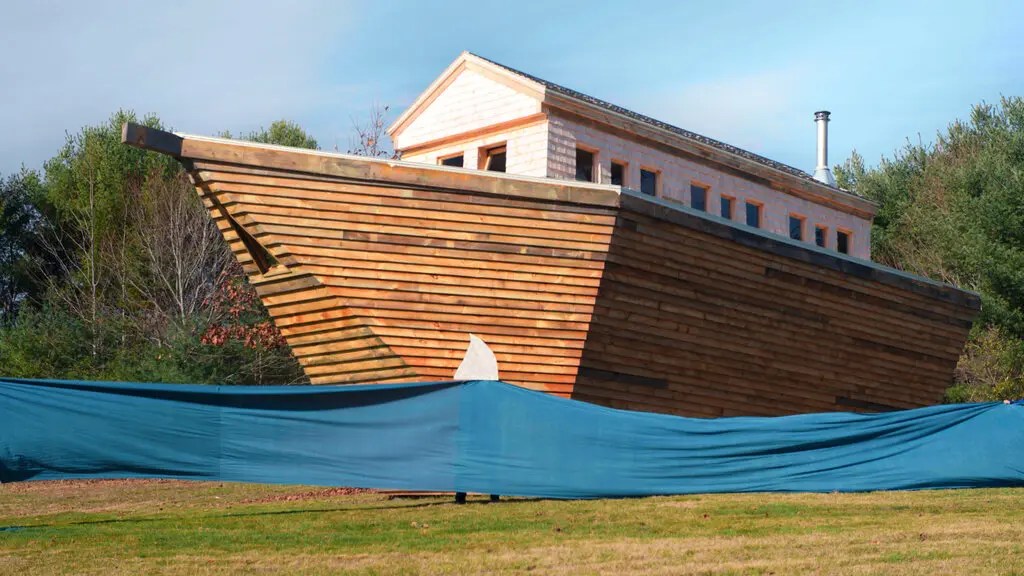
It’s a positive review. Cheney has actually hired a carpenter to build an ark the size of a guesthouse in his parents’ backyard in rural Maine. He’s not expecting to save mankind, like Noah, but, as is the film, he is exploring the concept of preservation itself.
In the puzzle today, which seemed easy to me for a Friday, the clue at 10D was “Casually chic updo,” and the answer was MESSY BUN. We sent Phil out looking for samples:




The first one is a young Monica Lewinsky [no it’s not], the second is you-know-who, the third is a woman Phil was surprised let him talk to her, and I don’t know how that guy got in there, but it’s a MESSY BUN alright.
It was nice to see MATT Groening in the grid at 36A (“Cartoonist Groening”), along with D’OH at 54A (“Cry from Homer”), since it was Matt’s 70th birthday yesterday, as OC readers know.
As is typical for a Friday, there was no theme, but several pairs of clever clues/answers teamed up nicely: 19A, “Personal struggles personified” (INNER DEMONS), joined 57A, “I want to, but really I shouldn’t …” (DON’T TEMPT ME). And 6D, “Post-Thanksgiving meal drowsiness, familiarly” (FOOD COMA) worked nicely with 39A, “Trancelike state during a monotonous drive” (HIGHWAY HYPNOSIS).
Other clever clues were “God on a mission” (APOLLO); “Northern hemisphere?” (IGLOO); “[Violin emoji]” (OH BOO HOO); and “Stand-up person?” (NO SHOW).
Last point on the puzzle: 1D was “Sitarist Shankar” and the answer, of course, was RAVI. Did you know Ravi Shankar was Norah Jones’s father? He passed away in December of 2012 at age 92.
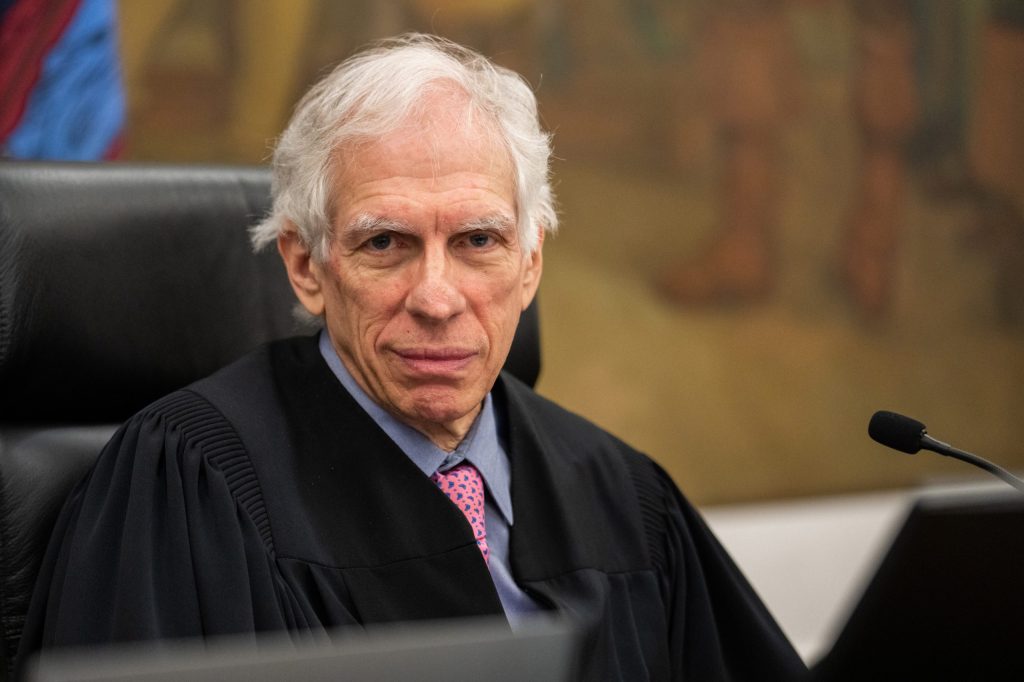
Finally, you may have heard a NY judge found Trump and two of his sons to have committed massive fraud, to the tune of hundreds of millions of dollars. Here’s what Judge Engoron wrote in his decision:
“Their complete lack of contrition and remorse borders on pathological. They are accused only of inflating asset values to make more money. The documents prove this over and over again. This is a venial sin, not a mortal sin. Defendants did not commit murder or arson. They did not rob a bank at gunpoint. Donald Trump is not Bernard Madoff. Yet, defendants are incapable of admitting the error of their ways.”
Yup. Sounds about right. See you tomorrow.
 The Wellington Files
One response to “Messy Buns”
My sister was inspired by Ravi Shankar to take sitar lessons in the late 60’s.Sshe was a fabulous guitar player, but the transition to sitar was difficult. It’s an amazing instrument
LikeLike