I saw the movie Jaws by mistake. I thought I was going to see “Jews.” But I stayed anyway and it was pretty gripping. I bet you all remember that first girl that was eaten? The actress was Susan Backlinie and she’s finally dead for real, at the age of 77, from a different but no less deadly kind of attack — a heart attack.

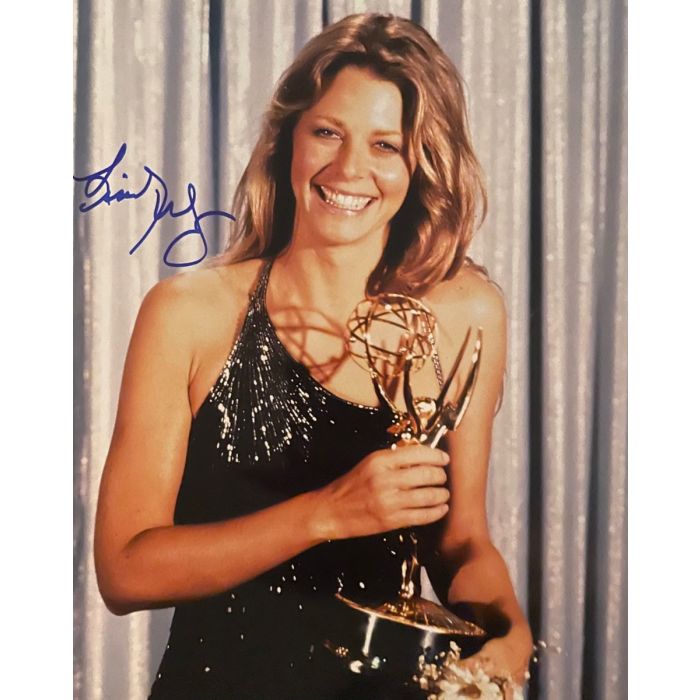
You may not have realized you saw her again, about ten years later, in a falling elevator in The Towering Inferno. As you can see in the first photo, above, she was fitted with a harness in the shark scene and tugged to shore by ten men on each side, giving the effect of being dragged by a shark. Spielberg called it one of the most dangerous stunts he ever filmed. It took three days to shoot. When Richard Dreyfuss saw how the scene turned out he told Susan he was absolutely terrified. The screams were actually Susan screaming but were recorded later. For authenticity, Spielberg poured water down her throat as she was screaming — what later was termed waterboarding in another context. (Not kidding.)
Susan was a state freestyle swimming champion in high school. In her later years, she sometimes attended “Jawfests” and said many fans blamed her for their fear of swimming. The comment she heard most often, she said, was “You know you kept me out of the water.” Susan is not in the famous Jaws poster that has Susan’s character Chrissie swimming on the water’s surface while the huge shark looms below. It’s a different swimmer, from the book cover, a model named Allison Maher. Here’s Allison, with her little baby shark.

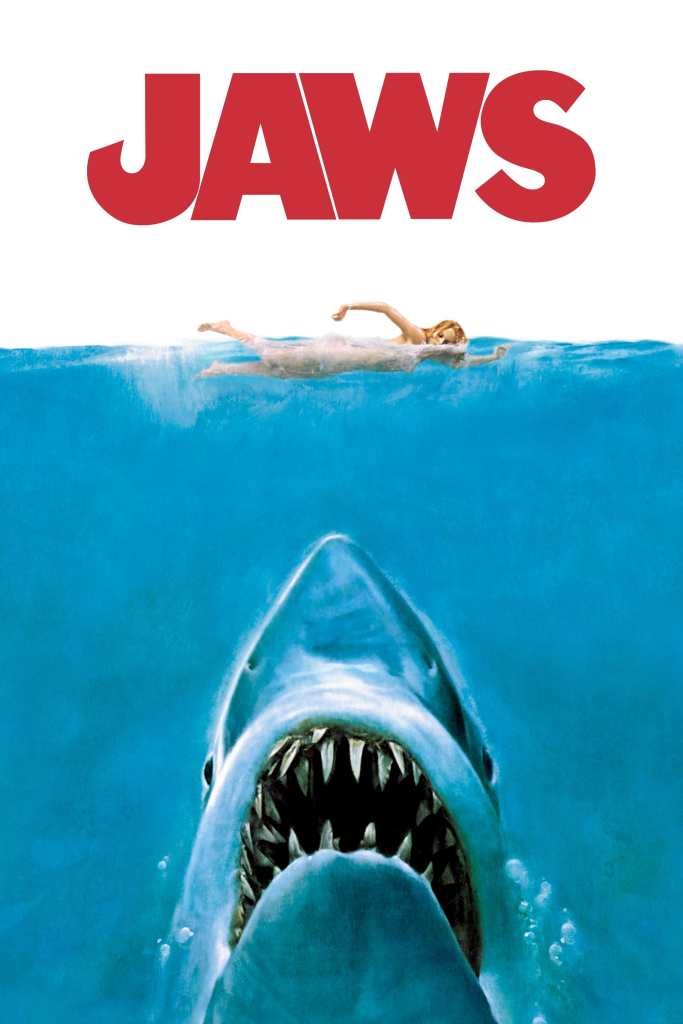
Susan is survived by her husband, Harvey Swindall, who learned early in the marriage not to grab at her legs. “And no biting, sweetheart.”
This poem is from today’s Writer’s Almanac. It’s called “Walking Distance,” and it’s by Connie Wanek.
for Stanley Dentinger (1922-2004)
Walking distance used to be much farther,
miles and miles.
Your grandfather, as a young man
with a wife and new baby son,
walked to and from
his job, which was in the next town.
That was Iowa, 1946,
and it was not a hardship
but “an opportunity,” which is youth speaking,
and also a particular man
of German descent, walking on good legs
on white gravel roads,
smoking cigarettes which were cheap
though not free as they’d been
during the war. Tobacco
burned toward his fingers, but never
reached them. The fire was small and personal,
almost intimate, glowing bright
when he put the cigarette to his lips
and breathed through it.
So many cigarettes before bombing runs
and none had been his last,
a great surprise. Sometimes he passed
a farmer burning field grass in the spring,
the smoldering line advancing toward the fence.
He had to know what he was doing,
so near the barn. You had to be close
to see the way
blades of dry grass passed the flame along
at a truly individual level,
very close to see how delicious a meal
the field was to the fire
on a damp, calm, almost English morning
ideal for walking.
In the puzzle today the clue at 67A was “Where to find a very wet sponge,” and the answer was REEF. Rex commented: “My theory is that things that live their entire lives under water are not, in fact, wet. You can only be wet on land. In the ocean, you just … are.”
Hmmmmmm.
The theme was very clever, IMO. It led to a nice “aha moment,” as the expression goes, when you finally grok it. (BTW, my good friend Miriam Webster assures me that grok is a legit word (a perfectly cromulent word): it means to understand profoundly and intuitively.) There was a series of starred clues for which the answers made no sense. E.g., Why is “Gone” SOME NERVE? And why is “Scoop received in a call” ICE CREAM?
Well, the revealer appears at 63A: ALL FOR ONE. The expression “all for one and one for all” tells you you need to substitute “one” for “all” in the clues, and vicey-versey. So “gone” becomes “gall” and SOME NERVE makes sense then. And “scoop received in a call” becomes “scoop received in a cone” so ICE CREAM makes sense.
Unrelated to the theme, at 37D the clue was “Head of lettuce?” and the answer was CFO (chief financial officer). You had to think of lettuce as the old slang term for money. And what was nice was the F from CFO intersected with the last letter of RED LEAF, which is a variety of real lettuce. The clue for RED LEAF was “Colorful variety of lettuce,” but Mr. Grumpypants felt the need to note: Red leaf lettuce is colorful in name only. It’s probably 95% green!!
Hrummmmph!
Another nice touch was at 48A “A notable Guinness” was ALEC, of course, and the clue at 6D was “Some Guinness records” which was FIRSTS.
Jean Arp’s sculpture “Shirt Front and Fork” was cited as the clue for ARP. Here it is:

At 45A the clue was “With every detail perfect,” and the answer was TOAT (to be read: TO A T). I wrote: If I were the constructor, I would bag TOAT. (No response yet, thank goodness.)
One of the clues was “It gets the ball rolling.” It inspired the NYT, in its Wordplay column, to include this photo:

Those are bowling pins made of ice from a summer festival in Tokyo.
Speaking of getting eaten (above), do you know who said the following recently?
“Has anyone ever seen “The Silence of the Lambs?” The late, great Hannibal Lecter. He’s a wonderful man. He oftentimes would have a friend for dinner. Remember the last scene? “Excuse me, I’m about to have a friend for dinner,” as this poor doctor walked by. “I’m about to have a friend for dinner.” But Hannibal Lecter. Congratulations. The late, great Hannibal Lecter.”
That was Trump, at a rally in NJ. Frank Bruni cites it in his newsletter noting that Trump has been unusually unhinged of late, even by his own standards. For one thing, Bruni notes that Lector has not died in any of the novels he’s in. So why call him the “late” great Hannibal? Here’s JF from the film.

From Bruni’s “For the love of sentences” feature:
In The Atlantic, Tom Nichols wrote: “Democracies have always had conspiracy theorists and other cranks wandering about the public square, sneezing and coughing various forms of weirdness on their fellow citizens. But even in the recent past, most people with a basic level of education and a healthy dollop of common sense had no trouble resisting the contagion of idiocy.”
In the NYT, J Wortham studied Brittney Griner’s technique and admired “the way she lifts the ball over the rim and into the net as gently as if she were returning a lost child to a parent.”
And, last, my favorite: In The Arizona Republic, Ed Masley appraised a recent Rolling Stones concert and wrote that Mick Jagger’s physicality “invites you to imagine Mikhail Baryshnikov raised by a family of overcaffeinated roosters.”
egs posted this today on Rex’s blog: “Wanna know how to feel young at age 70? Go to the Rolling Stones Hackney Diamonds tour sponsored by AARP! I was one of the younger of the 75,000 boomers watching Mick strut his stuff in Seattle last night. I mean, if you’re going to have AARP sponsor your tour, couldn’t you make it a series of matinees? We got home at 1:15 am! But Mick still puts on a great show. Go if you get a chance.”
Dylan fans will recognize this photo from the album cover of “Bringing It All Back Home.”

It was taken by one of Phil’s heroes, Daniel Kramer, who died late last month at the age of 91. It was shot in the living room of the home of Dylan’s manager, Albert Grossman, near Woodstock, NY. The woman in red is Sally Grossman, Albert’s wife. That’s a cat on Dylan’s lap, and Kramer explained that he took only ten shots that day and the one you see was chosen because it’s the only one with the cat looking at the lens. It earned Kramer a Grammy nomination. He also shot the cover of “Highway 61 Revisited.”
Dylan had already released three albums before he caught Kramer’s attention. In February 1964 Kramer heard him singing “The Lonesome Death of Hattie Carroll” on the Steve Allen show and “was riveted by the power of the song’s message.”
He harangued Grossman’s office for six months trying to arrange a photo shoot. Finally, Grossman himself took the call and said OK. A one-hour shoot turned into a five hour shoot, and for the next year Kramer was Dylan’s shadow. Photos began appearing in publications and Kramer eventually published one collection in 1967 and another in 2018, containing hundreds of shots.
It was during this period that Dylan shocked the world by going electric at the Newport Folk Festival. As Kramer put it, “Bob didn’t really want to be Woody Guthrie. He wanted to be Elvis Presley.” Kramer said the significance of the Newport moment was overblown. He saw Dylan make the conversion months earlier at a photo shoot in the recording studio for “Bringing It All Back Home.”
In October 1964, Dylan was slated to perform in Lincoln Center, and its management told Kramer he was restricted to a glass-enclosed balcony during the performance. Dylan told Grossman to let Lincoln Center know that if Kramer couldn’t go wherever he wanted to go, the concert was off.
In late 1965, Kramer moved on from Dylan, not wanting to be limited. He continued to connect on an intimate level with luminaries. “I had a writing lesson from Norman Mailer, and boxing lessons from Frazier and Ali,” he told The Times.
Kramer is survived by no immediate family members. He was married to his wife Arline for 48 years until her death in 2016. The last word on her lips was “Cheese.”
Thanks for stopping by. See you tomorrow.
 The Wellington Files