Adrian Dorson, of the Dull Men’s Club (UK) has been pondering this for a long time:
A bumblebee flying due east hits a train travelling due west, the bumblebee then obviously starts travelling due west with the train.
To change direction from flying east, to being flat and travelling west, the bumblebee at one point must have been stationary in relation to the ground, if so the train must have been too.
Did the bumblebee stop the train?
Jeff Creeach notes: Wait until you think about how wheels work. The part of the wheel that touches the ground is stationary for a split second and the top of the wheel travels two times faster than the car itself.
[What? My head hurts now.]
Craig Williams: At EVERY individual point the train is stationary. To prove this take a photo of a single point in time. Is the train moving in the photo? No. It’s just that in the very next infinitesimally small point in time, it has travelled to a different point in space.
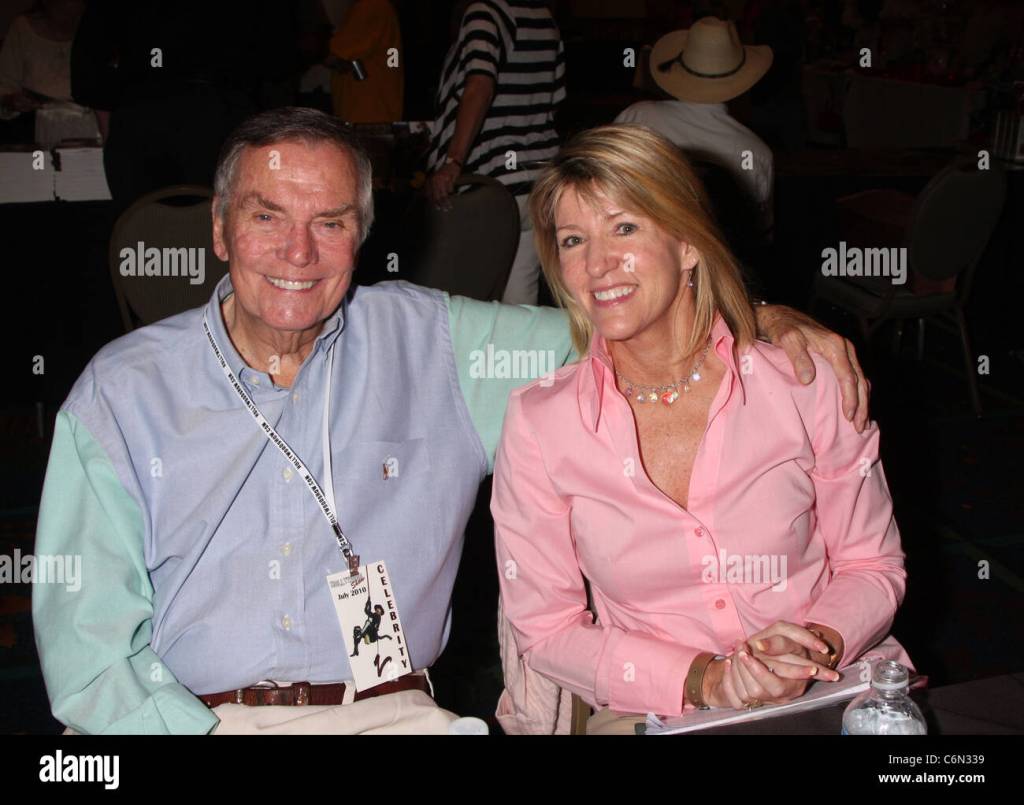
Peter Marshall died on Thursday at his home in Encino CA at the age of 98. He was the host of the funniest game show ever from 1966 to 1981: Hollywood Squares. The game was a tic-tac-toe board with nine celebrities in the squares. Contestants would pick a square and the celeb in the square would answer a question. The contestant “earned” the square if he or she correctly stated whether the answer was correct or not. Typically, the celeb would give a joke answer first and then a real answer.
Celebs often included great comics like Mel Brooks and Joan Rivers. Paul Lynde was a regular and was hysterical. Here are sample Paul Lynde lines: Question: Do guinea pigs whistle? Answer: Only when brought to a boil. Question: When your grandpa put oatmeal on his forehead, what was he trying to do? Answer: Get it in his mouth.
Remember the comic George Gobel? He was also a favorite. Question: Who is pregnant longer: your girlfriend or your elephant? Gobel’s answer, horrified: Who told you about my elephant??
“Is it a good sign if your man loves animals?” was the question for Joan Rivers. “Not to excess,” she replied.
Other regulars included Morey Amsterdam and Rose Marie from the old Dick Van Dyke show, and Wally Cox, who was Mr. Peepers.
Gene Hackman, Redd Foxx, Dolly Parton, and Alice Cooper popped in as guest stars, as did — get this — Mickey Mantle and Hank Aaron. OJ Simpson was on as a contestant after winning the Heisman Trophy at USC and later returned as a guest star. He was the only person to have been both. [Whatever became of him?]
With so much talent on stage, Marshall’s job was essentially to be the straight man. As he put it: the show’s producers said they prized one quality in particular when they sought a host: “‘We’re looking for a complete nonentity,’ they told me. ‘Well, look no further,’ I said, and they offered me an audition.”
BTW, I had always thought they fed the celebs the questions in advance, because the quips were so quick and funny. But Marshall insisted they didn’t. He did concede they sometimes crafted certain questions for certain celebs expecting to hit paydirt.
Marshall’s name at birth was Ralph Pierre LaCock. If you can’t figure out why he changed it for show biz, see me after class.
His first two marriages ended in divorce. But then he married Laurie Stewart in 1989 and it held. In addition to Laurie, his survivors include three children from his first marriage; 12 grandchildren; and nine great-grandchildren. Pete LaCock, the former baseball player, is one of Marshall’s children.
Alright, just a couple more from Paul Lynde.
Q: When is it a good idea to put your panty hose in the microwave for two minutes?
A: When your house is surrounded by the police.
Q: According to Julia Child, how much is a “pinch?”
A: Just enough to turn you on a little.
Q: What is the main thing we get from Honduras?
A: You got it too?!
Q: Marriage kills love. And love kills — what?
A: Twenty minutes.
Q: Within two, how many husbands have the three Gabor sisters had among them?
A: Including their own?
And, last one: When Paul Lynde was asked: According to the Food Editor of the Dallas Morning News, what’s the best reason for pounding meat?, his answer was: “Loneliness.”
Rest in peace, Peter Marshall — I hope you enjoyed it all as much as we did.
The puzzle today by Brandon Koppy had a ton of good stuff in it. If you’re not a puzzle person, you may be wondering, what the hell does that mean? It’s just word clues and answers? Well, they can be fun. At 20A today, the clue was “Reason one might read a ‘Speed Hump’ sign and laugh.” Answer: DIRTY MIND.
Or at 35A: “Jamie Lee Curtis or Neve Campbell, notably.” Answer: SCREAM QUEEN.
56A was cute: “A deal’s a deal.” NO BACKSIES!
At 50A, “The “1” in 8-8-1, e.g.,” was a very clever clue for TIE (get it?).
There were two Egyptian gods in the puzzle — that’s two more than I’d prefer: OSIRIS and AMON-RA. Rex asked: Who’s paying the NYT for this kind of exposure? Big Egyptology, no doubt.
I learned something about beer at 36D: The clue was “Low-cost lager from Anheuser-Busch, familiarly.” The beer they were looking for was Natural Ice, but the answer was its cool street name: NATTY ICE.
Also learned that in Buffalo it’s a faux pas to order RANCH with your wings. Here’s Rex on that: “I love the idea that some burly Bills fan snarfing wings is gonna use a word like “faux pas” with orange Buffalo sauce dripping off his lips and fingers. ‘RANCH? Oh dear, no. It’s simply not done,’ he splurted.”
Last, at 51A, “Hold please?” was a great clue for I NEED A HUG.
Who doesn’t?
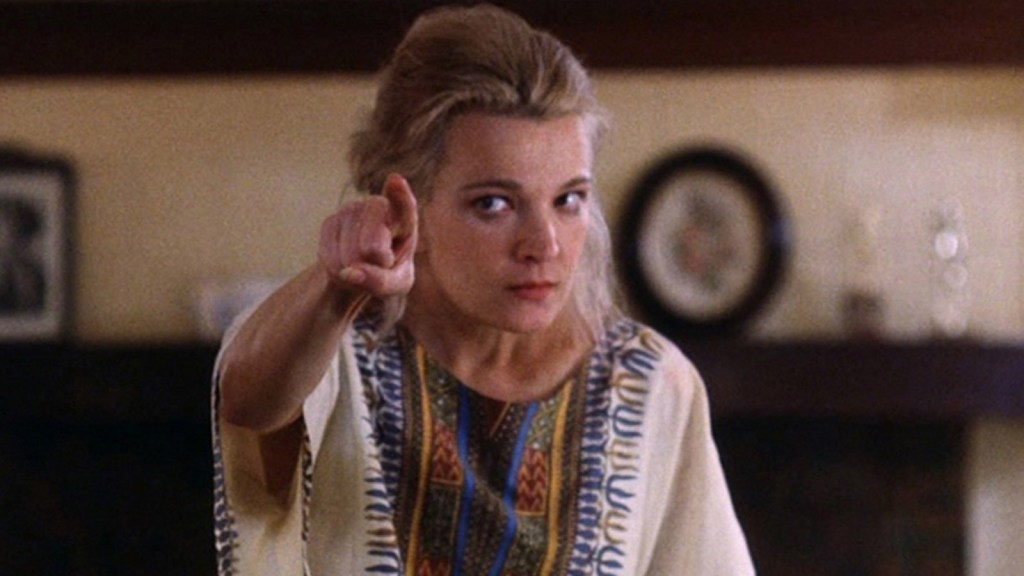
The brilliant actress Gena Rowlands passed away this month at the age of 94. She was nominated for a Best Actress Oscar for her role in A Woman Under the Influence (1974), which, if you saw, you will never forget. In addition to an obit, the Times ran an article by Manohla Dargis on just one scene from that movie. Here’s how Dargis sets it up:
“Rowlands is playing Mabel, an exuberantly alive woman of great sensitivities whose husband, Nicky (Peter Falk), loves her deeply but doesn’t understand her. They’re home and he has just yelled at her in front of some colleagues, who’ve fled. Now, as this husband and wife look at each other across their dining-room table, they struggle to push past the rancor and hurt. But Mabel is struggling harder because her purchase on everyday life has begun to badly slip, bewildering them both. Her love for Nicky and their children feels boundless, and it radiates off her like a fever, but Mabel is headed for a breakdown.”
Dargis goes on:
“As the two begin working it out, Cassavetes [the director] cuts between them, framing each in isolating close-up. At first, Nicky looks at her with a faint, inscrutable smile that Mabel doesn’t return. Instead, she stares at him and holds up a thumb, as if she were getting ready to hitch a ride out, then she begins a strange pantomime. She screws her face into a scowl, waves her arms, mimes some words. Rowland had an incredibly expressive, near-elastic face and equally extraordinary control of it, and the quicksilver shifts she uses here are unexpected and destabilizing; you want to keep watching Mabel but aren’t sure you can.
“As Mabel keeps talking, Rowlands widens her eyes but she also shifts the character’s focus inward. Suddenly, Mabel isn’t looking at Nicky and she isn’t exactly talking to him, either. Instead, as Mabel animatedly continues, her gestures and expressions growing more exaggerated, she no longer seems present. She’s somewhere else and then just as abruptly she returns to the here and now, and everything shifts again. Mabel looks at Nicky, her face open and soft. ‘Tell me what you want me to — how you want me to be,’ she says. ‘I can be that. I can be anything.’”
I remember that scene. I remember it seemed to me that she was taking us to a place we’ve been, but only alone, and we didn’t know anyone else knew we had been there. Here’s how Dargis continues:
“Rowlands breaks my heart each time I watch this scene, to the point that sometimes I’ve been reluctant to revisit it. It’s overwhelming and, even after repeat viewings, it’s still shocking, and it seems as intimate and genuine as my own agonizing fights and struggles. I feel the performance — and Mabel’s confusion and desperation — in my bones.”
Rowlands herself recounted a different scene from Under the Influence. She and Falk were working up an emotional intensity that suddenly seemed to be going too far. Cassavetes was shooting it with a hand-held camera and thought something cracked in Rowlands. “She’s gone,” he said, and he dropped the camera and “crashed the scene,” thinking he had to pull her out of the character.
“’I think he thought he pushed me just a step too far,’ Rowlands said with faint amusement. He hadn’t. Instead, working in concert, Rowlands and Cassavetes had in this film pushed themselves to the point of perfection.”
Forgive me for taking so much verbatim from the article, but you need to see the last paragraph before we say goodbye to her.
“Rowlands and Cassavetes changed American cinema, and they also, as importantly, changed the women in it, making films that spoke to their liberated moment. Cassavetes may not have been a feminist, strictly speaking. Yet he and Rowlands made some of the greatest, truest films about women. In Rowlands, Cassavetes had an obvious muse; he also had an equal, a partner who could go to the edge, who could open veins, break hearts and blow minds with characters who were messy and real inside and out, and gloriously, at times terrifyingly imperfect. There have always been brilliant actresses who could bring great art and honest feeling to the screen. Few have been as transcendent as Rowlands — an immortal.”
Rest in peace, Gena Rowlands.
See you tomorrow.
 The Wellington Files