When I taught contract law I stressed how important it is to know how long an offer “is out there.” If Tom offers to sell his jacket to Sally for $50, Tom is vulnerable in a way. She can utter two simple words: “I accept,” and the jacket is gone. Now, in most cases, of course, he wants to sell it so he’s happy. But sometimes he will change his mind, or get a better offer from Ellen. So we need to know how long Tom’s offer to Sally is open, i.e., when does it terminate? Has it terminated before Sally said “I accept?”
If the life span of an offer is not specified, it will be open for a “reasonable amount of time.” So then the question is, what’s “reasonable?” We discuss the factors that go into that determination. The subject matter can be relevant. For instance, an offer to sell a gallon of milk would likely have a shorter life span than an offer to sell your rock collection. The manner in which the offer is made could be relevant. Did Tom spend a fortune to a have private messenger service race across town with the offer? Or did he just drop it in the regular mail? The former implies urgency and a shorter life for the offer.
Another factor is geography. Different parts of the country have different paces of life. You say “good morning” to someone in Arkansas at 8 am, and they may say good morning back at 10:30. In New York, of course, it’s rush rush rush. Someone takes two extra seconds getting off the subway, and you trample over him, right? And he deserves it — c’mon, man, you gotta move! So an Arkansas jury might find that an offer has a reasonable life span longer than a New York jury would.
At this point in class I tell the story of the time I was walking up the subway steps, and there was an older woman ahead of me, walking very slowly. Well, after a few steps, I lost my patience, and yelled at her: “C’mon! Move it! You’re taking forever!!” And she turned around and said: “That’s no way to talk to your mother!”
It always got a good laugh, and I’d finish up by saying: “But Mom — we’re in a hurry.”
This story by Ardavan Nozari is from tomorrow’s Met Diary:
Dear Diary:
I was walking slowly up the steps at the Lexington Avenue-59th Street subway station. When I got to the street, a well-dressed woman who appeared to be in her 30s or 40s tapped me on the shoulder.
“Hi,” she said. She asked whether I spoke English, and I said yes.
Sir, she said, when you walk up so slowly, the whole stairs back up.
I was puzzled. I explained that I use a cane and could not walk that fast. What am I supposed to do?
Come at a different time when it is not crowded, she said before walking across the street while shaking her head.
I love New York.
The puzzle seemed easy for a Saturday. I finished it in 25:22. Should I celebrate with a CHERRY SODA (49A), a “Gas-infused coffee order,” (NITRO)(21A), GIN MARTINIS (22D), or some CHIPS AHOY! cookies (29D)? In any event I will certainly wear my BALLOON HAT (“it gets inflated and goes straight to your head”).

There were some tricky parts. “Common but often counterproductive response to a recurring problem” was the clue for ANTI PATTERN. Something from software design. And “Snap, crackle or pop” was the clue for ONOMATOPOEIA. I got that one pretty easily, if I may crow, but I ended it with a C instead of an A for a while.
Have you dog folks heard of “teacup” as a term for a small dog? It was the clue for MINI and made no sense to me. But now I (and you) know it’s a term for a tiny dog.

I learned about the “HIVE mind” today. Miriam W. says it’s “the collective thoughts, ideas, and opinions of a group of people (such as Internet users) regarded as functioning together as a single mind,” e.g.,
… Mindy Kaling asks her Twitter followers for the best dinner spots in cities she’s visiting. Generally, people trust that feedback from the hive mind is correct and well-informed.—Sarah Z. Wexler
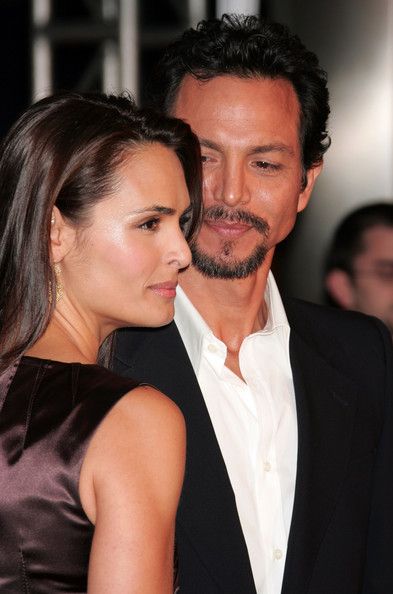
Actor Benjamin Bratt popped in to the grid today. Handsome! I’m sure you recognize him. How handsome? Well, he dated Julia Roberts from 1998-2001. Then he married model/actress Talisa Soto in 2002 and they are still married and have two kids: Sophia and Mateo. Good to see you both! Watchin’ the game tonight?
Phil caught them in an unguarded moment.
You hear about cuddlers? The Modern Love column in today’s NYT Style Section by Denise DiIanni is all about her time as a volunteer cuddler. Here’s how she describes it:
“Less than a wet nurse, more than a comfort object, our only job is to sit in a rocking chair and cradle a stranger’s infant to the left side of our chest — the heart side — to share with the tiny being the mammalian soundtrack of that beating: I am here. You are here. Just that, nothing more.”
It’s for babies kept in the hospital for repairs or who had special struggles. Denise had lost her husband decades earlier and had felt helpless when all she could do was feed him slivers of ice or squeeze his hand as he weakened. She says this about the cuddlers:
“We took turns holding the different babies with their different stories. We were a strange sisterhood in our rubber-soled shoes and pink jackets — young and old, Black and white, childless and parents, medical students and homemakers and executives. We were here for our own reasons — for the children we wanted or the children we lost. To give back. Perhaps to regain trust in the power of small offerings or to heal a long ago hurt.”
She established a bond with a tiny “withdrawal baby,” a baby whose mom was on drugs, so he had to be weaned off of them. She described her first day with him:
“On that day, I rocked him for three hours. My left shoulder ached, my arm went numb, but I would not let go, for he and I had work to do, trust to build. I would sit with him without any distractions. I would be patient, if he would be. We would rock together to see if this tiny connection might be of some use to him. By my third shift, he and I had found our rhythm. We sat. We breathed. We tried to trust in small things.”
After many weeks, the baby grew stronger, and one day when Denise came to the hospital she found that he was gone. Released into the care of a foster family. She hoped he would be okay.
“Rocking this child week after week had softened a broken place in me; I intended to help him, but he was healing me. It’s such a little thing, holding a stranger’s baby. I will never know how much we cuddlers helped him. But after months on the ward, I was more trusting of the power of the smallest acts: A kind word, a soft touch. A sliver of ice for a dying young man. The comfort of rocking a child. The healing beat of a heart.”
It’s Super Bowl Sunday. Let’s see how our friends from the Dull Men’s Club (UK) feel about it.
Stuart Kerr: American football Super Bowl this weekend. The ball is carried more than it’s kicked and there’s no bowling. I’m confused.
Daniel Faraday-Kiss: There will be an average of 18 minutes of sport played during the event.
Jon Doswell: It’s shit.
Daniel Lloyd: I do love a succinct, accurate description.
Ted Hopwood: Dullest sporting event ever, there’s been three occasions in my 48 years on this planet where I’ve tried to watch the Superb Owl & I’ve never made it past the first quarter. Massively overrated, the fact they have a big half time show & super expensive adverts to keep everyone interested says it all tbh
David Waldie: Rugby for girls that like to pose. It pays well though. [Ouch!]
Nick Taylor: A game played by four teams. The team with the ball plays against the team without the ball until the former scores or the latter wins it. Then both teams leave the pitch and two new teams come on. Sometimes a kicker comes on to kick the ball and then leaves. A game that seems to be designed to flow as little as possible.
Daniel Lloyd: Woeful event and sport. There’s an advert break every 38 milliseconds and you’re thankful for it because you don’t have to watch the “football” any more.
David Concannon: The players are stood still more than they run. Sit there for four hours and watch the occasional five second burst of play. I don’t think I’ve ever got past the first quarter when trying to watch a Stupor Bowl.
Chris Burhouse: And who are all those people on the sidelines, what is their purpose, what are they doing there ? There’s more people on the side of the pitch than on the field of play. And do teams really think the other team employs lip readers to try and relay what’s being discussed during the game?
But Tim Hiscock conceded: I actually quite enjoy watching it. Once you understand the rules and can appreciate the athleticism and tactical element, it’s quite entertaining.
And we’ll give Christine MacFarlane the last word (and image): Can’t wait … bring on the 3peat!
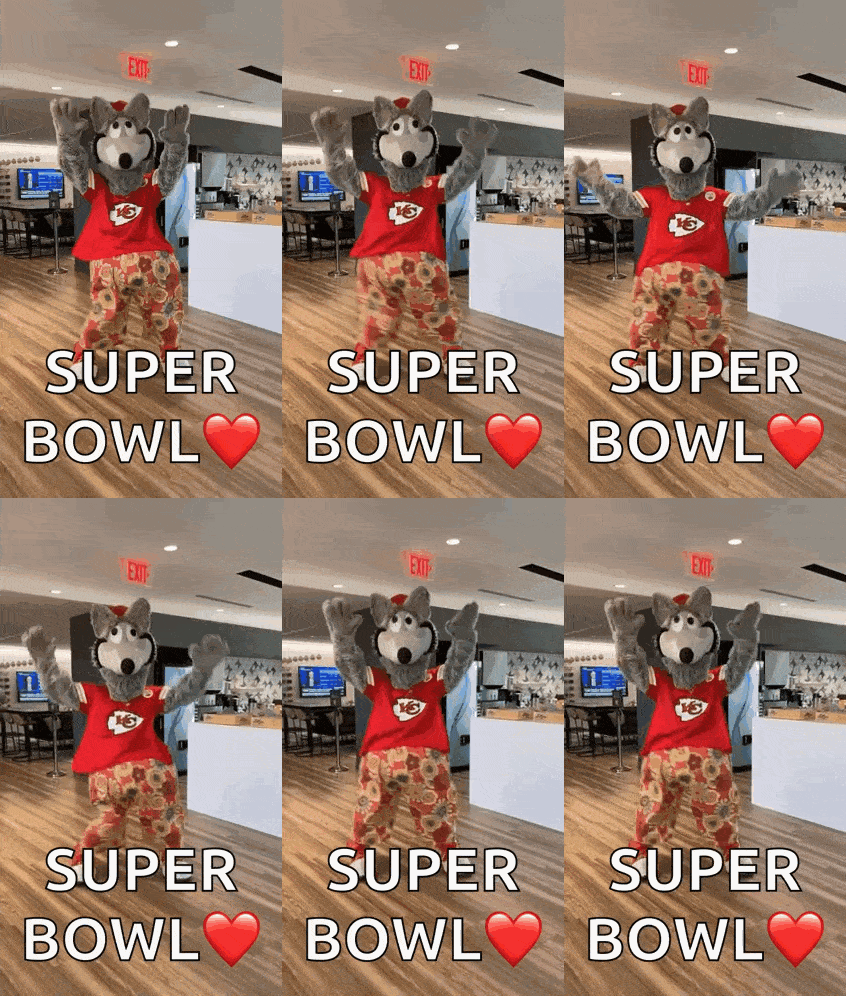
Enjoy the game! See you tomorrow!
 The Wellington Files