Commenter Gary came in late yesterday, but I enjoyed his note on the pretzel-centric puzzle:
“Just last night I went to a new movie theater that opened close to my house and it has a brewery attached and they take your order and bring you food as if you’re living in a civilized society and I ordered a pretzel (despite it costing as much as my first car) and it was miraculous and delicious and life affirming. So I’m wildly pro-pretzel right now.”
Yesterday’s grid also led to some interesting trivia. William Moulton Marston and Elizabeth Holloway, husband and wife, made key contributions to the invention of the polygraph. It stemmed from their noting the connection between blood pressure and emotions. William was also the creator of Wonder Woman. Wait. Is that Lucille Ball on the right? Nah.

A sheet of Wonder Woman stamps is selling on eBay for $30, twice its current postal value of $14.60.

Wonder Woman was protrayed in films by the Israeli actress Gal Gadot. It took a long time to get her costume and makeup on so she was often late to the set, a situation referred to as “waiting for Gadot.”

Do you know the expression to “zhuzh” something up? I learned it pretty recently from a puzzle. It means to liven it up, or, using today’s clue, “fancify” it. It was the theme. ZHUZH UP was the central answer and the four theme answers all added the “ge” sound to a phrase. E.g., for the clue “Neutral shade in some Florida décor?” the answer was TAMPA BEIGE. Get it? You zhuzh up Tampa Bay phonetically. Similarly, “Headline during a zombie attack?” was THE DEAD SEIGE. It zhuzhes up the Dead Sea.
The New Yorker is known for its intense fact checking. There’s a story about it by Zach Helfand, a former checker, in the Sept. 1 & 8 issue.
“How do you confirm a fact? You ask, over and over, ‘How do we know?’ Years ago, John McPhee wrote about a Japanese incendiary balloon that, during the Second World War, floated across the Pacific and struck an electrical cable serving a top-secret nuclear site; a reactor that enriched plutonium for the atomic bomb bound for Nagasaki was temporarily disabled. How did McPhee know? Someone had told him. How did that person know? He’d heard about it—secondhand. The checker, Sara Lippincott, spent weeks trying to track down an original source. Just before the magazine went to the printer, she got a lead. She called the source at home, in Florida. He was at the mall. How to locate him in time? She called the police. They found him and put him in a phone booth. Did he know about the incident? He did. How? He was the reactor’s site manager; he saw it happen. The detail made it in.
“When Parker Henry checked Patrick Radden Keefe’s Profile of Anthony Bourdain, Bourdain wasn’t able to get on the phone, so Henry sent him a memo containing a hundred or so facts about some of the most sensitive parts of his life, including his heroin use and the collapse of a romantic relationship. He responded, ‘Looks good.’
“Zadie Smith once received a call regarding whether, years earlier, at Ian McEwan’s birthday party, a butterfly landed on her knee. When a Talk piece by Tad Friend described the singer Art Garfunkel waving his arms around, the checker asked Garfunkel to confirm that he had two arms. (It turns out that Zadie Smith was asked not about a butterfly on her knee but about a slug on a wineglass.)
“Jane Bua checked a David Sedaris essay about meeting the Pope. She checked a detail about the color of the buttons on a cardinal’s cassock so assiduously (the department’s perception), or maddeningly (Sedaris’s), that he e-mailed his editor, ‘Can you slip her a sedative?’ Sedaris has complained, “Checking is like being f*cked in the a** by a hot thermos.” Bua mentioned this to the checker on Sedaris’s next piece, Yinuo Shi. Shi considered the analogy and said, ‘If a thermos works, the outside wouldn’t be hot.’”
Errors that elude the checkers usually are pointed out via mail from a reader. E.g.:
1947: “I was somewhat taken aback to find Mr. Hellman, in his article on the Stuart Collection, announcing the death of my father. To kill off a retired director of the New York Public Library is no doubt as insignificant a misdemeanor as one can commit. But I wonder if it was necessary.”
2019: “The chicken is NOT wearing overalls (which you mention twice). He is wearing lederhosen.”
Hrrrrrumph!

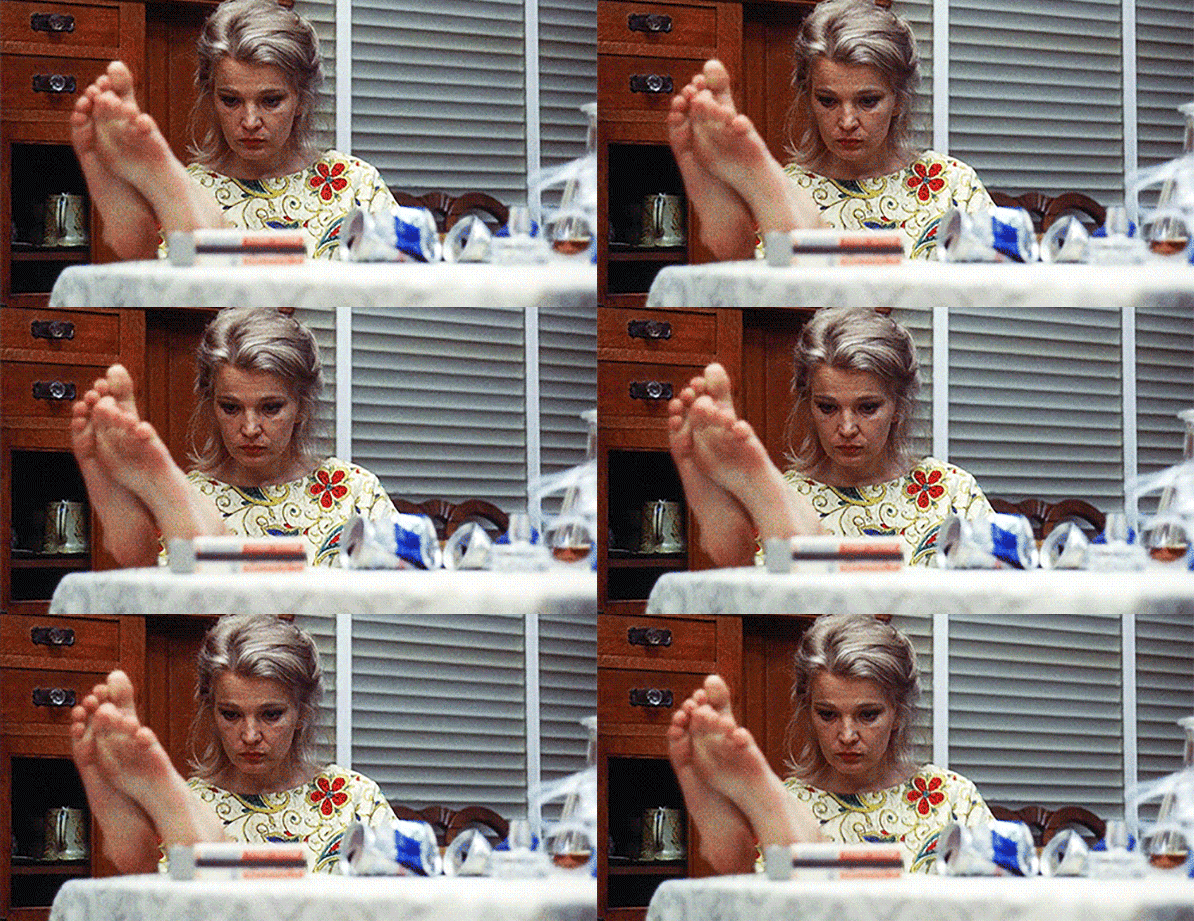
At 49D, “Rowlands of ‘A Woman Under the Influence’” was, of course, GENA. I’m no movie critic, but that was one of the most brilliant performances I’ve ever seen. If you missed it — it’s not too late!
She passed away just a year ago, at the age of 94.
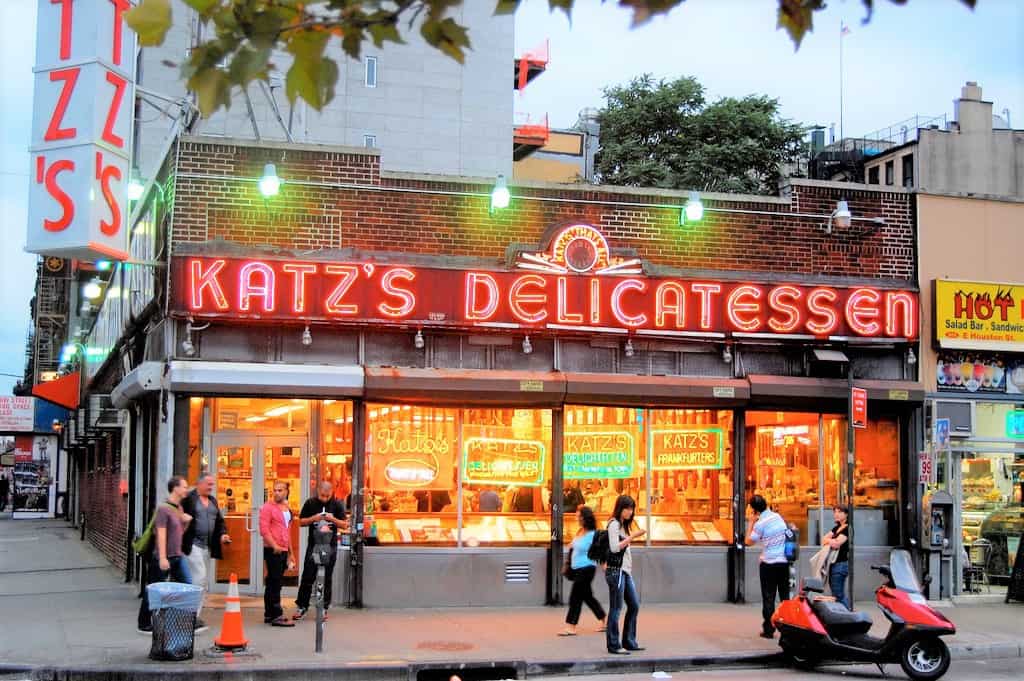
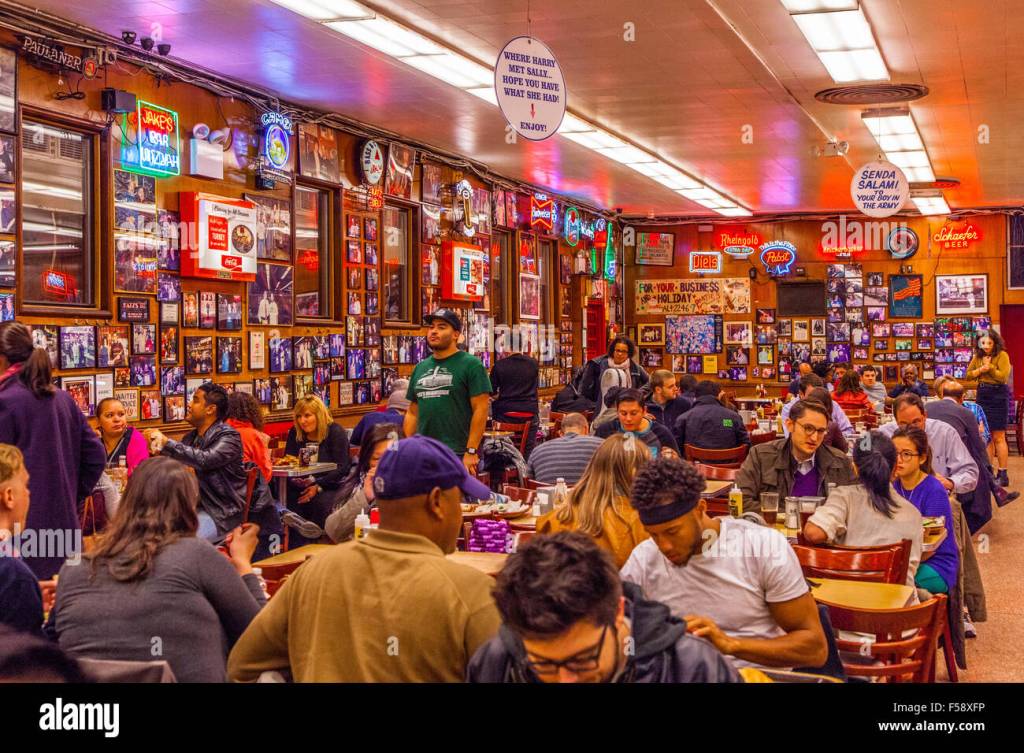
At 24D, the clue was “New York City deli name,” and the answer was KATZ. Commenter Sam P., clearly a member of the American Nitpickers Association and League (ANAL) wrote: It’s a nit but I’m going to pick it. There’s no NYC deli named KATZ. There is a Katz’s. The clue should’ve been “NYC deli eponym” or some-such.
But I agree with Anony Mouse’s response: “That’s not the only way to read the clue. I might agree if it read ‘Name of a NYC deli.’ But the most you can infer from the clue as written is that it’s a name associated with a NYC deli.”

Oriole Park at Camden Yards is a wonderful ballpark. If you haven’t caught a game there yet, what the hell are you waiting for? It opened April 6, 1992. So it was there, on 9/6/1995, that Cal Ripken Jr. broke Lou Gehrig’s consecutive-games-played streak. Gehrig had played in 2131 consecutive games, a record that held for 56 years. After breaking the streak, Ripken went on to finish with 2,632: 501 more. Astounding. Baltimore is commemorating the breaking of the streak this Saturday: it’s the 30th anniversary.
Sportswriter Ken Rosenthal was there 30 years ago, reporting for The Baltimore Sun. He was only 32 years old. He says “it was was the highlight of my career. Above the multiple Super Bowls, NBA Finals and Olympic Games I covered. And above anything else I’ve done in baseball, in print and on television.” President Clinton was there, and VP Gore. Gehrig’s teammate Joe Dimaggio came too. Ripken went 2 for 4 that night, with a homer. Baltimore beat the Angels 4-2 behind Mike Mussina.
Rosenthal goes on: “The column I ended up writing that night focused on the victory lap Ripken took around the ballpark after the game became official and the record was finally his. The Sun turned the front page into a poster that still hangs in my office. The next day’s edition was the biggest seller in the newspaper’s history. I’m confident that record, like Ripken’s, will never be broken.”

See you next time Chatterheads!
 The Wellington Files