-
Ana, V, and Ida B.
Sunday evenings, or early in the week, I often exchange Sunday Spelling Bee results with Larry, a doctor who is the husband of a colleague of mine at Hunter. He’s a hoot because he often comes up with rafts of wonderful medical words that don’t stand a chance of getting accepted. And we chit chat a bit about the week’s events. This week he mentioned that the Wordle competition between his wife and himself is heating up, and he’s concerned it may end in divorce. I’m sure he was kidding, but it made me think there should by now be some Wordle-based cartoons in the New Yorker — maybe a scene in divorce court? I gave it some thought (no more than 5 or 6 hours — I have stuff to do!), and here’s what I came up with: A guy is on the couch in his shrink’s office and he’s saying: “I thought all those notes starting with Adieu were her Wordle tries. It turns out she left me two weeks ago.”

[For those of you who do not Wordle, adieu is a very popular first try.]
Palindromic Cuban-born actress ANA DE ARMAS, 34, may be the most beautiful woman in the world. At least I wouldn’t want to be the poor slob having to argue the case against it. You may have seen her as the nurse in Knives Out in 2019, for which she received a Golden Globe nomination. She also played “Bond girl” Paloma in No Time To Die in 2021, and more recently Marilyn Monroe in Blonde. De Armas married actor Marc Clotet in 2011, but they divorced in 2013. She dated Ben Affleck from March 2020 to Jan. 2021. There is a very good chance there is no man on the planet worthy of her.

I mention Ana because she is one of seven women in today’s puzzle who form a “word ladder” with their three-letter first names. That is, you progress from each rung (name) to the next by changing one letter. Here they are:
- INA GARTEN (18A: The Food Network’s “Barefoot Contessa”)
- IDA B. WELLS (22A: Civil rights leader who co-founded the N.A.A.C.P.)
- ADA LOVELACE (29A: Mathematician regarded as the first computer programmer)
- ANA DE ARMAS (35A: Portrayer of the nurse Marta Cabrera in “Knives Out”)
- AVA DUVERNAY (47A: Director of the miniseries “When They See Us”)
- EVA MENDES (54A: “Girl in Progress” star with a line of cosmetics)
- EVE ENSLER (59A: “The Vagina Monologues” playwright)
The names are also symmetrical. I.e., each of the names in the pairs 1 and 7, 2 and 6, and 3 and 5 are the same length. For that reason, Ava Gardner could not have replaced Ava Duvernay. And four of the names are palindromes: ADA, ANA, AVA, and EVE.
Rex also noted, though it may not have been intentional on the part of the constructors, that the ladder starts with IN A GARDEN (“INA GARTEN”) and ends with EVE. On Rex’s blog he posted a very funny photo of Humphrey Bogart as Sam Spade, consoling IVA Archer on her exclusion from the puzzle.
Did you know playwright Eve Ensler changed her name to V? After publishing her book The Apology in 2019, where she described sexual and physical abuse by her late father, Ensler stated she wished to distance herself from his surname and be called by the mononym V.
After graduating from Middlebury College in 1975, she had a string of abusive relationships and became dependent on drugs and alcohol. In 1978, she married Richard Dylan McDermott, a 34-year-old bartender, who convinced her to enter rehab. When she was 23, she adopted her husband’s 16-year-old son Mark from his first marriage. Their relationship came to be a close one, and V said that it taught her “how to be a loving human being.” After V suffered a miscarriage, Mark took the name she had planned for her baby, Dylan.
V wrote The Vagina Monologues in 1996 which was first performed in the basement of the Cornelia Street Café in Greenwich Village. Subsequently, the play was translated into 48 languages and performed in over 140 countries. Celebrities who have starred in it include Jane Fonda, Whoopi Goldberg, Idina Menzel, Glenn Close, Susan Sarandon, Sandra Oh, and Oprah Winfrey.
Among her many honors, V received a Tony Award and a Guggenheim Fellowship Award, and has been named a Lion of Judah for her commitment to Jewish causes. Of course, her greatest honor is her inclusion in today’s puzzle.

Ida B. Wells was born into slavery in Mississippi on July 16, 1862 and was freed by the Emancipation Proclamation. She was one of the founders of the NAACP and was a fearless and brilliant journalist. She died in 1931, at age 69. In 2020, Wells was posthumously honored with a Pulitzer Prize special citation “for her outstanding and courageous reporting on the horrific and vicious violence against African Americans during the era of lynching.” And just last year Memphis dedicated the Ida B. Wells plaza with a life-sized statue of her. It is adjacent to the historic Beale Street Baptist Church, where Wells produced her Free Speech newspaper.

That’s as good an image as any to end on today. Happy Puzzling!
-
Crime Dog
We went to the Symphony yesterday (the New Jersey Symphony in Newark). They opened with Beethoven’s Eggplant Overture (tee hee), but the highlight was a modern piece by Aaron Jay Kernis, born 1/15/60: his Symphony No. 2 (1991).
Its theme is the horror of war — in particular modern technological war as waged in the Gulf War. If you can capture it in sound, he did. I noticed at several points that the harpist had her hands over her ears, and, later, I saw members of the string section taking earplugs out of theirs. The power of the music was provided in part by a percussion section that required four players on the following “battery:” snare drum, piccolo and high snare drum, tenor drum, small and large bass drum, medium log drum, brake drum, bongos, congas, wood blocks, reco reco, lead pipe, mounted handbells, cowbells, thunder sheet, crotales, cabasa, small and high triangles, China boy cymbal, small, medium and large cymbals, small and medium crash cymbals, ride cymbal, vibraphone, xylophone, glockenspiel, marimba, chimes, medium and large tam tams, and tom toms. (I copied that list directly off of the program notes: I didn’t make up the items such as lead pipe or cabasa (which sounds like a melon), as some of you may have thought.) Here are a cabasa and a reco reco (scraper):


Among his many awards, Kirnis won the Pulitzer Prize and Grammys. His Lament and Prayer for Orchestra (1996) commemorated the 50th anniversary of the Holocaust. At the conclusion of the performance of the Second Symphony, the conductor, Hugh Wolff, motioned to the boxes to the left of the stage. Kirnis was in attendance. The work premiered in Newark back in 1992, with Wolff conducting the NJ Symphony then as well.

[Note: The above is an example of how someone who is utterly ignorant about music (i.e., me) can write a few paragraphs on the subject.]
And, speaking of utter ignorance – welcome to the 50th post to appear on owl-chatter.com! I had absolutely no idea what it would be like when I started. And I pretty much still don’t. To my two or three readers — thanks for stopping by! Let’s take a look at today’s puzzle now.
Like me, you may have been unclear on the distinction between rabbits and hares. Well, for one thing, as the clue for 50 down states: “Unlike rabbits,” HARES’ “young are born open-eyed and hopping.” This was posted as a comment on Rex: “Rabbits nest below ground, the young are altricial, and when they run from you, they’ll run to cover and hide. Hares nest above ground, the young are precocial, and when they run they’ll just flat out run.”
Altricial means born helpless and requiring substantial parental care. Precocial means born in an advanced state and able to feed itself and move about independently almost immediately. Below is first a hare, and next a rabbit.


Delighted to see a big fat tuchas plop right down at 9D (ASS, “beast of burden”), right on top of SASS, and crossing CABOOSE! And if that’s not enough for you rear-enders, 51D is clued “Get Yer [blank] Out!” with the answer YA-YAS, the title of a Rolling Stones album. Well, one Rex comment today notes: “I wondered about the origin of ‘Get Yer Ya-Yas Out’ and it comes from a Blind Boy Fuller song where he tells someone to get out of his house or he’ll ‘throw your ya-yas’ out the door. And “ya-yas” means ASS.”
I was not able to confirm this meaning of ya-yas via Google, but so what?
The SAN ANDREAS FAULT (i.e., those words: not the thing itself) crosses the entire grid in the center. A Californian noted that it does not actually pass through the town of San Andreas, CA. Inhabitants like to say “It’s not our fault.”
The Fault runs for 750 miles and forms the boundary between tectonic plates. It runs mostly up California, but extends into Mexico too. The plates are moving in different directions which is “creating significant compressional forces,” meaning essentially “we’re f**ked.” The compression helps form mountain ranges, but also leads to earthquakes with the next one expected to hit the LA region at some indeterminate point in the future. Here’s a range rising above LA.

On the subject of devastation, there was a good New Yorker cartoon not too long ago. It had one of those gaunt, prophet-type fellows holding up his sign: The End Is Near. But we were viewing the sign reflected in the side view mirror of a car. And the sign said: The End Is Nearer Than It Appears.
Welcome to The Hall of Fame, Fred McGriff! What the hell took you so long, Crime Dog? In addition to hitting 493 home runs (the same exact amount as fellow first baseman Lou Gehrig), McGriff has the great nickname “Crime Dog,” from commercials featuring a crime-preventing cartoon dog named McGruff. From ’88 through ’97, McGriff hit the most home runs in major league baseball, if you don’t count the steroid-inflated numbers of Bonds and McGwire.

When I first started collecting baseball autographs in high school my goal was to obtain as many Hall of Famers as I could. So I try to add new members to my collection unless the cost would be prohibitive (e.g., Jeter and Mariano Rivera). McGriff’s was a gaping hole in my collection, which I remedied by picking one up on eBay this morning for not too unreasonable an amount. I look forward to passing the collection on to my grandchildren one day, none of whom is likely to have the slightest interest in it.

The James Lipton book on the venery of animals came in (i.e., what groups of animals are called): An Exaltation of Larks (the ultimate edition, with over 1,000 terms). In the intro, Lipton admits he is not the first to undertake the task, and he quotes this passage from Arthur Conan Doyle, from his non-Holmesian writing.
Answer me now, lad, how would you say if you saw ten badgers in the forest?
A cete of badgers, fair sir.
Good, Nigel — good, by my faith! And if you walk in Woolmer Forest and see a swarm of foxes, how would you call it?
A skulk of foxes.
And if they lions?
Nay, fair sir, I am not like to meet several lions in Woolmer Forest.
Ay, lad, but there are other forests besides Woolmer, and other lands besides England, and who can tell how far afield such a knight errant as Nigel of Tilford may go, when he sees worship to be won? We will say that you were in the deserts of Nubia, and that afterward at the court of the great Sultan you wished to say that you had seen several lions. How then would you say it?
Surely, fair sir, I would be content to say that I had seen a number of lions, if indeed I could say aught after so wondrous an adventure.
Nay, Nigel, a huntsman would have said that he had seen a pride of lions, and so proved that he knew the language of the chase. Now, had it been boars instead of lions?
One says a singular of boars.
And if they be swine?
Surely, it is a herd of swine.
Nay, nay, lad, it is indeed sad to see how little you know. No man of gentle birth would speak of a herd of swine; that is the peasant speech. If you drive them it is a herd. If you hunt them it is other. Can you tell us, Mary?
Surely, sweet sir, one talks of a sounder of swine.
The old Knight laughed exultantly. Here is a pupil who never brings me shame! Hark ye! only last week that jack-fool, the young Lord of Brocas, was here talking of having seen a covey of pheasants in the wood. One such speech would have been the ruin of a young squire at the court. How would you have said it, Nigel?
Surely, fair sir, it should be a nye of pheasants.
Good, Nigel — a nye of pheasants, even as it is a gaggle of geese or a badling of ducks, a fall of woodcock or a wisp of snipe. But a covey of pheasants! What sort of talk is that?
Apparently, we have a shitload of work ahead of us. That’s enough for today though.
-
Your Motto
Here’s some owl chatter from today’s Met Diary in the NYT:
My husband and I were on West 81st Street on an unseasonably warm fall evening. A group of us were gathered in front of the Excelsior Hotel around a very small owl that was looking up from the sidewalk with otherworldly eyes.
One man told people to avoid stepping on the owl while a woman redirected those who approached with dogs. It appeared to be a baby, though it didn’t have any baby fluff. Its tiny feathers were sleek and mature. Surely it was injured and unable to fly.
We all had our phones out, taking pictures of the bird and searching the internet for bird rescue groups. Finally, someone reached a rescue center operator and was told to bring the owl to an office on the East Side, where it would receive proper care.
“I have a box in my apartment,” one man said.
“No,” said someone else, “I think I have a bag you can use.”
The sense of camaraderie was palpable.
“I am used to handling wild animals,” said an elegantly dressed older woman who was wearing gloves despite the warmth of the evening.
She bent down to pick up the owl, which appeared calm and quite interested in the group that had gathered. It turned its head freely to take us all in.
As the woman reached for the owl, it squawked loudly, spread its small wings and flew into the nearest tree.
A spontaneous cheer erupted as we ran to the tree to make sure our little friend really was OK. By the time we got there, it had flown into the night.
— Melaney Mashburn

Lloyd Carr is featured in Maureen Dowd’s column today. He was Michigan’s head football coach when Sam was a student there. The story is about the death of Carr’s 5-year-old grandson Chad from a brain tumor: diffuse intrinsic pontine glioma (DIPG). Carr and Dowd became friends and kept in touch regularly until Carr fell silent from his loss. She says, “I found out that this man, so full of verve and life, had gone into a miasma of grief.”
“My entire life, from the time I was a kid, I hated losing,” Carr said when I (Dowd) called him Thursday. “As a player and as a coach, anytime we lost, it was a heartbreaking loss for me, in my eyes. I thought I knew what heartbreaking was, but I didn’t. Chad’s experience taught me. I know now.”
Carr was a great coach. Urban Meyer won the national championship at Florida with Tim Tebow in 2006 and 2008. But in 2007 Michigan and Carr beat them in the Capital One Bowl. Carr’s overall record at UMich was 122- 40, and he won the national title with them in 1997, the last time they won.
I saw Carr up close at a UMich women’s basketball game a few years ago. He was retired and saying hi to some friends in the crowd. He looked good.

Today’s puzzle has the following clue at 82 across: “[Blank] Questionnaire, character assessment that might ask ‘What is your idea of perfect happiness?’”
“Sacre blue!” (from right above it at 76A) — the answer turned out to be PROUST Questionnaire. Have you heard of it? I hadn’t. It’s a list of questions felt to determine your character. Proust did not devise it, but he answered the questions and the questionnaire became associated with him.
Proust answered the questions in a confession album –a form of parlor game popular among Victorians. The album was found in 1924, and published in the French literary journal Les Cahiers du Mois. It was auctioned on May 27, 2003 for roughly $114,000.
Other historical figures who have answered confession albums are Oscar Wilde, Karl Marx, Arthur Conan Doyle, and Paul Cezanne. A similar questionnaire is regularly seen on the back page of Vanity Fair magazine, answered by various celebrities. In October 2009, Vanity Fair launched an interactive version of it, that compares individual answers to those of various luminaries.
Among Proust’s answers, for favorite qualities in a man he wrote “intelligence, moral sense,” and for a woman he wrote “gentleness, naturalness, intelligence.” For favorite color, he wrote “I like them all,” and “the beauty is not in the colors, but in their harmony.”
There are various versions of the questionnaire. Here are the thirty-five questions Proust originally answered in 1890. Feel free to skip one or two.
- What is your idea of perfect happiness?
- What is your greatest fear?
- What is the trait you most deplore in yourself?
- What is the trait you most deplore in others?
- Which living person do you most admire?
- What is your greatest extravagance?
- What is your current state of mind?
- What do you consider the most overrated virtue?
- On what occasion do you lie?
- What do you most dislike about your appearance?
- Which living person do you most despise?
- What is the quality you most like in a man?
- What is the quality you most like in a woman?
- Which words or phrases do you most overuse?
- What or who is the greatest love of your life?
- When and where were you happiest?
- Which talent would you most like to have?
- If you could change one thing about yourself, what would it be?
- What do you consider your greatest achievement?
- If you were to die and come back as a person or a thing, what would it be?
- Where would you most like to live?
- What is your most treasured possession?
- What do you regard as the lowest depth of misery?
- What is your favorite occupation?
- What is your most marked characteristic?
- What do you most value in your friends?
- Who are your favorite writers?
- Who is your hero of fiction?
- Which historical figure do you most identify with?
- Who are your heroes in real life?
- What are your favorite names?
- What is it that you most dislike?
- What is your greatest regret?
- How would you like to die?
- What is your motto?
Here’s a shot of Proust, right before he chomped down on that fateful cookie.

That last question — “What is your motto?” — figured in Al Pacino’s speech in Scent of a Woman, as he defends Charlie who was going to be expelled from his fancy prep school for refusing to rat out his friends. The headmaster says he is recommending that Charlie (Mr. Simms) be expelled, but he gives him one more chance to speak up. Pacino says:
“Mr. Simms doesn’t want it. He doesn’t need to be labeled ‘still worthy of being a Baird man.’ What the hell is that? What is your motto here? — Boys, inform on your friends, save your hide, anything short of that we’ll burn you at the stake? Well, gentlemen, when the shit hits the fan, some guys run and some guys stay. Here’s Charlie facing the fire, and there’s George: hiding in big daddy’s pocket. And what are you doing? — you’re going to reward George, and destroy Charlie.”
“Are you done, Mr. Slade?”
“No, I’m just getting warmed up.”

I had trouble with the puzzle — came down with a DNF (did not finish). I don’t know Andy SERKIS, clued as the voice of Gollum in Lord of the Rings (duh), and I’m not familiar with the SHAKA SIGN — the “hang loose” hand gesture. So I blanked on where the K’s cross. It’s a gesture with friendly intent associated with Hawaii and surf culture.

And here’s from commenter Pete: Fun fact about Andy Serkis – when he and Lorraine Ashbourne eloped in 2002, her parents disowned and disavowed her. I can understand, as who wants a daughter who ran away with the Serkis?
Here’s Andy:

“Defense of a history paper?” was the clue for FORTRESS, and it puzzled me for a while. It’s a history paper that contains a discussion of a fortress as a type of military defense. It’s not that the fortress is defending the paper.
Not too many folks were invited to the grid today. Channing TATUM popped by. And for those of you who might accuse me of only featuring hot babes, here’s a hot shot of CT. I haven’t seen any of his films. He was born in Cullman, Alabama, on 4/26/80. His mom was an airline worker and his dad was in construction. Channing’s pretty well-built himself. Ba da boom!

Funnyman Jay Leno dropped by too. Here’s a quick trio of his: The crime problem in NY is really getting serious — the other day the Statue of Liberty had both hands up. I went into a McDonald’s yesterday and said “I’d like some fries.” The girl behind the counter said, “Would you like some fries with that?” At Sharper Image, I saw a “body fat analyzer.” Didn’t that used to be called a mirror?

How about the artist EL GRECO? For one thing, he wasn’t insulted if you called him a Cretan. The clue read: “Cretan-born painter who was a leader of the Spanish Renaissance.” In fact, he normally signed his paintings with his full birth name in Greek letters, Δομήνικος Θεοτοκόπουλος (Domḗnikos Theotokópoulos), often adding the word Κρής (Krḗs), which means Cretan. Here’s some work of his:

All Hail the 2022 Big Ten Champs: the Wolverines! Purdue put up a good fight. We were only up by one point at the half. But all’s well that ends well. TCU is next, on New Year’s Eve. Dare we dream of a national title?

-
Mash-up
Gaylord Perry was named after a close friend of his father’s who died while having his teeth pulled. Think of that the next time you’re in the chair. And if you need small talk: “Hey Doc — did you know . . . . ?”
Perry himself, the Hall of Fame pitcher, died last Thursday, nondentally, at age 84. His daughter Allison said he caught Covid last year and never fully recovered. He and his brother Jim combined to win 529 games, only ten behind the leading brother-team of Phil and Joe Niekro. Perry’s career spanned 22 years and he played for eight teams, including the Yanks for part of the 1980 season. He went 4-4 with the Yanks. He played longest for the Giants, his first team, and is wearing their cap on his HOF plaque. He’s with the Mariners towards the end of his career at 44 pictured below on an autographed card from my collection.
Perry was famed for throwing “spitters” which are illegal, but he was only thrown out of a game once for doing so, and that came after more than 20 years on the mound. Gene Tenace, his catcher when he was with the Padres, said he sometimes couldn’t throw the ball back to Perry: it was so greasy it slipped out of his hand. He’d walk it back to the mound on those occasions. Reggie Jackson was once so infuriated by striking out on a Perry spitter that he hurled a bucket of Gatorade onto the field and told the ump Perry could use that on the ball. Jackson was tossed from the game; not Perry. Bobby Murcer, similarly infuriated, excoriated the Commissioner and the American League office for “lacking the guts” to apply the rules, and he was fined $250 for his outburst. Shortly thereafter Murcer hit a home run off of Perry, and remarked to the press: “I got hold of a hanging spitter.”
Two days after his 30th birthday, Perry threw a no-hitter for the Giants beating the Cards and Bob Gibson 1-0. The next day Ray Washburn of the Cards no-hit the Giants. It was the only time in the history of baseball that no-hitters were pitched on consecutive days in a series.
Perry was a terrible hitter, and in 1963 his manager Alvin Dark jokingly said there would be a man on the moon before Perry hit a home run. On July 20, 1969, just an hour after Neil Armstrong and Buzz Aldrin landed on the moon, Perry hit the first home run of his career.
He won the Cy Young award twice, and was the first pitcher to do so in both leagues: in ’72 with Cleveland and in ’78 with San Diego, at age 40. He won 314 games with a lifetime ERA of 3.11 and had 3,534 strikeouts. He never played in the World Series and was in the post-season only once, in 1971 for the Giants against Pittsburgh, and he went 1-1 in the series.
The spitball was first outlawed by baseball in 1920, more than 40 years before Perry’s debut. When it was first introduced, several designated pitchers who were accustomed to doctoring the ball were allowed to continue to do so until they retired.
When his daughter Allison was just 5 years old, a reporter asked her if her dad threw spitballs. “It’s a hard slider,” she replied.

Here are some follow-up comments from Rex’s blog about ketchup and its flow (see my previous post). “Thixotropic,” a new word for me, means capable of liquifying when agitated and re-solidifying when standing still.
“While I’m being pedantic, and since were having a ketchup discussion, ketchup behaves the way it does because it’s thixotropic. I have to bring this up whenever I can because opportunities are limited.”
And later:
“Proudly thixotropic here. Plopped down and blob-like in my favorite easy chair, I can barely move. Occasionally I become less viscous out of necessity, usually when a sandwich is located across the room in the refrigerator.”
Yesterday’s puzzle started right out with a splash. Or, actually, a mash. One across was clued as “1962 #1 hit that the BBC once deemed ‘too morbid’ to play.” MONSTER MASH.
Monster Mash came out as a single in August of 1962 and, fittingly, rose to #1 on Billboard’s hit list in the week preceding Halloween that year. It’s still seasonally popular, and made it onto the list at #37 in 2021. It’s by Bobby “Boris” Pickett and started out by him fooling around with a Boris Karloff imitation with his band. He composed it with a band-mate (Leonard Capizzi) and recorded it with a group of musicians including Leon Russell on piano. The song is featured in a Simpsons episode (what isn’t?), when radio presenter Marty accidentally played it for Valentine’s Day. Here are some of the lyrics:
From my laboratory in the castle east
To the master bedroom where the vampires feast
The ghouls all came from their humble abodes
To get a jolt from my electrodes
“Inclination to prioritize new events over historical ones,” is RECENCY BIAS (58A). It’s a cognitive bias that favors recent events over historic ones; a memory bias. Recency bias gives “greater importance to the most recent event,” such as the final lawyer’s closing argument a jury hears before being dismissed to deliberate. It is not to be confused with “recency illusion,” the belief or impression that a word or language usage is of recent origin when in reality it is long-established.
Recency bias can skew investors into not accurately evaluating economic cycles, causing them to continue to remain invested in a bull market even when they should grow cautious, and refrain from buying assets in a bear market because they remain pessimistic. Lists of superlatives such as “Top 10 Superbowls,” are prone to distortion due to recency bias.
TASHA Smith popped by. You may have seen her in “Why Did I Get Married”? (I didn’t; nor am I raising the question, darling!) Love the hair, Tash!

Speaking of hair, a good clue was “Ones long in the tooth?,” and the answer was AFRO PICKS.
And MAE Jemison stopped in, now that she is back on the planet. She was the first Black woman in space!

She can hang with supermodel TYRA Banks, who we are told at 56 down “coined the term ‘smizing,’” which means “smiling with your eyes.” Great new word for the Covid era. Way to go, TB! Here’s a nice example of smizing.

I was at a doc’s office last year and the nurse was taking my vitals (after assuring me she’d give them back when she was done with them). She asked me to take off my mask so she could take my temperature, and when I did so she recoiled in surprise. “Wow — I wasn’t expecting that moustache,” she explained. I smized.
Today’s puzzle. Remember AVA Gardner? Despite her puzzle-friendly name, I don’t recall seeing her in a while. She was born in Grabtown (not kidding), NC on 12/24/22, and died 32 years ago at age 67. She was nominated for a Best Actress Oscar for Mogambo in 1953. In 1999, the American Film Institute ranked her #25 on their greatest female screen legends of classic American cinema list (Katherine Hepburn is #1).

It was a fun puzzle. “Quite the reverse,” was the clue for SWITCHEROO, and HEE HEE (“Couple of laughs?”) was right on top of JOLLITY (“good cheer”). At 47D, Bette Midler and Miss Piggy shared the clue for DIVA. And pretty Katherine Ross popped by, clued for her role so long ago in The Graduate. Quite a collection of ladies today, assembled by our constructor, Kate Hawkins.


25A was a four-letter answer that I needed every crossing letter to get. The clue was “Brain-tingly feeling that may come from hearing whispering or crinkling, in brief,” and the answer was ASMR, which stands for Autonomous Sensory Meridian Response. It’s a tingling sensation that usually begins on the scalp and moves down the back of the neck and upper spine. It signifies low grade euphoria. Whispering and crinkling sounds are included among ASMR triggers. Many ASMR-inducing videos are available on YouTube. Here’s a comment:
“Many, many years ago in a guided meditation class, I noticed that the leader’s soft, soothing voice caused tingles up my spine. I never forgot the sensation. Same sort of feeling as when someone gently plays with or brushes your hair. Fast forward to the present, when I realized there’s a name for that tingling sensation: ASMR. Not everyone gets it. Check out the YouTube videos sometime. Everyone’s triggers are different, but when you figure out what yours are, the right videos can be wonderfully relaxing and sleep-inducing.”
OK, but keep your creepy fingers out of my hair.
For “Empty bottles?” the answer was TOPE, which means “to drink alcohol to excess.” Commenter Conrad shared this:
Unaware of the wiles of the snake in the grass
Or the fate of the maiden who TOPEs,
She lowered her standards by raising her glass,
Her courage, her eyes, and his hopes.
— Flanders & Swann, “Madeira M’Dear”
Michigan aims for the Big Ten Football title tonight against Purdue. Slightly worried about a let-down after the big Ohio State stomping. Sorry to see the USA men bow out of the World Cup. The Dutch were too good. How they even move in those silly wooden shoes is pretty impressive.

-
Designing Woman
A special welcome to new friend Bogie — woof woof! No one can ever replace Susie, but we love you little guy! Nor says Bogie really loves taking walks. What a sweetheart! (Hi Norrie!)

If you read yesterday’s post, please do not confuse the horse with no name with the horse with a clock in its stomach from The Honeymooners. As you may recall, Ralph won the horse with a clock in its stomach in a pinball contest at a local pizza shop but failed to include it in his gross income, under Internal Revenue Code Section 61. It was worth $15. He thought this was the reason he was called in by the IRS. Norton went with him to the meeting — what are friends for? — and when the revenue agent mistook him for Ralph, Norton said: “He’s Kramden. I’m clean.” It turned out Ralph just forgot to sign his return, but he fessed up about the horse with a clock in its stomach, and the agent lauded him for being a good citizen.

Yesterday’s theme was things that can be referred to via the letter K, but don’t start with a K. So from baseball there was the STRIKE OUT. And, “in a salary listing,” THOUSAND. From the periodic table: POTASSIUM, which someone noted has a big tuchas in the center. And, finally, “on a printer cartridge,” BLACK INK.
I wasn’t aware of that last one, but one commenter said: Having worked in publication design for years, I’m super familiar with the print color model CMYK (cyan, magenta, yellow, and black), the basis for almost all color printing for over a century. The reason K stands for black (and not B) is so as not to confuse it with B for blue, which later was used in the RGB (red, green, and blue) color model used in color TVs and monitors. [Note: RGB, in this context, does not refer to the late Supreme Court Justice Ruth Gader Binsburg.]
But later this appeared: I don’t want to be “that guy,” but the black is abbreviated K in CMYK because it stands for “Key,” not to avoid confusion with the B in Blue. In old printing presses, the black plate was the “key plate” that was used to align all three colors, so the inks were always identified as CMYK for this reason.
Okay. Thanks!
In yesterday’s puzzle, 7 down was clued as “Baseball’s Felipe, Matty, Jesus or Moises,” and the answer was ALOU. But one commenter noted they left out Bob Alou. And another said, don’t forget about Cal Alou, the chef who specialized in Caribbean food. Or Boog Alou. Or the liveliest of the bunch: Skip Tom Alou. Quite a family. Here’s an autographed card of Moises Alou from my collection:
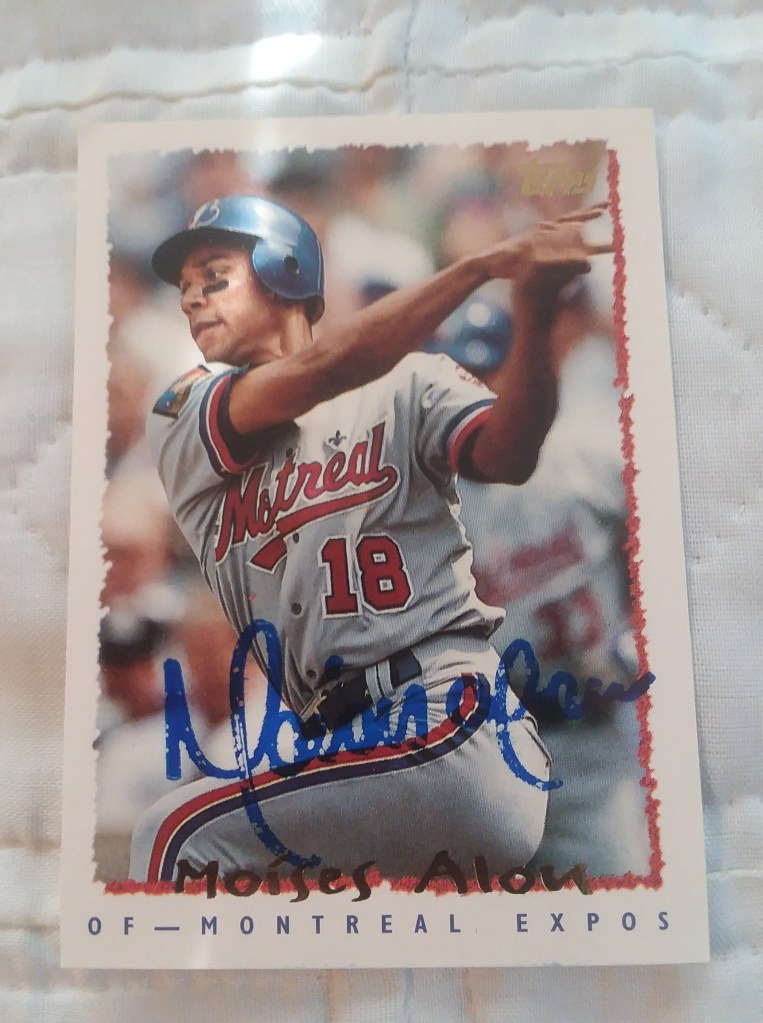
Moises had a heckuva career, with a lifetime batting average of .303 with 2,134 hits, 421 doubles, 332 home runs, and 1,287 runs batted in. Alou is one of the few baseball players who batted without the use of batting gloves. Instead, Moisés revealed that during the baseball season, he’d urinate on his hands to toughen them up. So that’s what he was doing in the outfield! TMI!
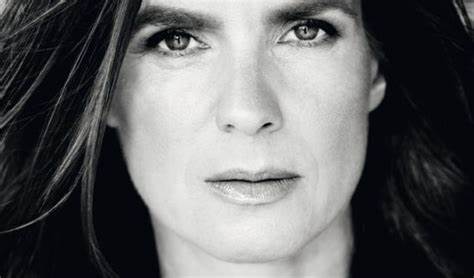
Let’s skate to something more pleasant to round out yesterday’s grid: the lovely Katerina WITT, Olympic figure skating champion, who glided in late, at 60 across. So we start with a dog and end with a Kat.
“Witt’s taste in figure-skating costumes sometimes caused debate. At the 1983 European Championships, she skated her Mozart short program in knee breeches instead of a skirt. Her blue, skirtless feather-trimmed 1988 costume for a showgirl-themed short program was considered too theatrical and sexy, and led to a change in the ISU regulations dubbed the ‘Katarina rule’ which required female skaters to wear more modest clothing; skirts were required to cover the [important parts]. In 1994, skating a Robin Hood-themed program, Witt stated, ‘I wore the Robin Hood – like a man’s costume – because I didn’t want to be accused of seducing the judges this time.’”
Today’s puzzle was all about ANTICI . . . PATION. The first part (ANTICI) was the first across answer, and the second part (PATION) was the last across answer. In between, there was ALMOST THERE, WAIT FOR IT, and NOT QUITE YET.
Commenter Wanderlust noted:
“The theme made me think of the Carly Simon song, of course (written while she was waiting for Cat Stevens to show up for a date, I believe). The ketchup ad with the Carly song is an interesting case of an advertiser emphasizing a flaw in its product. All of us oldsters remember turning the glass bottle upside down, pounding on the base and waiting excruciatingly long for that first ooze of red. The spoiled kids today with their plastic squeeze bottles! They had no idea of the living hell we went through before we could eat the burger! And get off my lawn! “
A later note added the following:
“As for ketchup bottles, I think the modern trend of putting the labels on them upside down to encourage you to stand them on their heads is undermining the moral fiber of our society.”

“Residents of the Sagebrush State” was NEVADANS. When we took our Grand Canyon trip many years ago, I learned that I was mispronouncing “Nevada.” I said the middle syllable like the “a” in “dad.” But the locals pronounce it “ah.” After learning this, I started pronouncing it correctly. But Caity continued to pronounce it with the “a” from “dad.” I said, “Caity, we just learned that the people who live here pronounce it the other way,” and she said “But I don’t live here.”
The clue for 48D was “Joe-[blank] weed,” and I had no idea what it was. It turned out to be Joe-PYE weed, and here’s a comment on it:
“Eupatorium purpureum, or Joe-pye weed as most people know it, is far from an unwanted weed to me. This attractive plant produces pale pink-purple flowers that last from midsummer through fall. It’s a great addition to nearly any garden and a must have for wildlife lovers, attracting a multitude of butterflies with its sweet nectar. Growing Joe-pye weed flowers is a wonderful way to bring a little bit of nature to your backyard. What are Joe-Pye Weed Flowers? They were named after a New England man who used the plant medicinally for helping people with typhus fever. In addition to its medicinal properties, both the flowers and seeds have been used in producing pink or red dye for textiles.”

Mollusks made up a mini-theme. First there was NACRE (“Source of iridescence in many mollusks”), and then CONCHS (“Mollusks with iridescence not created by nacre”). Conch can be pronounced either conk or conch. So if you’ve run out of them you can say you’ve “conked out.”

Fashion designer ANNA SUI visited today. Here’s what Wikipedia says about her:
“She was named one of the ‘Top 5 Fashion Icons of the Decade,’ and in 2009 earned the Geoffrey Beene Lifetime Achievement Award from the Council of Fashion Designers of America (CFDA), joining the ranks of Yves Saint Laurent, Giorgio Armani, Ralph Lauren, and Diane von Furstenberg.”
Not too shabby. Here’s one of her outfits on one of my tax students, followed by Anna herself.


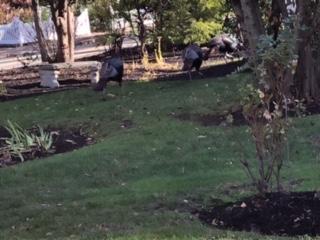
Last, a special shout-out to Don up in Newton MA who reported on turkey sightings in light of the Jill Lepore article from a few days ago. Here’s Don’s report:
“We saw turkeys in a neighbor’s yard on our daily walk this morning. (Proof attached below.) We see turkeys in our neighborhood very often. Sometimes as many as 20 together. They’ve wandered through our yard many times. And they frequently stop traffic on Walnut Street for 10 minutes or so as a dozen or more cross the street. We’ve also seen them on the Cape.”
Thanks, Don!
OK everybody — thanks for stopping by. Happy puzzling!
-
Kestrels and Condors
Eleven down in today’s New Yorker puzzle by Wyna Liu is the best clue/answer I’ve seen in weeks. The clue was “Unfortunate first base choice.” (9 letters) The answer: BAD KISSER. Get it? Think dating — “getting to first base.”
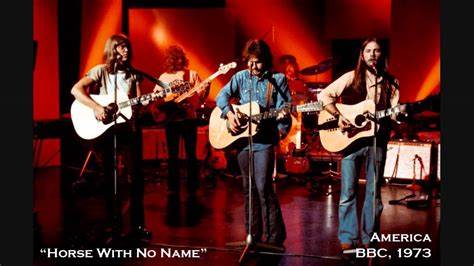
But in the NYTXW, 10 down today unleashed a torrent of comments, including a rare posting by yours truly on Rex’s blog. The clue was “Desert wanderer’s mount in a 1972 hit by America.” (15 letters) Maybe this lyric will help:
After two days in the desert sun
My skin began to turn redStill no?
Ok, it was HORSE WITH NO NAME. (Of course!)
It unleashed a raging battle among the commentariat between the camp that thought it was one of the most ridiculous idiotic songs of all time, and the camp that found artisitic merit in it. It was a very big hit, but I have to say, I belong to the former. Here are some of the lyrics:
On the first part of the journey
I was lookin’ at all the life
There were plants and birds and rocks and things
There was sand and hills and rings
The first thing I met was a fly with a buzz
And the sky with no clouds
The heat was hot and the ground was dry
But the air was full of soundI’ve been through the desert on a horse with no name
It felt good to be out of the rain
In the desert, you can remember your name
‘Cause there ain’t no one for to give you no painOK, let’s take a look at it: “There were plants and birds and rocks and things.” Things? Things? That’s the best you can come up with? Leonard Cohen would agonize for weeks over a single word. How long do you think “things” took?
And then, “sand and hills and rings.” What rings are in the desert? The rings are only there because they rhyme with things — admit it.
A fly with a buzz? A fly with a buzz? Seriously?
The heat was hot. — Hard to mount a case against that one.
And, finally, you are able to remember what your name is because “there ain’t no one for to give you no pain.”
Maybe it’s me, but the genius part is eluding me.
Here’s what I posted on Rex’s blog:
Did the horse know that it had no name? Did it wonder why it was never summoned? Or was it summoned with “Hey You,” or “Hey you, horse?”
Did it have a name in the past, so you could refer to it as “the horse with no name, formerly known as Rusty,” like we had to do with Prince?
Could it be identified via its parents – “Horse with no name, son of Fleet of Foot and Bushy Tail?”
Or was it referred to as “Horse With No Name,” so that, paradoxically, that became its name?
[I got two positive responses! — made my day.]
But the puzzle was all about birds, not horses. And birds with names. You know the expression “Birds of a feather flock together?” Well, BIRDS was up in the NW corner at 1D, and FLOCK was in the SE corner at 51D. And FEATHER ran across dead center, and each letter of FEATHER — all seven — was part of a different bird. I’ll get pictures of each one for you as I share them.
The F was for FALCON. (“Its peregrine variety is the world’s fastest avian.”)
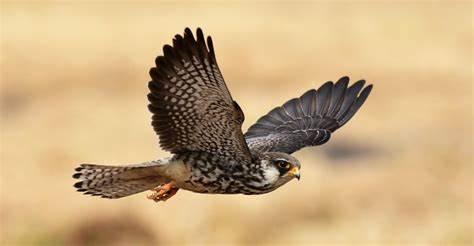
The E was the E in WREN. (“Small brown passerine that holds its tail upright.”)

The A was from RHEA. (“Ratite featured on Uruguayan currency.”) (Peru too. See below.)
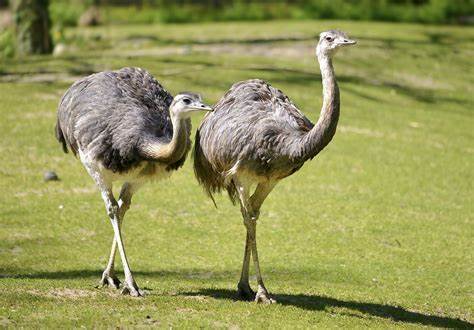
The T was in KESTREL. (“American raptor that’s the size of a mourning dove.”)

The H was for HAWK. (“Iconic metaphor for keen-eyed watchfulness.”)
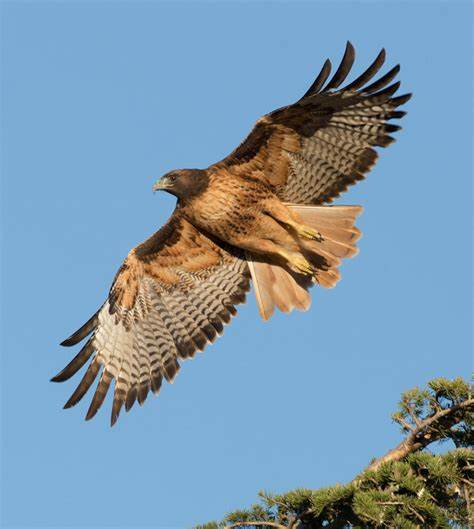
The E was from NENE. (“Goose that might nest on volcanic ash.”)

Finally, the R was the R in CONDOR. (“Its Andean variety has the largest wingspan among all raptors.”) I had no idea it was so ugly.

And the constructor, David Rockow, wasn’t done. Pigeons and finches were mentioned in other clues. Even a long down answer: COOL AS A CUCUMBER had a feather-related clue: “unruffled.”
Here’s a RHEA on a coin from Peru:

Enough.
How about this? For those of you who don’t believe in the power of puzzles, 55 across on Tuesday predicted the score of the USA victory over Iran before the match even started: ONE NIL! Eerie.
Monday’s puzzle reminded me of an old Carl Zack story (Hi Carl!) Carl was a hospital administrator for many years up in Somerville, MA, and he told us about one poor fellow who went in for stomach surgery but due to a dreadful mixup, had a leg amputated instead. OMG! I said, “Carl, what happened when he woke up and found out?” Carl said, “He was hopping mad.”
That was the theme of Monday’s puzzle: HOPPING MAD. Different terms for being mad “hopped” over a black square. So, e.g., we had SHEBANG [black square] RYE SEED, and the ANG hopped over the black square and joined the RY to form ANGRY. Kind of neat — didn’t tickle me as much as the birds. But it did conjure up the Carl story, so I can’t complain (much).
Monday’s puzzle also sizzled with a GHOST CHILI — “Pepper measuring over 1 million on the Scoville scale.”
Here’s what a commenter had to share: “The Ghost Chili isn’t the hottest chili pepper on the Scoville Scale. That would be the Carolina Reaper, coming in at about twice the heat of the Ghost Chili. The absolute hottest of the super hot peppers, though, is literally off the Scoville chart. It’s the Guatemalan Insanity Pepper, a.k.a. the Merciless Pepper of Quetzalacatenango.
“This mind altering pepper was featured in an episode of The Simpsons. Homer ate several at a CHILI Cook-Off and began to hallucinate that he was wandering in the desert where he met a coyote who claimed to be his spirit guide.” (Note: This was a different desert from the one with the horse, above.)
Someone else added: “From New Mexico, ‘the Chile Capital of the World:’ Yes, that phrase is actually on our license plates. The answer should be “ghost CHILE.” CHILE with an ‘e’ at the end denotes the pepper; CHILI with an ‘i’ is for the dish made with the peppers. Your spelling lesson for today!”
Wikipedia says that Scoville measurements are now calculated by chromatography but, amazingly, were subjective before 2011:
“The Scoville scale is a measurement of the pungency (spiciness or ‘heat’) of chili peppers, as recorded in Scoville heat units (SHU), based on the concentration of capsaicinoids, among which capsaicin is the predominant component. The scale is named after its creator, American pharmacist Wilbur Scoville, whose 1912 method is known as the Scoville organoleptic test. The Scoville organoleptic test is a subjective assessment derived from the capsaicinoid sensitivity by people experienced with eating hot chilis.
“An alternative method, the high-performance liquid chromatography (HPLC) can be used to analytically quantify the capsaicinoid content as an indicator of pungency. As of 2011, the subjective organoleptic test has been largely superseded by analytical methods such as HPLC.”
Here are some ghost chilis. Look away if you’re sensitive.

And here’s a Guatemalan Insanity Pepper.

Thanks for visiting!
-
Marisa
All hail the mighty Wolverines! We were out in Michigan visiting Sam et al. to watch the ‘Rines (on TV) dismantle and destroy the hateful Buckeyes, who revealed their true nature with a series of dirty plays, as well as repeated defensive breakdowns. Ohio State was the heavy favorite and playing at home. Michigan was without its star running back, Heisman candidate, Blake Corum. But it was a wipeout at 45-23. Sam was especially tickled at one point when the announcers said “The Buckeyes really need a stop here,” and on the very next play Edwards broke free for a 75-yard touchdown run. Bravo J.J. McCarthy, Donovan Edwards, Cornelius Johnson and all of our heroes! On to Indianapolis for the Big Ten crown!

Who doesn’t love Marisa Tomei? She was born in Brooklyn and will be 58 next week. (Ouch!) Great to see you in Friday’s puzzle, MT!
When she won an Oscar for Best Supporting Actress in “My Cousin Vinny,” Tomei prevailed over Miranda Richardson, Joan Plowright, Vanessa Redgrave, and Judy Davis. That was 30 years ago. Critic Rex Reed created a controversy when he suggested that Jack Palance announced the wrong name after opening the envelope. While this allegation was repeatedly disproved —even the Academy officially denied it —Tomei called the story “extremely hurtful.” WTF Reed!!??

You must have something going for you to make it into the puzzle. And having 75% of the letters in your name be vowels doesn’t hurt. ADIA Victoria has described her music as “gothic blues.” Her style has been called blues, folk, Southern Gothic, indie rock, blues rock, gothic country, gothic folk, Jewish gothic, swamp blues, garage punk, punk blues, and soul music. (Alright, I made up Jewish gothic, but all the rest is true.)
Victoria is 36 and from South Carolina. Her first single (2016) was “Stuck In the South,” described on NPR’s All Things Considered as a “very swampy mysterious kind of slow-burning song.” Her live performances are described as “furious and feral.” In August 2021, Victoria released “Magnolia Blues” as the lead single from her album “A Southern Gothic.” Rolling Stone described it as “an eerie, acoustic-guitar-driven tune that expands to thick bass and a ghostly orchestra of strings and banjo.” You can check it out here: https://youtu.be/sVlQPpQ3xlY

For the clue “London has a ‘Royal’ one,” the answer was OPERA HOUSE. The Royal Opera House lost 60% of its income as a result the COVID-19 pandemic. As a consequence, the 1971 “Portrait of Sir David Webster” by David Hockney, which had hung in the opera house for several decades, was put up for auction at Christie’s and sold for £12.8 million. At the same time, the string section of the Royal Orchestra starting taking in laundry. Every farthing helps. [Note: the farthing was withdrawn as a monetary unit in 1961. It was worth 1/4 of an old penny.]
For the clue “Unfailingly loyal,” the answer was RIDE OR DIE. That expression is new to me. The concept of “ride or die” emerged in 1990s hip-hop as a modern, urban take on Bonnie and Clyde. The term appears in early 2000s rap music, notably in a 2000 song by The Lox (not kidding). “Ride or die” originally referred specifically to a Black woman, called a “ride or die chick,” who is willing to ride with, or support, a man living a criminal lifestyle no matter what, even if it means death. It jumped into the mainstream lexicon as an expression for any friend, family member, or romantic partner, regardless of gender, who will always stick by your side—who will ride or die with you to the end.

Here’s a clue worthy of a Saturday puzzle: “Key piece of an overlock sewing machine.” Clues like that are sometimes referred to as WOEs, which I think stands for “what on earth?”
Hands up if you filled in LOOPER. Loopers are used to produce thread loops that extend from the needle thread to the fabric’s edges, enclosing the fabric’s edges within the seam. You might want to write down this important tip: If the upper looper thread breaks during sewing, this may be caused by the lower looper thread getting caught on the upper looper. If this happens, lower the upper looper, remove the lower looper thread from the upper looper, and re-thread the upper looper from at least the tension disc. (At least!)

On Saturday, “Paulo who wrote ‘The Alchemist’” was Paulo COELHO, 75, a Brazilian novelist. His parents committed him to a mental institution from which he escaped three times, until his release at age 20. While trying to overcome his procrastination about launching his writing career, Coelho decided, “If I see a white feather today, that is a sign that God is giving me that I have to write.” Seeing one in the window of a shop, he began writing that day. “The Alchemist,” a fantasy/quest tale, became an international bestseller, and, overall, Coelho’s books have sold 320 million copies. In 2016, he was contacted by Kobe Bryant (alav hashalom) to discuss a children’s book project with him. They started to write the book together, but Coelho abandoned the project when Bryant died.

Happy puzzling, everybody!
-
Horseradish
Broadcasting from the lovely Rodeway Inn on the outskirts of Historic (sorta) Brookville, PA, Thanksgiving night. Halfway between NJ and Michigan, on the way to visit Sam, Sarah, Morris, and (for the owls) Worthington. Outstanding holiday dinner comprised of Ma Po Tofu and Shrimp in Black Bean Sauce from Chatham’s Garden Rice, reheated in the in-room microwave. Ice cold ale. Perfect.
If it’s not too late, consider this cranberry sauce recipe from a Rex comment:
Ingredients:
- One can of Ocean Spray cranberry sauce
- A can opener
Directions: use can opener to open can. Slide contents onto plate. Serve immediately.

Commenter Jberg added this C-sauce memory:
I once made a big patch of Susan Stamberg’s cranberry sauce recipe, featuring horseradish, which she used to read on the radio. I wrapped it up tightly, flew with it to Green Bay, and took it to my Mom’s house for Thanksgiving. No one would eat it.
Some days the commentariat just doesn’t cut it, and some days, like today, it’s one delight after another. For PAEAN (“Song of triumph”), someone noted: PAEAN looks like a word that melted when it was left out of the fridge and then got put back in when it should have been placed in the trash and properly disposed of.
I always thought it was pronounced pay-un, but it’s pronounced pee-un.
SLAKE (“Quench”) brought this memory out for commenter jberg:
SLAKE reminded me of one of my favorite episodes from M*A*S*H. I couldn’t find a video but here is a drag-and-drop from mash.fandom.com:
Unfortunately, Simmons is not interested in movies, preferring to stay in, listen to music or read poetry. Seizing this opening, Radar turns up at Simmons’ tent that night with Klinger’s poetry book. Simmons invites him in and asks him to read some poems to her. He opens the book and clumsily reads some thoroughly unromantic lines from Rupert Brooke’s “Channel Passage” about retching and being sick on a ship. Suddenly Simmons pounces on Radar exclaiming, “You don’t give a girl a chance do you!” and “There ought to be a law against guys like you!” She pushes Radar onto the bed, with Radar all the while protesting that she is “bending the book!”
Much later, Radar staggers into the company office, shirt ripped open and lipstick all over his face. Trapper and Hawkeye, who are there for Klinger’s wedding to his fiancée over the radio, are astonished. “Radar, what happened to you?” “I think I’ve been slaked,” Radar says.

1 across had a great clue that set a great tone for the puzzle. It used a Jose Saramago quote (I know: Who?) in the clue: “Order waiting to be deciphered,” and the answer was CHAOS. I should have heard of him — he’s a Portuguese writer who won the Nobel Prize in Lit in 1998. The Nobel committee praised his “parables sustained by imagination, compassion and irony,” and his “modern skepticism” about official truths.

For the third day in a row, I loved the theme. It was “DOT THE I’s,” and for all seven of the letters “I” that were in answers the squares above had to be filled in with a “dot.” Reading down, the dot was just a dot over the I, but reading across it had to be read as D, O, T. (Confused? Now you know how my students feel.) Here’s an example. The across clue was “They’re spotted on Lucille Ball and Minnie Mouse.” The answer was POLKA (.) DRESSES, with the dot to be read as DOT. But going down the answer was (.) IONS, and the dot was just a dot over the I.

There were no tuchas sightings in the grid, but the staid NYT went with HORNY at 13A, clued as “Aroused, informally.” And right across from it was OPEN ARMS, so make of that what you will.
7 down was “Olivia Rodrigo or Billie Eilish” for POP IDOL, and LOLA Kirke of “Mozart in the Jungle” dropped in too. Hey! Here’s Olivia! All are welcome on this wonderful holiday! — as soon as I find the can opener, we can dig into that cranberry sauce.

-
Moondance
Students are excellent beggars. I love this aspect of teaching. Before I share a note I received this week, I must tell you about a class my friend Maxine (a’h) took (at Hunter!) back in our college days. She and her friend Linda needed a science class to meet some requirement so Max found an arithmetic class and said these famous words to Linda: “How hard can it be? Arithmetic — two plus two.” So they signed up and it started off, like, with vectors or something and took off into the stratosphere from there. The only way they passed was by going to the professor’s office and making a big scene crying and begging. He finally said he’d give them D’s if they’d just leave his office. For many years, whenever Max came up with some insane idea, Linda would say “Two plus two – how hard can it be?”
Here’s a note I got a few days ago, verbatim. The student’s keyboard must have a defective period key, because it’s all one long stream of consciousness, or unconsciousness.
Good afternoon professor sorry for the late notice but I was wondering if I will be able to take the exam next Tuesday since we have off on Thursday because I’m not feeling well since Friday and I have a lot of family issues at home at the moment and I know I won’t preform well on the exam and for these unforeseen circumstances I don’t want it affecting my grade my parents are going through a big divorce and I am not feeling well and hope I can be given an extension so once I feel better I can study so I won’t fail the class just wondering if I can be given this opportunity it’s not me making excuses but just alot going on the moment and wish to see if I can take the exam next Tuesday so I can be given time to study to take care of what I need too I’m Abraham I always go to class so I hope you don’t think I’m lying and hope you understand
How could I say no to such a plea? I told him he could take a makeup, and I suggested his parents try a little divorce before going for a big one.
OK, let’s ease into some puzzle stuff. 43A today was “Evergreen tree with poisonous seeds.” Yikes! The answer was YEW. (Yes, yew and yew and yew.) And I liked this comment someone posted: “I did not know YEW seeds were poisonous, but to be honest I didn’t know YEW trees had seeds, in fact, I don’t think I know what a YEW tree is.” Amen to that. I love the descent into ignorance.

Today’s theme was brilliant. It was about colored rings. It started off with “Red and yellow circles.” The answer was MASTERCARD LOGO. Then it progressed to “Red, yellow, and green circles,” which was TRAFFIC LIGHT.” Then “Red, yellow, green, and blue circles,” which was TWISTER MAT (remember those?). Twister took off in popularity after Eva Gabor played it with Johnny Carson on The Tonight Show. And, finally, “Red, yellow, green, blue, and black circles,” OLYMPIC RINGS.

There was a fantastic word for the tuchas watch too — VASSAR – it gives you an ASS in both directions(!), thus giving a whole new meaning to the expression “ass backwards.” (There was also ASSORT.)
The clue for VASSAR was “Poet Elizabeth Bishop’s alma mater.”
Here’s a poem she wrote called “I Believe.”
I Believe
that the steamship will support me on the water
& that the aeroplane will conduct me over the mountain,
that perhaps I will not die of cancer or in the poorhouse,
that eventually I shall see things in a “better light,”
that I shall continue to read and continue to write,
that I shall continue to laugh until I cry with a certain few friends,
that love will unexpectedly appear over and over again,
that people will continue to do kind deeds that will astound me.
41D was “‘Patton’ or ‘Platoon,’” and the answer was WAR DRAMA. Rex said he would prefer “war movie,” and that any movie or show about war had to be a drama, but that was roundly disputed by the commentariat. There are a whole bunch of war comedies: MASH, Hogan’s Heroes, and others.
On Hogan’s Heroes, Robert Clary, the little French guy, died last week. He was Jewish and a holocaust survivor. The actor who played Klink, Werner Klemperer was born to a Jewish family (his dad was the conductor Otto Klemperer), and he had one condition for taking the role – that Klink could never emerge as the hero in an episode. (Not a problem.) And the actor who played Schultz, who famously “knew nothing,” was also Jewish, John Banner, and was (in real life) a sergeant in the U.S. army during WWII. The show ran for 168 episodes over six seasons. Here’s Robert Clary:

Did you know that an OPAL can come from petrified wood? According to 21A it can. Wood opal is a form of petrified wood which has developed an opalescent sheen.

And did you know that the Ural Mountains are a formation made by a collision of the continents Laurasia and Kazakhstania? (59A) Huh? I ain’t heard of those continents. They’re certainly not on the board in Risk.

Yesterday’s puzzle had a neat theme too. The phrase CUTTING THE CARDS ran straight down near the center of the puzzle and at five points it “cut” through different types of “cards.” E.g., it ran through GIFT OF GAB, and TAKING CREDIT FOR, which caused it to cut a “gift” card and a “credit” card.
Van Morrison made a rare appearance — I don’t ever recall him popping up in the puzzle before. He was in the clue: “Van Morrison song aptly featured in ‘An American Werewolf in London.’” The answer was MOONDANCE, which has nothing to do with werewolves, but I guess the moon makes it apt.
The lovely Anya Taylor-Joy from The Queen’s Gambit visited too, and songstress Trisha Yearwood — Don’t play chess with her, Trish!

The clue for STRUT was “Swagger like Jagger.” Hi Mick! Our friend Richie is a brilliant chef, retired now out in SF. For a while he was catering private parties in the Hamptons, and Mick Jagger was a guest at one. During the event, Richie was refilling some dish on the main table and he noticed Jagger was eating one of his pastries. Jagger took a bite and caught Richie’s eye and gave him a very nice nod of approval. Satisfaction!
Let’s end with a poem (or two). Ogden NASH was a guest in today’s grid. Commenter Barbara shared his poem “The Lama” with us, and added a verse of her own.
The Lama
by Ogden NASHThe one-l lama,
He’s a priest.
The two-l llama,
He’s a beast.
And I will bet
A silk pajama
There isn’t any
Three-l lllama.Barbara decided to add a second verse:
The one-l lama, he sat
In meditation on his bamboo mat
The two-l llama, he spat
In agitation at a threatening cat
The three-l lllama, there’s chat
He was last seen in Gujurat.
Happy Thanksgiving everybody!
-
You Are Permitted to Whistle
Graded papers today in lieu of blogging. Only have one item to share, appropriate for the holiday.
Jill Lepore in the New Yorker (11/28) had a nice piece on wild turkeys. Apparently, they are out in full force in New England. Bostoners — any sightings?
Here are her words:
“Wild turkeys have returned to New England. They’re strutting on city sidewalks, nesting under park benches, roosting in back yards — whole flocks flapping, waggling their drooping, bubblegum-pink snoods at passing traffic, as if they owned the place. You meet them at cafes and bus stops alike, the brindled hens clucking and cackling, calling their hatchlings, their jakes and their jennies, the big blue-headed toms gurgling and gobble-gobbling. They look like pilgrims, grave and gray-black, drab-daubed, their tail feathers edged in white, Puritan divines in ruffled cuffs.
“In Massachusetts, you can hunt wild turkeys (since 1991, the state’s official game bird), but only with a permit, only during turkey-hunting season, and only so long as you don’t use bait, dogs, or electronic turkey callers. You are, to be fair, permitted to whistle. ‘Sit and call the birds to you,’ the Massachusetts Division of Fisheries and Wildlife advises. Yet beware: ‘Do not wear red, white, blue, or black,’ or the gobblers, the full-grown males, might attack. Ben Franklin offered the same caution: if a turkey ran into a British redcoat, woe to the soldier. This, my fellow Americans, may be how we won the war.”

-
Subscribe
Subscribed
Have a WordPress.com account? Log in now.

