I’m sure you’ve heard about it, but it’s too perfect to ignore. On his social media platform overnight, Trump shared a video that includes a racist animation of former President Barack Obama and former first lady Michelle Obama depicted with the bodies of apes.
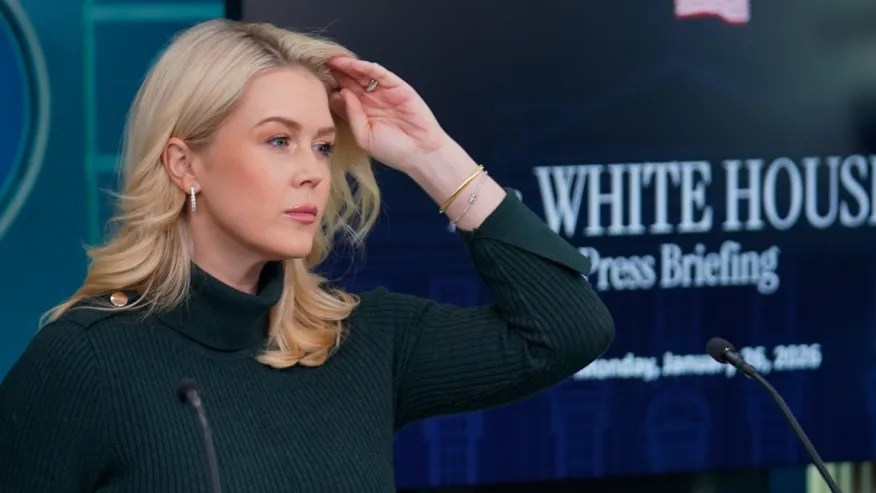
White House press secretary Karoline Leavitt said, “This is from an internet meme video depicting President Trump as the King of the Jungle and Democrats as characters from the Lion King. Please stop the fake outrage.” But, but, but . . . the video only includes imagery of the Obamas.
I guess Trump and Leavitt were unaware that the video was shared in October by the Hardin County Republican Party of Kentucky, which led the chairman to issue an apology after swift backlash noting the long history of racist tropes depicting Black people as apes or monkeys — a vehicle for slave traders and segregationists to dehumanize them. At least the Kentucky racists apologized, you know, when caught. Can’t imagine that from the White House.
There was much in the puzzle to love today: an owl sighting (!) and a Taylor Swift lyric, just to name two. It’s going to be a heavy music day, starting with an exquisite Valentines tune. But I’m getting ahead of myself.
The clue for OWL was classy: “Parliament constituent.” It’s from the term for a group of owls: a parliament.
Here’s Rex: “Because I studied Middle English literature in grad school, I knew Chaucer’s poem Parlement of Foules (i.e. ‘Parliament of Fowls’) before I ever knew the term ‘parliament’ applied specifically to owls. Fun (and semi-timely) fact: Parlement of Foules is the likely origin of the association of St. Valentine’s Day with lovers.”
Don’t need no Valentines; don’t need no roses.
Just take me back in time.
The Taylor Swift lyric was a mystery to me. The clue was “‘Hearts are ____ for the breakin”” (Taylor Swift lyric).” Answer HERS. It’s from this song, below, but brace yourself: she drops a few F-bombs in it.

On HERS, Son Volt shared this tune by The Honeydogs, a band that started out in St. Paul MN in 1994. I’m glad word of them finally reached me under my rock.
The Commentariat was suitably impressed with 49A: “Phenomenon through which luxuries become necessities.” Answer: LIFESTYLE CREEP. Egs gave it a secondary meaning: “In his day, Hugh Hefner might have seemed glamorous, but today he’d be viewed as a LIFESTYLE CREEP.”
My personal favorite was at 7D: “Derisive term for unattractive public sculptures:” PLOP ART. You know, some horrible giant public art installation that is just plopped down in the middle of somewhere. A play on POP ART. This might qualify. It’s in Mississauga, Ontario, Canada.

Mickey Lolich passed away on Wednesday at the age of 85, a brilliant left-handed starter for the Tigers from 1963 to 1975. It’s not too much of a stretch to say he single-handedly won the World Series for Detroit over St. Louis in 1968, pitching three complete game wins. In Game 7, on two days rest, Lolich outpitched Bob Gibson. Yeah, you heard me. Detroit won the game, 4-1. It was the last World Series game in which both starting pitchers pitched complete games (57 years and counting). Fifty years later Lolich said in an interview that he went into that game “slightly tired,” but that made his fastball sink more than usual. The final out was a foul pop out by Tim McCarver.
In 1971, Lolich pitched 376 innings and struck out 308 batters. He went 25-14 with an ERA of 2.92. He lost out to Vida Blue for the Cy Young award that year. From 1971 thru 1974, he pitched over 300 innings each year and came one win short of averaging 20 per season.
Post-baseball, Mickey and his wife ran a doughnut and pastry shop in Lake Orion MI. Thus, the photo, below. Rest in peace, Mickey.

Got to hunker down now. It’s not getting out of the teens for a couple of days. Pancake and soup weather. We’ll stay in bed with the owls and do crosswords. Keep warm, Chatterheads!



























 The Wellington Files