It’s going to be a day of grading tax exams for me, but a nice concert in Princeton is in store for later: A piano concerto of Mo’s, and Tchai’s Fifth, along with some modern piece. Richardson Auditorium is so beautiful, it’s a pleasure to sleep through a concert there.
This poem by Naomi Shihab Nye is from today’s Writer’s Almanac. It’s called “Prayer in My Boot.”
For the wind no one expected
For the boy who does not know the answer
For the graceful handle I found in a field attached to nothing pray it is universally applicable
For our tracks which disappear the moment we leave them
For the face peering through the cafe window as we sip our soup
For cheerful American classrooms sparkling with crisp colored alphabets happy cat posters the cage of the guinea pig the dog with division flying out of his tail and the classrooms of our cousins on the other side of the earth how solemn they are how gray or green or plain how there is nothing dangling nothing striped or polka-dotted or cheery no self-portraits or visions of cupids and in these rooms the students raise their hands and learn the stories of the world
For library books in alphabetical order and family businesses that failed and the house with the boarded windows and the gap in the middle of a sentence and the envelope we keep mailing ourselves
For every hopeful morning given and given and every future rough edge and every afternoon turning over in its sleep
Today’s puzzle was a bear, so I’m proud of myself for nailing it, eventually, doubly so since even Rex rated it challenging. The entire north was roped off by PHILLIS WHEATLEY, who not only is a Black poet from 1758, but she spells Phyllis wrongly. We were also expected to know that (1) OKRA comes from Igbo, a language I not only do not speak but have never heard of, (2) “Put on blast” is BASH, and (3) “Bill originating in Texas” is PECOS. I got right away that Bill was intended as a name rather than a law, but all I could think was “Is Bill Gates from Texas?” Plus, get this — crossing the second “I” in PHILLIS was “Swing-era bandleader _____ Cates.” WTF?!? Like anyone outside of his immediate family has heard of OPIE Cates. Gimme a break!
Phoebe Cates I’ve heard of, but that did me no good.
Actually, Andy Griffith heard of Opie Cates because Opie, his son on The Andy Griffith Show, was, in fact, named for Opie Cates. Cates was also the music director of a radio show that inspired the TV show Green Acres, of blessed memory.
Do you recognize this babe, below? It’s Elinor Donohue. She played Andy’s pharmacist girlfriend Ellie on the show the first season, but is better known for her role as the eldest daughter (Betty) on Father Knows Best. (How’s that for a fossilized title? For most teenagers today, it’s Father is an Embarrassing Moron.)
There were high hopes for her character on Andy Griffith. She originally came ahead of Don Knotts in the credits! But she bolted after the first season. She and Ron Howard are the only central cast members still living. She’s 86, has four kids, and has been married to her third hubby for over 30 years. She was married to #2 for 29 years and had all the kids with him. Hi Betty!
Just got back from Princeton and will hit the sack shortly. Concert was good. Mozart’s Piano Concerto #24 (“The Willie Mays”), and Tchaikovsky’s Fifth Symphony. What’s nice about the Fifth is you don’t have to know the first four in order to follow it.
In a story that almost had to be made up for Owl Chatter’s You Can’t Make This Stuff Up Department, Saudi Arabia unveiled a humanoid robot it developed, and one of the first things it did was grab a female reporter’s ass. But don’t take our word for it. When Phil heard there was a story with the words “female” and “ass” in it, he grabbed his equipment and hopped on the first plane to Riyadh. He returned with this footage, or, if you will, ass-age.
The robot, whose name is Muhammed (not kidding), later apologized, sent flowers, and asked her out for drinks. She declined, explaining she was already dating a washing machine. D’oh!
It’s Pi or pie day today: 3.14. So the puzzle was math-y. There was a Greek letter Pi comprised of black squares in the center, flanked by STEPHEN HAWKING and ALBERT EINSTEIN, who died and were born on 3/14, respectively.
MJB noted: Pi Day was started at the wonderful Exploratorium in San Francisco by Frank Oppenheimer, its founder, physicist and brother of a better known Oppenheimer.
Anony-mouse added: “3/14 is also the anniversary of Karl Marx’s death, which occurred in 1883. He thought the workers deserved not just a bigger slice of the pie, but the whole thing.”
Here’s a quote of Einstein’s on his early impression of America:
“Most of all it is the women, by the way, who dominate all of American life. The men are interested in nothing at all; they work, work as I haven’t seen anyone anywhere else. For the rest, they are toy dogs for their wives, who spend the money in the most excessive fashion and who shroud themselves in a veil of extravagance.”
Woof, woof!
Yup, Linda just picked up a few more veils of extravagance at Target. Looking good darling!
Thank you for the profound insight, Al.
But getting back to math, okanaganer says: the most beautiful equation in math is how you calculate the volume of a pizza. If the radius of the pizza is z and the thickness is a, the volume is: PIxZxZxA.
Mathgent offered: Pi is the most well-known irrational number but being irrational isn’t why it’s important. Square root of 2 is the first number found to be irrational (not the ratio of two integers like 22/7). When the Greeks learned that, it blew their minds. The classic proof that root two is irrational is often considered the most beautiful in all of mathematics. [OC note: Sort of the mathematical Ana de Armas.]
Don’t shoot, Ana! It’s just Phil!
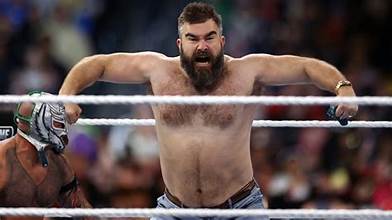
I love this note by Dr. A: My daughter’s school makes a fun celebration out of Pi day, and if you have good grades in Math her teacher lets you throw a pie at his face which is so awesome.
Wait, oops — this is a face in a pie, not a pie in a face. Sorry. George! Send it back — it’s wrong!
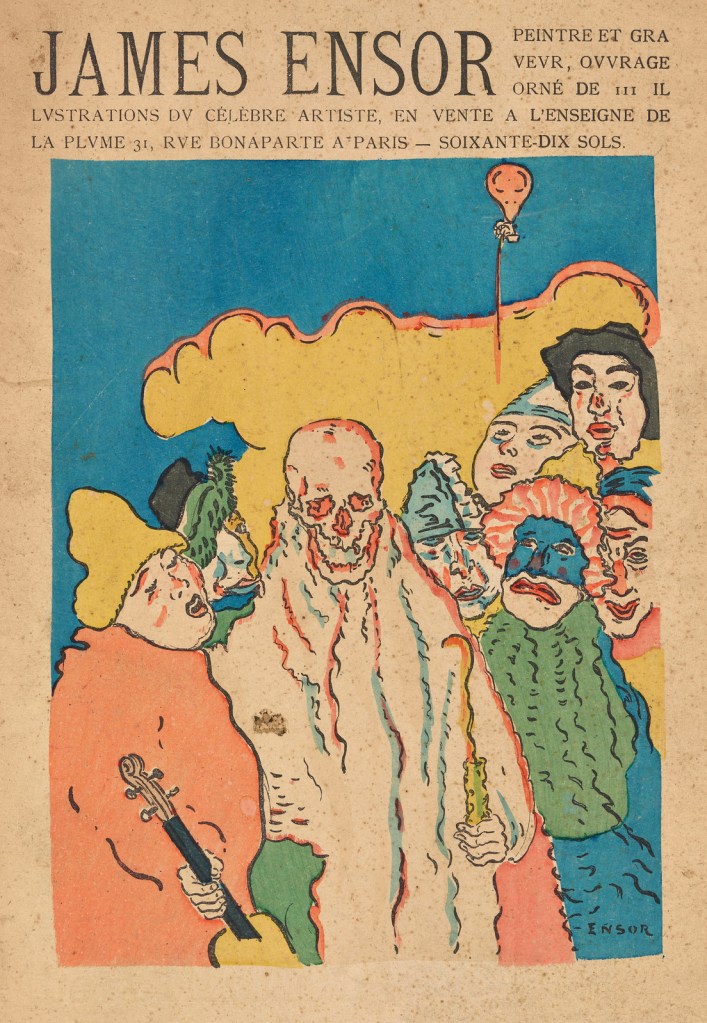
Frank Bruni’s “For the love of sentences” feature shared this entry from a eulogy for fashionista Iris Apfel by Anita Diamant describing an exhibit of the outfits Apfel wore. (Apfel passed away recently at the age of 102.) “Every mannequin was loaded with layers upon layers (upon layers) of garments and embellishments and gewgaws that challenged propriety, common sense, and in some cases, gravity. Elaborate fabrics in shocking combinations were accessorized with feathers, bells, mirrors and so much jewelry: bangles stacked from wrist to elbow, strands of enormous beads that formed a kind of breastplate. Pins the size of small birds. A flock of small birds. And as nutty as the juxtapositions seemed, they created a kind of harmony. A triumph of muchness.”
Nick Catoggio described House Speaker Johnson’s face during the SOTU address thusly: “Visible in-frame over Biden’s left shoulder, House Speaker Mike Johnson struggled all evening to find facial expressions that conveyed disagreement without seeming off-puttingly disrespectful. The extended, more-in-sorrow-than-in-anger choreography of exaggerated grimaces and head-shakes he settled on was familiar to me instantly as a longtime fan of the New York Jets.”
Ouch!
Last, this gorgeous review in The Times by Oussama Zahr of a recital by pianist Igor Levit: “He was playing the Nocturne from Hindemith’s ‘Suite 1922,’ a collection of five genre pieces like marches and rags, and there are a few moments in which the pianist only needs to use one hand. Gesturing with his left one in a downward pressing motion, he seemed to tell himself, ‘Gentle, gentle,’ as he plucked starlight off the page and dispersed it through the air.”
Here’s Anna Gourari, not so much playing it, as living it.
We’ll let her send us off tonight. See you tomorrow everybody.
Today’s puzzle was musical. The clue at 33D was “Follow a composer’s notation … or a hint to interpreting four clues in this puzzle,” and the answer was READ MUSIC. But I don’t read music and I was able to solve it. Here’s what the constructors meant. At 17A the clue was “A♭?” You were supposed to know that meant “A flat” so the answer was APARTMENT. Get it? Flat is a musical symbol but it also is a term for apartment. There were three more like that.
B♯? was Be sharp, and the answer was LOOK ALIVE.
B♭? was Be flat, and the answer was LIE DOWN.
And the most controversial was E♯? which was E sharp and the answer was TECH SAVVY.
egs noted: This one was particularly tough because I don’t read letters. Fortunately, the extensive use of musical notation, which I do read, bailed me out.
Get this — the constructors today were Andrew Kingsley and Garrett Chalfin. Garrett is a freshman at U Chicago and Andrew was his teacher in HS. This is their third puzzle together.
And, speaking of teachers and students, the Individual Taxation course at Hunter College this semester is being taught by a young woman who was my student several hundred years ago. She’s great. And a law course at Hunter will be taught in the Fall by another young woman who went to school with my Caitlin slightly less than several hundred years ago. The youth may not be moving into The White House, but they are taking over the accounting program at Hunter. And not a moment too soon, kinahora.
Back to the puzzle, the clue for HAIKU at 53D was “A kind of poem / Found within this crossword clue / Serendipity.” Get it? The clue itself is a haiku. Rex conceded the clue was clever but went on to note: “that’s not exactly what ‘Serendipity’ means—there’s an element of chance to ‘Serendipity,’ whereas this clue is a HAIKU by design.
C’mon Rex — it’s close enough for crosswords.
Commenter Smith shared this nice memory it jarred loose: I tend to think of serendipity as when you are looking for something particular but you find something else that’s equally or more wonderful. A moment when you’d say, “Even better!” As when I needed (and dreaded) a pair of high-heeled formal shoes to go with (an equally dreaded) dress, and I actually found a low-heeled pair that worked. But I may be wrong.
Right next to HAIKU, the clue was “Sheesh!” and the answer was OY VEY.
How do you like 47A? — “Smallest unit of purchasing power, in an idiom.” Answer: RED CENT. Someone noted the “red” comes from the (former) use of copper to make pennies. From 1793 to 1857, pure copper. Then, till 1864 a copper-nickel blend (even though it was a penny!). Then bronze.
The red in red cent has nothing to do with the Commies. Relax. Get up from under your desk.
At 28A the clue was “Not playing any songs, as a radio station,” and the answer was ALL TALK. Commenter Tom shared this: Not playing any songs, as a radio station, brought to mind my Bampa (long deceased granddad) who from the front passenger seat on a family road trip in the 50’s ran the entire dial of the radio, then turned it off, famously (in family lore) grumbling, “Nothing on but music.”
This poem from today’s Writer’s Almanac is by Marjorie Saiser and it’s called “My Old Aunts Play Canasta in a Snow Storm.”
I ride along in the backseat; the aunt who can drive picks up each sister at her door, keeps the Pontiac chugging in each driveway while one or the other slips into her overshoes and steps out, closing her door with a click, the wind
lifting the fringe of her white cotton scarf as she comes down the sidewalk, still pulling on her new polyester Christmas-stocking mittens. We have no business to be out in such a storm, she says, no business at all.
The wind takes her voice and swirls it like snow across the windshield. We’re on to the next house, the next aunt, the heater blowing to beat the band.
At the last house, we play canasta, the deuces wild even as they were in childhood, the wind blowing through the empty apple trees, through the shadows of bumper crops. The cards
line up under my aunts’ finger bones; eights and nines and aces straggle and fall into place like well-behaved children. My aunts shuffle and meld; they laugh like banshees, as they did in that other kitchen in the 30’s that day Margaret draped a dishtowel over her face to answer the door. We put her up to it, they say, laughing; we pushed her. The man—whoever he was— drove off in a huff while they laughed ’til they hiccupped,
laughing still—I’m one of the girls laughing him down the sidewalk and into his car, we’re rascals sure as farmyard dogs, we’re wild card-players; the snow thickens, the coffee boils and perks, the wind is a red trey because, as one or the other says,
We are getting up there in the years; we’ll have to quit sometime. But today, today, deal, sister, deal.
Our Pistons improved their record to 11-53, pounding Charlotte last night 114-97. I know, some of you are thinking, Charlotte has a team? Yeah, they are pretty bad at 16-49, but any win for Detroit is sweet after losing 28 straight earlier in the season. They’ve won two of their last three and the talk about their future has been pretty positive. OC is looking forward to seeing them in person 4/6 in Brooklyn.
Jaden Ivey is one of their young stars. He played college ball in Purdue.
Last, AVRIL Lavigne was in the puzzle today and Rex featured her as his “word of the day.” I had no idea how successful she’s been. She’ll be 40 in September and is Canadian. Married twice, no kids. Her albums routinely top the charts and sell millions upon millions of copies.
There’s a giant hot dog in this video that is sorely mistreated.
This Tiny Love Story, by Leslea Newman, was in the NYT today.
“If you met Mary today, would you still choose her?” a friend asked. “Of course,” I replied. I felt indignant at the question, yet knew why it had been asked. Mary and I are nothing alike. Mary hails from Puerto Rico and is a former nun; I’m from Brooklyn and light Shabbat candles every Friday night. Mary enjoys horror films; I enjoy poetry readings. Last night Mary ate pork chops for supper; I feasted on tofu. So why did I choose her? Thirty-six years ago, I looked into her eyes and saw nothing but kindness. I still do.
Here’s the opposite. This is Mark Robinson. He is a raving lunatic running for Governor of NC with Trump’s backing, to no surprise. Trump called him “MLK times two,” which only makes sense as a reference to his weight.
Among his greatest hits are his wish to go back in time to when women couldn’t vote. His explanation: “Because in those days, we had people who fought for real social change, and they were called Republicans. And they are the reason why women can vote today.”
Wait, what? Should they vote or not?
Robinson described Blacks who vote for Democrats as “slaves,” and claimed that “so many freedoms were lost during the Civil Rights Movement.”
“Black folks don’t respond to those types of comments,” said Cliff Albright, of Black Voters Matter.
Ya think?
Speaking of votes and women — I was surprised to see Geraldine Ferraro got an Oscar nomination last night. I didn’t even know she went into acting. You’ll get ’em next time Gerry! Lookin’ good!
What’s that, George? It wasn’t her? She’s been dead since 2011? Sorry everybody. Human error.
One of Rex’s commenters enjoys putting a story together using as many words from the puzzle as she can. I could see that being a neat assignment for a freshman writing class. I pass them up — they don’t do anything for me. But others enjoy them. I liked Gary’s review of today’s tale of words:
“Another nerve wracking thrill ride where the careful delineation between the comfortable concepts of noun, verb, and adjective gets tossed around in the trunk screaming to get out.”
PICKLEBALL was an answer in the puzzle today, clued as “Washington’s official state sport since 2022.” I had no idea. WA was getting a little grief for it in the comments. Then egs wrote:
In defense of Washington, PICKLEBALL was invented there and has been played in schools in many districts for years. When it became a big deal, the Pickleball community (full disclosure: that includes me) united to push its adoption as the state sport. Traditionally, the person or team on the side of the court closest to Bainbridge Island, birthplace of the game, serves first. This gets dicey when you’re playing on Bainbridge Island, but works fine elsewhere.
Let’s take a breather.
Vermont Lizzie sent us an email that included a drawing of Susan today. It was done from a photo by a friend. Liz says it captures Susan’s youthful beauty. Susan was very beautiful — both in traditional ways and in ways that only came across in her eyes, smile, gestures, laugh — you know what I mean. Even at the end, when it was all taken away, she was beautiful in a different way.
Aaron Lansky will be retiring from the Directorship of the Yiddish Book Center in Amherst MA in June of next year. We’ve been members since its founding (by Aaron) way back in 1980, and are thrilled to be attending its Klezmer music festival this year in July (Yidstock, they call it).
It’s a remarkable place and its story is a remarkable success story. It’s central to the survival and thriving of the Yiddish language and Yiddish books. Nobel Prize winner I.B. Singer was asked why he wrote in a dying language and he said “Yiddish has been dying for a hundred years and I’m confident it will go on dying for another hundred.”
One of our too few visits to the Center was for a party celebrating the opening of its new (then) facilities. When we were leaving, Aaron Lansky was at the door and he walked us to our car in the parking lot. He introduced himself but he didn’t have to — we recognized him from his photo in a story in the NYT about him. He was bubbly and gracious and thanked us for coming. Linda asked him if he walked everyone out to the lot when they left, and he said “No, I just have to get something from my car.”
If your sock collection is short on Jewish socks, these are available in the Center’s bookstore for only $6 a pair.
Southside Johnny referred to the clue at 73A as “gibberishly looking.” It is: “In which “‘Ciamar a tha thu?’ means ‘How are you?’” The answer was GAELIC. And he asked: is GAELIC a real language (that people still speak), or is it more like Latin?
Owl Chatter’s staff’s extensive research (you know, a minute or two of Googling) reveals that it is definitely still spoken — by close to 40% of the Irish population both rural and urban. Here’s a sign that translates to: “Oy, my back.” (Maybe not.) Actually, that’s the term for a district in which Gaelic is spoken.
I posted this on Rex’s blog:
An unusual variant of Gaelic is spoken in the Irish village of Clove. It’s referred to as a Gaelic of Clove. If a resident of Clove were to mince words, it would be minced Gaelic. Here’s a pretty Gaelic lass.
I crashed on the shore of 116D: “Negative Boolean operator.” What? The answer the puzzle wanted was NOR.
But one comment noted: The negation operator in Boolean logic is “not,” not “nor.” (Boo.)
A second comment added:
NOR is, in fact, a Boolean operator, but nobody ever uses it. It appears in one place in most logic textbooks, and usually not by that name. It has the nice property of being functionally complete, which is to say you can express any statement of elementary logic with just NORs.
A better clue would have mentioned its use as a logic gate in EE/CE. It’s about as well-known as the mathematical usage, and a NOT gate is usually just called an inverter.
But, but, but, later a commenter who called him or herself Witt Genstein said:
In Boolean logic, NOR is used to indicate that two things must be false in order for something to be true. Cluing this as a “negative Boolean operator” seems fine to me.
egs added: I assume the storm you all have raised about the Boolean operator would be a NOReaster.
[You may recall I’m the idiot who doesn’t even know what a logarithm is, so this entire discussion was Gaelic to me.]
There was another poem by Joyce Sutphen in today’s Writer’s Almanac. It’s called “My Father Comes to the City.”
Tonight his airplane comes in from the West, and he rises from his seat, a suitcoat slung over his arm. The flight attendant smiles and says, “Have a nice visit,” and he nods as if he has done this all before, as if his entire life hasn’t been 170 acres of corn and oats, as if a plow isn’t dragging behind him through the sand and clay, as if his head isn’t nestling in the warm flank of a Holstein cow.
Only his hands tell the truth: fingers thick as ropes, nails flat and broken in the trough of endless chores. He steps into the city warily, breathing metal and exhaust, bewildered by the stampede of humanity circling around him. I want to ask him something familiar, something about tractors and wagons, but he is taken by the neon night, crossing carefully against the light.
It’s Oscar night. We only saw three of the movies: Maestro, Anatomy of a Fall, and The Leftovers. All good, IMO. (Alright — it was The Holdovers. So what?) Rooting for Bradley Cooper for Best Actor, and Sandra Huller for Best Actress. Will have to catch up with more of them via streaming. I would have nommed Swann Arlaud from Anatomy for Best Supporting. He was Huller’s lawyer. Terrific.
I see Jodie Foster is up for her supporting role in Nyad. Living under my rock, I didn’t know she’s gay (not that there’s anything wrong with that). Her spouse is Alexandra Hedison, a fine art photographer and former actress/director. Jodie is 61 now. Here she is with Hedison, and, below, in the glow of her youth.
OC readers with memories better than mine will recall yesterday’s math issue on what a COSET is and whether the clue was wrong. Commenter Gary was moved to share this following funny rant/musing with us today:
Now, this ate at me all last night. I have a math question: I believe 100% of the time a math clue appears in the puzzle, a math expert will pipe in and assure us it is wrong. Yesterday was no exception. Mathematics is nothing if not precise, and crosswords are in the business of celebrating the slightly askew, so fine, I get it, the clue is wrong. BUT, typically, as yesterday, the commenter is utterly grief stricken. We were dealing with COSET, and I wouldn’t know a COSET if it was in line in front of me at the grocery store, but the puzzle left one mathematician “irritated” and another “appalled.” The last math class I took was in 1984, so maybe things have changed, but my main recollection was an auditorium full of undergrads looking confused and getting it wrong. I am under the impression mathematicians live in a world surrounded by incorrect answers, wrongheadedness, dead ends, partial solutions, continuous questions, and students and colleagues getting it wrong like a pack of dolts. So how in the world can mathematicians muster the strength on every math clue to become aghast? Is it just mathematicians who do crosswords, or are they all scandalized all the time? Is there a Big Bang-style whiteboard with a formula describing the level of abhorrentness one can stand from the unwashed barbarians before you say enough is enough? I looked at the Wikipedia page on COSET and it says “heebledy geebledy, garbledy goober” (I’m paraphrasing) and that seems close enough for crosswords. It is assuredly wrong, but maybe not have-a-cow wrong.
I wouldn’t trust FOX News for a story any more serious than this one, but I’m going to buy this one. Harrison Ford in an interview for Variety was talking about John Williams, who composed the iconic theme for Raiders. He remarked that he often reminds Williams that “his music follows me wherever I go — literally.” And then Ford noted that he heard it playing through the speakers during his recent colonoscopy.
Here’s the shot Phil got for us of Ford’s procedure. [You’re unbelievable, Philly!! How the hell did you get in there? You were sterile at least, right?]
Can’t imagine a nicer image to end with. See you tomorrow!
Love makes you stupid. You’ll go to crazy lengths to earn a point with whomever you are drooling over. It’s okay, though: that kind of stupid is okay. If you’re lucky, the love stays and the stupid slowly wears off. Also, if you’re lucky, you don’t get too stupid — just the right amount of stupid. This story from tomorrow’s Met Diary is by Elisabeth Rosenberg and is called “Full Hands.”
Dear Diary:
I was on the F train going uptown when a young man carrying a large pizza and a small dog got on at 34th Street and sat down next to me.
“Excuse me,” he said. “Where are you getting off?”
Roosevelt Island, I said.
“Do you mind holding my pizza until then?” he asked.
I must have looked at him funny.
“I have a new girlfriend,” he said, “and I wanted to impress her, so my dog and I took the train up to New Haven this morning so I could buy her a genuine Frank Pepe pizza.”
“I’ve been carrying it for hours,” he continued, “and my dog needs my attention.”
He handed me the pizza and put the dog on his lap.
“What’s on it?” I asked.
“Sausage and mushrooms,” he said. “Her favorite.”
“Mine too,” I said.
Here are two clues from the puzzle today, followed by an erudite discussion.
19A: “‘The ultimate form of free speech,’ to Denis Leary.” Answer: COMEDY.
50D: “‘The origin of wisdom,’ per René Descartes.” Answer: DOUBT.
First, Rex had me laughing with this: “Why are we being told it’s René Descartes, specifically? Is there some other Descartes? Jimmy Descartes? Typically, Descartes is a one-name dude. If you don’t know him as Descartes, then “René” is not gonna help you.”
But then he went on: I don’t know why it’s “per” René Descartes but “to” Denis Leary. Is Leary not fancy enough for a “per?”
Commenter G. Marcel helped us out (I think):
In fact there is a reason it is “per” for René Descartes and “to” for Dennis Leary…
“Per” is about following a method or instruction. Descartes was not simply expressing an opinion; he was giving a method or instruction for doing philosophy, with step #1 being doubt. This process has become commonly known as the “Cartesian Method,” around which an entire tradition and school of philosophy was built, and one that dominated European philosophical thought until the modernists came along to challenge it. The use of “per” here is most appropriate and accurate, then.
Denis Leary, however, is not giving an instruction or proposing a method about comedy. He is instead stating a conclusion from his experience as a comedian and as a fan of comedy – a phenomenology that expresses his existential reality. The use of “to” here is most appropriate and accurate, then.
And finally, per the unknown ancient Roman philosopher, whose works have largely been lost: “Semper ubi sub ubi.”
[OC note: That Latin phrase means “Always where under where,” and is jokingly construed as “always wear underwear.”]
And, while we’re on the topic: make sure you always put da horse before Descartes. Right, Jimmy?
This one is for the head of our Owl Chatter Math Dept. (Hi Judes!):
38A: “Mathematical subgroup.” Answer: COSET.
It generated this comment: As I’m a retired mathematician, I get irritated every time I see “coset” misdefined. A coset is NOT a sub-group, it’s obtained by multiplying a sub-group by a group element. Editors: NOTE THIS AND GET IT RIGHT NEXT TIME!
[Hrrrrrrumph!]
At22A, “Streaked” was STRIPY. Some grumbled, but I love STRIPY. What sort of homicidal maniac wouldn’t like STRIPY, I ask you?
And how about this one? (What a great puzzle!): 6D: “‘Thanks a lot!,’ in intentionally butchered French.” Got it? MERCY BUCKETS. (From “merci beaucoup.”)
34A: “MacGyvering” is JURY RIGGING, and it means to employ a temporary fix on a boat. (A jury mast is thus a replacement mast.) It has nothing to do with jury tampering in court. In jury rigging the word jury comes from the word root for “aid.” “Jerry-built” similarly means something poorly built but derives from a different root: jerry in the sense of shoddy.
At 62A: “Saul Bellow’s ‘The Adventures of ___ March’” was, of course AUGIE.
I was surprised that some folks hadn’t heard of it. So I shared the following via a comment:
Here’s the first sentence of Bellow’s AUGIE March:
“I am an American, Chicago born, and go at things as I have taught myself, free-style, and will make the record in my own way: first to knock, first admitted.”
It’s considered one of the great opening sentences in modern American lit by many: a “Call me Ishmael.”
My favorite sentence of his is from Herzog: “Stuff your face with herring, [name I forgot], and mind your own f*cking business.” (Something like that.)
This is the poem of the day from The Poetry Foundation. It’s by Petra Keppers and is called “Found on the Pond Deck.”
The husk of a tiny dragonfly, translucent, clings upside down on a yellow spear of grass its roots clasp the dry wood of the deck. Tiny white fibers everywhere: the planks, breathing, expectorate their innards, wood weeps and uncoils what it knew when it stood, tall in a wet Redwood forest, before the chains of a truckbed, dark and long, bite, here, where all trees are twisted into themselves against the prevailing winds. On that white-spun deck, I remember my watery nature, pour my liquid body to wash away the pain of the shorter years, to wash away the pain of a hollow embrace, the feeling that we all will slide, not into the clear pool, but into the murk of a place that should not be settled.
Kudos to the valiant Lady Beavers of Oregon State U. They fell to a superior Stanford team in the PAC-12 tourney yesterday after their brilliant double overtime win over Colorado. They’ve got one last ride ahead of them in the NCAA tournament. Go Beavs!
The Gothamist reports today that Owl Chatter’s own George Santos is running for a seat in Congress again. Go get ’em Georgie! Unless he was kidding (and I wouldn’t put anything past our Georgie), his tweet during the SOTU address last night says he plans to challenge GOP Rep. Nick LaLota in NY’s 1st District, which covers the east end of Long Island. Knock ’em dead, big fella!
Our cup runneth over today (which explains how all this thlop wound up in our thauther). The Writer’s Almanac had so much interesting fare. First, this poem by Joyce Sutphen, called “Snow at the Farm.”
My father gets his tractor out. It is winter, finally—the first big snow of the year—and
he is eighty-four. He does not leap into the seat the way that I remember, but once he’s there
he pulls down the brim of his cap, and all-in-one his legs and arms work at clutches, throttles, and
levers as he pushes and loads the snow into neat hills at the edge of the yard. The sun
is a bright shield in the sky, something I cannot bear to look at, and the snow is so white that
it shows black where the plow cuts in. From the kitchen window I watch the red tractor moving
back and forth through the blue and white world, my father’s hands at the wheel.
My dad didn’t drive a tractor; he drove an Oldsmobile. He was a doctor with his office on the first floor of our Brooklyn home. Docs made house calls in those days and I have an early memory of going with him on one when I was a little boy. Sitting in a dark room as he introduced me to his patient and his patient’s wife. If I had to guess a year, I’d guess 1956 or 7. It’s a good memory.
Speaking of driving, 33D in the puzzle today was “Hot rods popular in the ’60s,” and the answer was GTOS. But Anoa Bob says GTOS aren’t really hot rods, as clued. They are more in the muscle car category. Hot rods are usually older cars that have been heavily modified, often without fenders over the wheels. Take a look:
It’s the anniversary of the publication of Thomas Wolfe’s Of Time and the River in 1935. Wolfe first brought it to editor Maxwell Perkins in December of ’33. It was over a million words long and the first installment, page-wise, stood two feet high. The two met almost every day (Sundays included), and Perkins read every word aloud to Wolfe with his red pencil in hand, sometimes deleting entire pages over Wolfe’s protestations. Wolfe would bring new material to Perkins for insertion, but Perkins refused it.
The final version was 912 pages long, and Wolfe dedicated it to Perkins. The dedication ran close to 100 words. The book was a success, but the few negative reviews tormented Wolfe and he was convinced Perkins ruined his book and fired him. Three years later, dying of tuberculosis at the age of 37, Wolfe sent Perkins an apology. We don’t know how long the apology was.
Picked nit of the week: At 53A the clue was “Flotsam once in Boston Harbor.” The answer was TEA CHESTS. But Conrad said that was jetsam, not flotsam. He wasn’t kidding. There is a difference (under maritime law). Flotsam is debris in the water that was not deliberately thrown overboard, often resulting from a shipwreck or accident. Jetsam is debris that was deliberately thrown overboard by the crew of a ship in distress, most often to lighten the ship’s load. Now, I ask you, where else can you get vital information like that?
Those of us who watched The Little Mermaid several thousand times know that Flotsam and Jetsam were also the eels who assisted Ursula the sea witch in her evil doings — her little “poopsies.”
Last, on the topic. By Ogden Nash:
Want some flotsam? I got some. Want some jetsam? I’ll get some.
The puzzle had some good stuff in it today. At 13D, “Butt of a joke?” was WHOOPEE CUSHION.
What? You thought that was beneath me (so to speak)? Puh-leeeze. I’ve sunk much lower than that for a laugh.
More puzzle stuff:
At 10D, “Hunger hyperbole” was I COULD EAT A HORSE.
A lot of folks liked “Needle on a thread?” as the clue for TROLL. A TROLL is a person who tries to “needle” people in an internet “thread.”
And how about this clue for a four-letter answer: “That’s what I just said!” Answer: JINX. Remember that from when your kids were ten?
Rex dug this up from Reddit. Good to know the Hebrew equivalent for JINX is “Ain,” pronounced Aye-In, a reference to the Evil Eye.
According to the OED, the first documented use of jinxing as a children’s game is in 1973. The jinx game is described as “a sophisticated, stereotyped ritual.” “The word used to induce the spell varies widely in other languages, e.g., Israeli children shout, Ain, the Arabic word for ghost or evil eye”. There is also a French variant called Chips, although it’s unclear whether this is derivative of the English “jinx.”
What happens is both kids say the same thing simultaneously, just by coincidence. Then, the first one who says “Jinx” next “wins.” In some versions the loser must stay silent until released from the spell. In others, the loser may have to buy the winner a soda.
In the adult version, the loser has to [use your imagination]. You don’t want to lose in the adult version, especially in prison. [Shout out to all of our incarcerated OC readers: Hang in there guys! — the years fly by, believe me.]
Today’s WOE clue/answer (what on earth?) was at 42D: “World leader associated with the justicialism movement.” The answer was PERON. You ever hear of this? Me neither. It’s also called Peronism and is a form of populism that eschews both capitalism and communism. To hell with it, I say. Here’s Evita:
Today’s puzzle is a “modern reimagining” of Frost’s famous poem (which I was barely skin-of-my-teeth familiar with). I thought it was fairly cute/clever. But Rex’s rant was so heartfelt (and funny) that I am going to go whole hog with it. First, here’s the (real) Frost poem:
Whose woods these are I think I know. His house is in the village though; He will not see me stopping here To watch his woods fill up with snow.
My little horse must think it queer To stop without a farmhouse near Between the woods and frozen lake The darkest evening of the year.
He gives his harness bells a shake To ask if there is some mistake. The only other sound’s the sweep Of easy wind and downy flake.
The woods are lovely, dark and deep, But I have promises to keep, And miles to go before I sleep, And miles to go before I sleep.
OK, and here’s the “modern reimagining” which fills four complete lines in the puzzle: 15 letters across for each line:
I KNOW WHOSE WOODS THESE ARE. MY HORSE IS RESTLESS. I HAVE A LOT TO DO. GIDDYUP!
Get it? It’s kinda cute IMO. I guess the idea is to “unpoem” the poem.
Rex killed it with unusual fervor. The poor constructor (Joe O’Neill) must be searching for Saddam Hussein’s hiding hole right about now.
Here’s Rex:
Well, this puzzle *is* exceptional, in that it’s easily the worst puzzle I’ve done this year. Imagine writing a puzzle that (a) assumes the vast majority of solvers will know this damn poem well enough to paraphrase the whole thing, (b) has such a terrible, off-the-mark sense of what “modern” means (or what paraphrase entails), and (c) makes zero reference to “sleep” in a poem where the speaker, famously, repeats the need for sleep at the poem’s conclusion.
There are four stanzas to the poem, but we get three … sentences? Or four lines, I guess, if this is supposed to be “modern” poetry, with each line a “line,” and rhyme and meter not a factor. Anyway, two whole stanzas about the horse condensed to “MY HORSE / IS RESTLESS.” Brilliant. If this is “modern,” why are you even on a horse in the first place?! Use the GPS on your ATV, you idiot. This puzzle manages to be an insult both to poetry and to puzzles. Guessing at the phrasing of the “modern” version was torture, in the sense of (occasionally) “hard,” but primarily in the sense of “actually physically painful to accomplish because the ‘poem’ was so completely tin-eared.”
He goes on:
I liked one thing about this … or at least respected one thing, and that’s the final GIDDYUP! It’s so stupid, so Not a part of the original poem, so unexpected and goofy, that I have to give it at least a golf clap. The rest of the poem was so punishing that the GIDDYUP! at the end actually managed to alleviate a bit of the pain.
Commenter Kenji wrote:
“We read and discussed a number of Frost poems in a course I took, under the guidance to look always beyond Frost’s seeming pastoral, down-home gloss for the haunting, darker angle. Ever since, I’ve seen the ‘lovely, dark, and deep’ woods of this one as reflecting a relatively young person’s (possibly first) contemplation of mortality, and, kinda Hamlet-like, early death by one’s own hand.”
I re-read the Frost poem from this perspective and got more out of it. Sleep = death. I can see it.
The best early comment was from Anony-mouse (who was anticipating Lewis’s take on the puzzle — Lewis always finds the positive, as a counter to Rex):
[Grabs popcorn] 🍿 [Waits for Lewis]
To no surprise, when Lewis chimed in, he loved it. Many folks agreed with Rex, but several came to the puzzle’s defense, including me. It generated an unusual amount of interest — there are 193 comments. That’s about triple the usual amount.
Here’s a defense I found reasonable. Then I’ll end the discussion with Commenter Nancy’s poem.
I’m a high school English teacher, love Frost, really enjoyed the puzzle. I think if it had been clued as “banal reimagining of a Frost poem” or “limited” or “unpoetic,” it would have irritated people who know the poem less. My sense was that the superficiality of it was the point, which is why it amused me. I spend all day listening to students complain about the “pointless” complexity of language, imagery and meaning in literature, so this felt like a spoof of that attitude. It made me laugh, and I liked trying to figure out exactly how pedestrian each line would be as I filled it in from the downs. The “giddyup” at the end was a great payoff.
Nancy’s poem:
What have you done to Robert Frost? His words are jumbled — tempest-tossed! They make no sense; they leave us lost! What have you done to Robert Frost?
He doesn’t need improving, Joe! “Stopping by Woods” has grace and flow, So why you’ve done this, I don’t know — He doesn’t need improving, Joe!
He can’t protest because he’s dead. So I’m complaining in his stead. The words he wrote, the words he bled Are not your words to take and shred.
So stick to what you know the best: The “SMOOVE”s and “U”s and all the rest. And make your silly nonsense cease, And let poor Robert rest in peace!
One of the funniest men in America died on Tuesday: Richard Lewis, at age 76, in his home in LA, from a heart attack. Years ago, he cracked me up with a Bill Skowron joke. Who does that? Skowron was the Yankee first-baseman when I was growing up and first became a fan. Nickname Moose. He was my favorite Yankee because I played first base too. He kept his hair short and heavily gelled.
So years later I’m watching Richard Lewis being interviewed, and the topic of Mickey Mantle’s restaurant came up — Mickey had recently opened it in Manhattan. And Lewis said: “Yes, I ate there. It’s very good. I had the Bill Skowron salad, you know, with the vaseline.”
Fell out of my chair.
One of my great comedy disappointments occurred when I settled into my couch to watch Lewis interviewed by Bob Costas. After three sentences, Costas was so paralyzed by laughter that he couldn’t go on. He couldn’t do the interview. They didn’t do it.
Some of his bits were about the something “from hell.” The waiter from hell; the doctor from hell, etc. The Yale Book of Quotations credits Lewis as the source of “the [blank] from hell” expression.
He was a regular on Larry David’s “Curb Your Enthusiasm” and appeared on David Letterman’s show 48 times. He was born in Brooklyn three days ahead of Larry David in the same hospital. But he grew up in Englewood NJ. His dad owned a kosher catering business, and his mom acted in community theater, specializing in the Jewish mother characters in Neil Simon plays. That must’ve been easy.
He graduated from Ohio State with a degree in marketing and was phumphing around on the edges of comedy back in NJ after graduating. He was in a deli one day with friend and mentor David Brenner, complaining about his life (voo den?).
As Lewis told the story, “Brenner said, ‘What do you need to be a comic full time?’” “I said a thousand dollars. He whipped out a check and gave it to me. I quit my job and I’ve never looked back.”
He avoided long-term relationships for many years, but then met Joyce Lapinsky who worked in music publishing. They dated for years and when they considered marrying, Lewis brought her to meet his psychiatrist. “This is as good as it gets,” the shrink told him. They married in 2005.
Lewis is survived by his wife Joyce and his brother Robert, both of whom, I have absolutely no doubt, spent most of their time laughing.
Rest in peace, Richard. I’m glad you enjoyed the salad.
The Oregon State Lady Beavers were down by 12 to Colorado with only seven minutes to go in the PAC-12 tourney. Not looking very good. But a flurry of made shots and stellar defense brought the game to a dead heat by the time the buzzer sounded. Oh, baby. First overtime – still tied. Second overtime was the ticket. 85-79 OSU! Brava, ladies. On to the semi-finals tomorrow!
Bridgette Watkins was training for the Iditarod back in 2022 when the attack occurred. Perhaps she was aware that a 71-year-old man was killed in such an attack — trampled to death on the U. of Alaska campus. Moose typically weigh over half a ton and stand over six feet tall. Fatal moose attacks are rare, but she was right to be worried.
“That moose had a look in his eye,” Watkins said. “He just wanted death to occur. Like he just wanted to kill us.”
We married men have seen that look from time to time in the missus. It sends quite a chill, amirite fellas?
In Watkins’s case, four of her dogs were seriously injured and one later died of its wounds.
And that brings us to this year’s Iditarod, specifically to last Monday, when Dallas Seavey, a 5-time champ, shot and killed a moose in self-defense after it got tangled up with his dogs. His dad Mitch, 57, says this has only happened three or four times in the four decades he has competed in the race.
Moose are generally friendly, but when food is in short supply they can get as testy as the rest of us, and they are not particularly fond of dogs, truth be told.
Under the rules of the race, the actions Dallas took were proper. An animal can be killed in self-defense or to protect property. But he was required to gut the moose and save any salvageable food for charity. In this case, the body parts and organs were donated to the UJA.
Alaskans love their moose, so this was a sad day.
This poem from today’s Writer’s Almanac is called “Boy at the Window,” and is by Richard Wilbur.
Seeing the snowman standing all alone In dusk and cold is more than he can bear. The small boy weeps to hear the wind prepare A night of gnashings and enormous moan. His tearful sight can hardly reach to where The pale-faced figure with bitumen eyes Returns him such a god-forsaken stare As outcast Adam gave to Paradise.
The man of snow is, nonetheless, content, Having no wish to go inside and die. Still, he is moved to see the youngster cry. Though frozen water is his element, He melts enough to drop from one soft eye A trickle of the purest rain, a tear For the child at the bright pane surrounded by Such warmth, such light, such love, and so much fear.
Rex’s guest blogger today, Malaika, says Twitter is engaging in a “thirteen albums to know me by” discussion. You pick 13 albums off the top of your head — you’re not supposed to agonize over it (but how could you not?).
Here is her list, below. I have at least heard of all of the artists, except for Miguel. But I only know three of the albums. Needless to say, Malaika is much younger than me: I’d guess in her 20’s?
Pure Heroine (Lorde)
Jagged Little Pill (Alanis Morissette)
Let Go (Avril Lavigne)
Come Away With Me (Norah Jones)
Lemonade (Beyonce)
Bridge Over Troubled Water (Simon & Garfunkel)
ANTI (Rihanna)
SOUR (Olivia Rodrigo)
Speak Now (Taylor Swift)
Rumours (Fleetwood Mac)
Tapestry (Carol King)
Wildheart (Miguel)
19 (Adele)
It’s only March, but here’s Avril. Phil — you’ve outdone yourself — stunning.
And here are my 13:
Rolling Stones Let It Bleed
Dylan Blonde on Blonde
L. Cohen Live from London
Beatles Rubber Soul
James Taylor Sweet Baby James
Taylor Swift 1986
Four Tops Greatest Hits
Neil Young Prairie Wind
Ramones The Ramones
Bob Marley Uprising
Van Morrison Moondance
Bruce Born To Run
Alasdair Fraser Fire and Grace
[Honorable Menschen: Phil Ochs, The Clash, Simon & G’funkel, Cream, Tom Rush/Joni Mitchell/Judy Collins, Silk City/Tony Trischka, Klezmer Conservatory Band]
Josh Allen is a great quarterback for the Bills. Any team would be happy to have him. The Jets? Don’t start me weeping. That sort of guy gets the pretty girls and Josh is no exception. Exhibit A: Hailee Steinfeld, actress/model.
But you know, he’s also human, and stuff happens. They were in Paris for Fashion Week. After dinner, they emerged from a car and Hailee stuck around for some pictures with fans while Josh rushed off. WTF Josh?? He later explained: “My pants ripped at dinner 🙁🤣 Didn’t want cheeks out… I love Paris 😁”
In yesterday’s puzzle, the clue at 51A was “Not digital, as a clock,” and the answer was ANALOG. Via a commenter, it opened quite a door.
I’ve never had an interest in tribute bands. They just seem like bar bands that perform covers limited to one group. Not to diss any of you who enjoy them. And there’s a good chance if I were dragged to one I’d enjoy it. But the Analogues are something else, and they’re mesmerizing.
They are a Dutch group of accomplished musicians formed ten years ago. But let me back up a bit. The Beatles, you may recall, never performed their last clump of albums live: Abbey Road, The White Album, Sgt. Pepper, to name a few.
Well, the Analogues buried themselves in the music and perform brilliant renditions on stage. They don’t try to mimic the look — but they capture the sound brilliantly, down to the smallest detail. This is from Wikipedia:
To sound as close to the original recordings as possible, the Analogues have amassed a collection of musical instruments, such as a black-and-white Rickenbacker guitar similar to John Lennon’s, a light blue Fender Stratocaster similar to George Harrison’s, and a Höfner 500/1 bass. Exotic musical instruments from India are also used in their performances, including a dilruba, a swarmandal, a tanpura, a tabla and a sitar. Further special instruments include a one-metre-long harmonica for “The Fool on the Hill” and a clavioline for “Baby, You’re a Rich Man.”
The band’s primary analyst is bass guitarist and producer Bart van Poppel. After a thorough analysis of an album’s arrangements, they find the necessary equipment such as a 1965 Lowrey Heritage Deluxe organ, or one of only thirty known existing mellotrons in a particular series, used in the intro of “Strawberry Fields Forever.”
I listened to half of their version of Abbey Road last night, agog. But don’t take Owl Chatter’s word (ever) — have a listen to this sample, especially the guitar “conversation” towards the end, with the sudden drop back to the keyboard:
Today’s puzzle had a brilliant revealer near the bottom that pulled it all together after driving us nuts. It’s by Christina Iverson, who’s on the NYT puzzle staff. Here: you try to find the connection: The four theme answers were: LOGICAL FALLACY, EMPTY SPACE, PIG STY, and FRUIT DRINK.
So? You got it? What connects those four? The revealer was at 54A: The clue was “Spring-loaded office device,” and the answer was THREE-HOLE PUNCH. So, the first three are the “holes.” A “logical fallacy” is a hole in an argument. An “empty space” is a hole. And a “pig sty” can be thought of as a hole — a mess. Then, “fruit drink” is the punch, so you get three holes and then a punch. Ta da!
Iverson said she was inspired by Jim Halpert’s Halloween costume on “The Office.” He always tried for costumes that involved no effort to put together. His three-hole punch was just three black dots on his white shirt.
Another year he went as “some guy named Dave” and his whole costume was a nametag on which he wrote “Dave.”
Got 4 minutes? Here’s a song called “Born Under Punches” by Angelique Kidjo. Original version was by the Talking Heads. It’s been said of Kidjo, “when she gets her hands on a song she feels it VERY deeply and performs it from a very powerful place in her soul.” Yup.
This poem by Carl Dennis is called “String Quartet,” and it was in today’s Writer’s Almanac.
Art and life, I wouldn’t want to confuse them. But it’s hard to hear this quartet Without comparing it to a conversation Of the quiet kind, where no one tries to outtalk The other participants, where each is eager instead To share in the task of moving the theme along From the opening statement to the final bar.
A conversation that isn’t likely to flourish When sales technicians come trolling for customers, Office-holders for votes, preachers for converts. Many good people among such talkers, But none engaged like the voices of the quartet In resisting the plots time hatches to make them unequal, To set them at odds, to pull them asunder.
I love the movement where the cello is occupied With repeating a single phrase while the others Strike out on their own, three separate journeys That seem to suggest each prefers, after all, The pain and pleasure of playing solo. But no. Each near the end swerves back to the path Their friend has been plodding, and he receives them As if he never once suspected their loyalty.
Would I be moved if I thought the music Belonged to a world remote from this one, If it didn’t seem instead to be making the point That conversation like this is available At moments sufficiently free and self-forgetful?
And at other moments, maybe there’s still a chance To participate in the silence of listeners Who are glad for what they manage to bring to the music And for what they manage to take away.
The commentariat raised the issue of what “begs the question” means, and I think I’m finally starting to understand it. Its incorrect (but popular) use is as a way to say it “inspires you to ask a question,” or “it raises a question.” But its correct use is to note that your conclusion was stated in your premise, similar to circular reasoning. It is begging the question to say “opium induces sleep because it has a soporific quality.” Soporific means sleep-inducing, so your point begs the question.
At 24D, the clue was “Like a tightrope, ideally,” and the answer was TAUT. egs asked: If you’re full of tension solely because of your own anxieties, are you self-TAUT?
The Car Talk duo once asked a caller how long he was unemployed (because he had so much time to work on his car). The caller was a bit taken aback and said: “Actually, I’m a consultant.” And Tom or Ray said: “Oh, so you’re self-unemployed.”
Research on the 2017 Trump tax cut has been released, says the NYT. Trump officials predicted workers would come out ahead by $4,000 to $9,000. The average gain was $750. The corporate tax cuts were promised to pay for themselves. Instead, they are adding $100 billion a year to the deficit. Just sayin’.