If you like spoonerisms, today’s puzzle is for you. What’s a spoonerism? Fair question. It’s when the initial sounds or letters of two or more words are transposed. “The Lord is a shoving leopard,” is not a bad example. (“Loving shepherd,” would be the correct form.) The term has nothing to do with spoons. It’s derived from an Oxford don, William Archibald Spooner, who fell into them naturally.
There were four in the puzzle today:
“Pamphlets on how to use marinara?” was SAUCING FLYERS, a spoonerism with “flying saucers.” (See how it works?)
“Grocery store worker on the days leading up to Thanksgiving?” was STUFFING STOCKER, for “stocking stuffer.”
“Bookie?” was BETTING GETTER, for “getting better.”
“Devices that help dentists monitor anaesthesia?” was NUMBING TRACKERS, for “tracking numbers.”
A spoonerism is also known as a marrowsky or morowski after an 18th century Polish count, who was also prone to them. (Not really, though — I’ve never heard that used.)
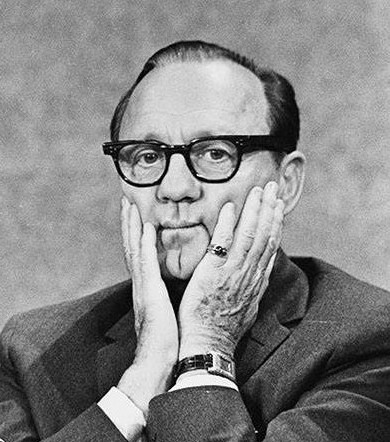
On an episode of The Jack Benny Program in 1950, Jack mentions that he ran into his butler Rochester while in his car that was on a grease rack. Mary Livingston was supposed to say “How could you run into him on a grease rack?” but flubbed her line with “How could you run into him on a grass reek?” The audience broke up into so much laughter Jack was unable to reply as the show ran out of time.
Here’s a nice sports spoonerism someone noted: Paul Blair (Ball Player). Blair was a brilliant center fielder, one of the best ever to play the position. He hit an inside-the-park home run one game, and a reporter chided him afterwards, saying the fielder should have caught it. Blair’s perfect response was: “There’s only one man could’ve caught that ball — and he was running the bases.”
“Kniferism” and “forkerism” refer to changing, respectively, the vowels or the final consonants of two syllables, giving them a new meaning, e.g., the “Duck and Doochess of Windsor.”
Here’s Reverend Spooner, carefully running down some wordplay.

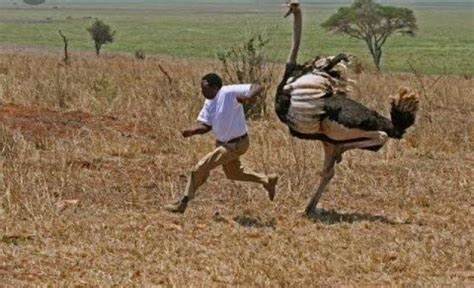
The oddest clue/answer today was at 51A: “Winners of a 1932 Australian “war.” Ans: EMUS. Here’s from Wikipedia:
The Emu War, also known as the Great Emu War, was a nuisance wildlife management military operation undertaken in Australia over the later part of 1932 to address public concern over the number of emus said to be running amok and destroying crops in the Campion district in the Wheatbelt of Western Australia. The unsuccessful attempts to curb the population of emus, a large flightless bird indigenous to Australia, employed Royal Australian Artillery soldiers armed with Lewis guns—leading the media to adopt the name “Emu War” for the operation. While some of the birds were killed, the emu population persisted and continued to cause crop destruction.
Needless to say, Welly and Wilma, and all of the owls behind owl chatter were quite happy to learn of the war’s outcome.
Here are some battlefield photos. Warning: not for the faint of heart.

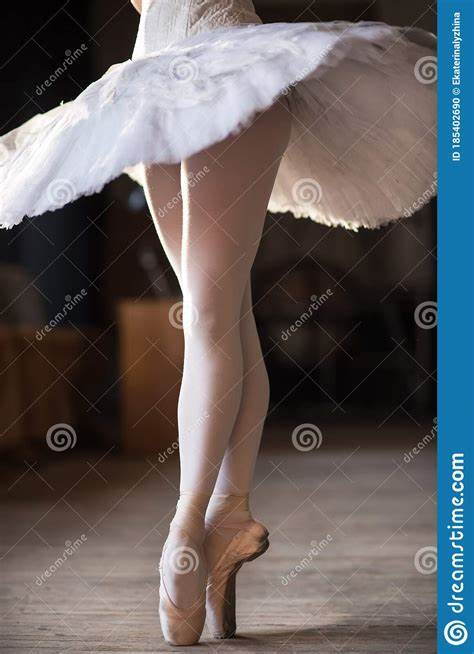
From the ridiculous to the sublime. 63A “En pointe,” — ON TOE. It’s from ballet, of course, and is a very difficult stance to maintain without doing damage to the toe or foot. Special shoes are used to provide support (pointe shoes). I once mentioned to Carl that I was going to the ballet, and he exclaimed: “Bolshoi!”
GLEN Campbell popped by today, even though he died in August 2017 at the age of 81. He was born in Delight, Arkansas. Campbell was married four times and had nine children. He also had a fling with Tanya Tucker in between wives #3 and #4. They recorded the single “Dream Lover” together, and sang the national anthem at the 1980 GOP convention. My favorite of his hits was “By the Time I Get to Phoenix,” which was written by Jimmy Webb. Frank Sinatra called it “the greatest torch song ever written.” Here it is, in 2:52. Try not to wonder, as I did, if his head is made out of silly putty. It must be the makeup.
When Campbell starts singing, above, the fans applaud when they recognize the song. It reminded me of what Tom Rush (who will be 82 next month, and majored in English Lit at Harvard) does when that happens. He starts a song, the fans applaud, and he stops and says: “I haven’t sung it yet.” Then he pauses, puzzled, and asks “Have I?” And then he goes, “Aw, what the hell, I’ll sing it again.” (Now I wish I had shared Tom Rush singing “Urge for Going” with you instead of Campbell. But Glen was in the puzzle. We’ll save Tom Rush for another day. Maybe he’ll make the grid — it’s certainly a puzzle-friendly name.)
How are we doing on the midterm?
See you tomorrow!

































 The Wellington Files