-
Difficult Music
How do you know when the violist is playing out of tune?
ANS: The bow is moving.
But it was not a violist’s bow in the puzzle this morning, it was a CELLO BOW, and not just any cello bow — the bow of the great Yo Yo Ma.
Ma was quite a child prodigy. At age 3, he was playing the violin and piano. He settled on the cello at the ripe old age of 4. By 7 he was brilliant enough to perform for Presidents Eisenhower and Kennedy.
Even more remarkable, in the womb, on the morning of his birth, he strummed “I’ll Be Your Baby Tonight,” on his mother’s umbilical cord.
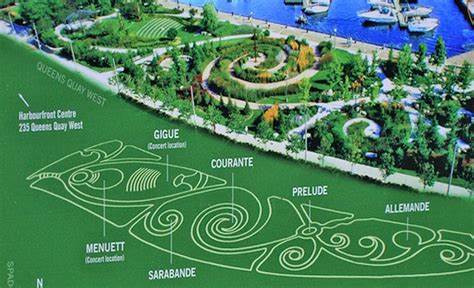
In addition to his many musical accomplishments, it was interesting to learn that in 1999 he collaborated with landscape architects to design a Bach-inspired garden. It interprets Bach’s Suite No. 1 in G Major for unaccompanied cello, with the garden’s sections designed to correspond with the suite’s dance movements. It was built in Toronto’s Harbourfront neighborhood.
Here’s a shot of the garden, followed by one of Ma himself, upon learning that he’d be featured in owl chatter today.

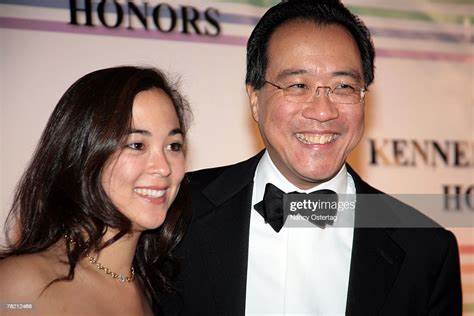
Both of Yo Yo Ma’s children, Emily and Nicholas, studied at Julliard and are accomplished cellists in their own right. Here’s dad with Emily.
One of our favorite actors, John TURTURRO, popped into the grid at 24D: “John of ‘The Big Lebowski.’” He was born in Brooklyn and still lives there, in Park Slope. He’ll be 66 at the end of next month.
His first role was non-speaking, as an extra in Scorsese’s “Raging Bull.” Spike Lee is such a big Turturro fan that he’s used him in nine of his films, more than any other actor. If you were a fan of the TV show “Monk,” you may recall his portrayal of Monk’s reclusive brother, Ambrose, for which he won an Emmy. Ambrose made Monk seem normal. In all, JT has appeared in over 60 films. An owl-chatter favorite was “A Box Of Moonlight,” with Sam Rockwell (1996).
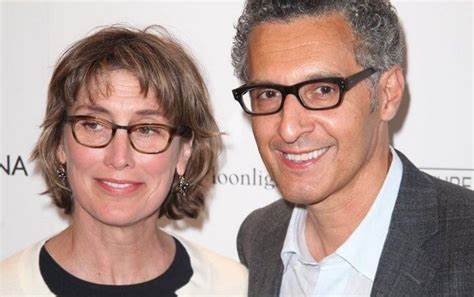
He is married to Katherine Borowitz, a former actress, now a social worker. They have two kids. Here he is as Jesus in Lebowski.

And here is he, with the missus.
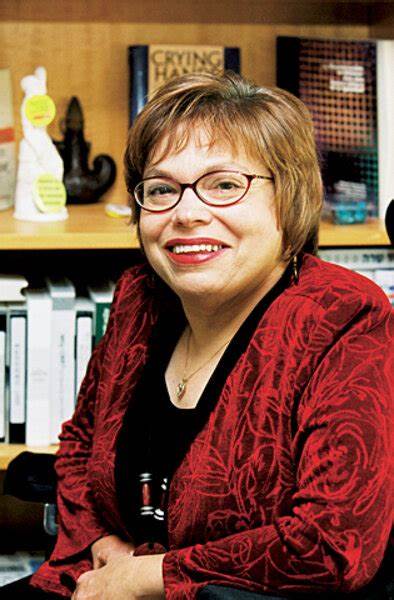
Anybody hear of JUDITH HEUMANN? She wheeled herself right across the center of the puzzle today at 35A with the clue: “Leading disability rights activist in the 2020 documentary ‘Crip Camp.’” She spearheaded the rights movement for the disabled. It’s a terrific movie.
Heumann turned 75 last month. She lives in Washington DC with her husband, Jorge Pineda. She contracted polio when she was 18 months old and has been wheelchair bound since. It hasn’t slowed her down.
In 1977, Heumann took on HEW Sec’y Joseph Califano who was refusing to implement laws protecting the rights of the disabled. She staged a sit-in with 125 disabled folks in the HEW federal building in Washington DC. Califano ordered no food or medicine be brought into the building, but the protesters found ways to circumvent the order, including the receipt of help from the Black Panthers who had a disabled member in her group. The protest lasted 28 days and ended with Califano capitulating. It remains the longest protest ever to take place in a federal building.
Heumann has held positions in the World Bank, the State Department, the Clinton Administration, and the Ford Foundation. In her younger years, she fought discrimination that she faced personally by filing lawsuits. For example, in 1970, Heumann was denied her NYS teaching license because the Board did not believe she could get herself or her students out of the building in case of a fire, so she sued. With FDR in mind, a local newspaper ran the headline “You Can Be President, Not Teacher, with Polio.” The case settled without a trial, and Heumann became the first wheelchair user to teach in New York City.
Thank goodness for Judith today. Otherwise it would be all men. CONAN O’Brien popped in too. Here are some of his quotes:
“When all else fails, there’s always delusion.” (Amen to that, CO.)
“Starbucks says they are going to start putting religious quotes on cups. The first one will say, ‘Jesus! This cup is expensive!’”
“My favorite comedy is comedy where nothing is achieved and there is no point.” [Me too.]

Here’s a poem by Kooser that is not from Winter Morning Walks. It’s from Delights & Shadows and is in his collection Kindest Regards. I am so glad I was able to track it down because it’s especially appropriate for today:
A Rainy Morning
A young woman in a wheelchair,
wearing a black nylon poncho spattered with rain,
is pushing herself through the morning.
You have seen how pianists
sometimes bend forward to strike the keys,
then lift their hands, draw back to rest,
then lean again to strike just as the chord fades.
Such is the way this woman
strikes at the wheels, then lifts her long white fingers,
letting them float, then bends again to strike
just as the chair slows, as if into a silence.
So expertly she plays the chords
of this difficult music she has mastered,
her wet face beautiful in its concentration,
while the wind turns the pages of rain.
-
Soil As Soft As Summer
Anne Clarke, of the Massachusetts Bay Colony, had had enough. More than enough, truth be told. So she filed for divorce from her shitbag husband Dennis, an adulterer who abandoned her and their two children. Dennis conceded his shitbaggedness, and the divorce was granted. Court records show: “She is garunted to bee divorced.” And thus we have the first legal divorce recorded in the American colonies, on this very date, in 1643.
Many years ago, I had to reserve a campsite for the July 4th weekend, so I called Andre at Privacy Campground in Hancock MA. He told me the cost would be $17 a night for two people plus a dollar extra for each additional camper. I told him there would be four of us, so it would be $19 a night.
We needed the site for two nights, but he said it was a holiday weekend so there was a three-night minimum. That was fine with me, but it seemed silly to be paying the extra $2 for the night we weren’t going to be there. So I said, “Okay. But that third night – the night we’re not going to be there? Only two of us won’t be there.” It didn’t work. He pretended to not understand what I was saying, so I just let it go. Here’s a photo of all four of us, not there:

I see in the NYT today that Romeo and Juliet are suing!! They claim they were sexually abused as minors. It’s no idle owl chatter: it’s a real lawsuit. California opened up a three-year window in its statute of limitations to allow for minors to file civil suits for sexual abuse they suffered long ago. (It closed last Saturday.) So Olivia Hussey and Leonard Whiting (Romeo and Juliet) are suing Paramount Pics over nude footage of them in Zeffirelli’s 1968 film. J was 16 at the time, and R was 17. They claim they were assured there would be no nudity, but were duped! “Images of plaintiffs’ nude bodies were secretly and unlawfully obtained during the performance,” the suit asserts. Zeffirelli himself bears much of the blame for the deception, but he died in 2019. The suit states the studio “knew or should have known” about it.

Hussey said she was told she’d be able to wear a flesh-colored body suit for the scene in question, but when it was shot Zef told her she’d have to be nude for it to work. It was filmed on a closed set with only essential crew present, but she recalled one incident in which a “dirty old man” on the crew had to be removed. Hey! Dirty old men have rights too!! Hrummmmmph!
I can see why R fell for her.

Speaking of nudes, the NYTXW continues tossing tuchases at us. We’ve had one on three out of the five days of 2023 so far. Today’s was “Biblical mount,” at 30D: ASS. It was appropriately placed in the grid on the other side of, and below, ABS, at 20A (“Pilates target”).
The clue for 21D was a great word: “Lachrymose,” and the answer was TEARY. So my question for you is: after you’ve had a good cry, are you lachrymoist?
The clue for 52A was “Recover from a bender,” with the answer SOBER UP. LMS noted she misread the clue at first as “Recover from a blender.” And then she just said “Gruesome.”
“Good name for a marine biologist” at 4D was RAE. And I was thinking a good name for the Whirlpool salesman (who sold me my new microwave oven today), would be Eddie.
In yesterday’s New Yorker puzzle by brilliant constructor Patrick Berry, one of the answers was “Alan Smithee.” Here’s the story:
During the filming of Death of a Gunfighter, released in 1969, actor Richard Widmark was at odds with the director, Robert Totten, and used his influence to have him replaced by Don Siegel. Siegel did not want the credit as the director because he worked on only ten days of shooting, plus he claimed Widmark was really in control. But Totten didn’t want the credit either since he was bitter about being replaced. In the end, a pseudonym was used: Alan Smithee. The film got good reviews. The NY Times said it was “sharply directed by Alan Smithee who has an adroit facility for scanning faces and extracting sharp background detail.” Roger Ebert wrote, “Director Alan Smithee, a name I’m not familiar with, allows his story to unfold naturally.”
“Alan Smithee” was then used retroactively for the director’s credit for the film Fade In. The director, Jud Taylor, wanted to make a statement that he was overly interfered with on the film. Since then, the name has been used for the director in over two dozen films, where, for one reason or another, the actual director did not want the credit. An urban legend arose saying the name “Alan Smithee” was being used because it is an anagram of “the alias men,” but there is no evidence for this assertion.
Listen to this! — In 1997, the film An Alan Smithee Film: Burn Hollywood Burn was released, in which a man named Alan Smithee (played by Eric Idle) wishes to disavow a film he directed, but is unable to do so because the only pseudonym he is permitted to use is his own name. The film was directed by Arthur Hiller, who complained that producer Joe Eszterhas had interfered with his creative control, and successfully removed his own name from the film, so Alan Smithee was credited instead! The film was a commercial and critical flop scoring only an 8 rating (out of 100) on Rotten Tomatoes. It won a “worst picture” award. The name Alan Smithee gained so much attention from this film that it was retired from use as a pseudonym.

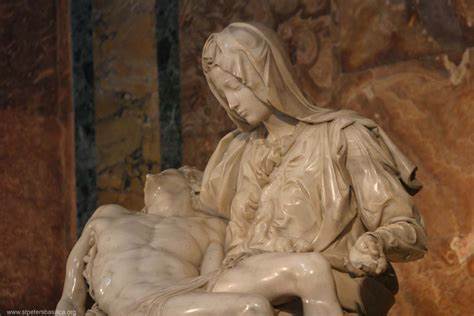
Michelangelo’s PIETA graced the grid today at 62A, the only piece Michelangelo ever signed. It’s had a tough life since its creation in 1498-1499. Mary lost four fingers on her left hand during a move. WTF!! They should have used the Seven Santini Brothers!
More seriously, on May 21, 1972, a mentally disturbed geologist, Laszlo Toth, attacked the sculpture with a geologist’s hammer while shouting, “I am Jesus Christ; I have risen from the dead!” With 15 blows he removed Mary’s arm at the elbow, knocked off a chunk of her nose, and chipped one of her eyelids. Bob Cassilly, an American sculptor and artist from St. Louis, Missouri, was one of the first people to remove Toth from the Pietà. “I leaped up and grabbed the guy by the beard. We both fell into the crowd of screaming Italians. It was something of a scene.” Onlookers took many of the pieces of marble that flew off. Later, some were returned, but Mary’s nose wasn’t, and it had to be reconstructed from a block cut out of her back. (The same thing happened to a cousin of mine: now, whenever you slap him on the back, he sneezes.)
I told our Vermont friend Lizzie that she had climbed into Leonard Cohen’s song “Sisters of Mercy,” in caring so relentlessly for our ailing friend Susan. I defied her to come up with a lyric more beautiful than “If your life is a leaf that the seasons tear off and condemn, they will bind you with love that is graceful and green as a stem.”
In response, she shared one of her favorites with me: A Paul Simon song I was not familiar with, “Further to Fly.” Here’s the second chorus:
There may come a time when I will lose you
Lose you as I lose my light
Days falling backward into velvet night
The open palm of desire wants everything, it wants everything
It wants soil as soft as summer
And the strength to push like spring
Thanks for stopping by. See you tomorrow.
-
Mo Says:
Owl-chatter will resume tomorrow, after I fly home with Mom and Dad.
Morris

Good night!
-
Move Fast and Break Things
Margaret Seikel’s puzzle today in the NYT pays homage to two very successful women writers: Sally Rooney who wrote “Normal People,” and Meg Cabot who wrote “The Princess Diaries.” Here’s the Irish Ms. Rooney, from County Mayo, who is only 31,

and Ms. Cabot, 55, a Hoosier (or, if you prefer, an Indianian).

Top them off with ROSIE the Riveter, and you’ve got a real ladies day at the NYTXW. Rosie represented the women who took jobs in the shipyards and factories during WWII, allowing the men to go off to fight.
Who’s the real Rosie? It was originally believed the image of Rosie in the classic poster was inspired by Geraldine Doyle, who died at age 86 in 2010. In 1942, Geraldine found work as a metal presser for a machine company in Ann Arbor, MI, but quit after two weeks fearing she might injure her hands — she was a cellist.
During her brief time at the company, a UPI photographer took a photo of her. In the 1990’s she came to believe the image in the poster was based on that photo, and the media advanced her claim.
[Shortly after quitting her job, in 1943, she married a dentist, Leo Doyle. They had six children and remained married for 67 years, until his death in 2010. They could do it!]
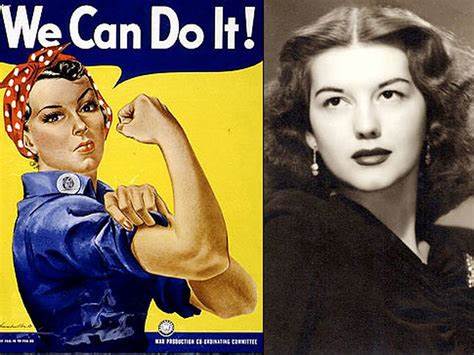
But it was later determined that the more likely model for the poster was Naomi Parker Fraley. Fraley worked in a Pratt & Whitney aircraft factory during the war, and the poster was based on a photo taken of her on the job, not Doyle. Researchers have credited her claim over that of Doyle’s but not until 2015. The long life of Doyle’s claim was attributed to the “Woozle Effect,” which occurs when a source is widely cited for a claim it does not adequately support, giving the claim undeserved credibility. Fraley died at the age of 96 in 2018. Here she is, on the job.

Today’s theme was MOVE FAST AND BREAK THINGS, the corporate motto coined by Mark Zuckerberg for Facebook (now Meta).
LMS thought a variant: BREAKFAST AND MOVE THINGS, could be the slogan for Kellogg’s All-Bran.
Ben W. said: “MOVE FAST AND BREAK THINGS, in the timeline of tech startups, is actually not particularly modern. Facebook jettisoned it as a principle 7 or 8 years ago after they discovered that too many things were breaking. I worked there in 2016, during the subsequent culture shift, and boy were people having a hard time figuring out how to refocus on ‘not’ breaking things.”
The clue for 25D was “What a budget motel might have,” and the answer was ONE STAR. It set LMS off, who said:
“What a budget motel might have” – Where do you even start with this? An odor, for sure. A noisy thermostat that doesn’t really work. A commode with an anemic flush. A sour-smelling shower curtain. A half-clogged bathtub drain that leaves you ankle-deep in water by the time you’re done showering – that Creeps. Me. Out. I know my way around a cheap motel, buddy.
I would add “and a very friendly Pakistani family,” at least there’s one at the very budget-y (but nice) Rodeway Inn in Brookville, PA, halfway between Detroit and Jersey, our favorite stop for Michigan trips.

Here’s a new bad joke!!
“Have you heard about the inattentive two-headed man? Everything you tell him goes in one ear and out the other and in one ear and out the other.”
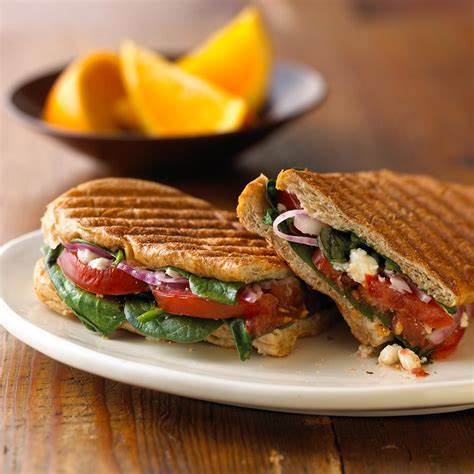
The “Italian pressed sandwich” at 11D was PANINI, but someone balked at that, pointing out that PANINI should be the plural form, so a single sandwich should be a PANINO. Along that line, would a single strand of spaghetti be a spaghetto? Merriam-Webster notes that panini is indeed the plural in Italian, but as adopted into English it represents a single sandwich as well, so you could even say “paninis” if you’re really hungry.
182 years ago today, Herman Melville set off on the whaling vessel Acushnet from New Bedford, MA. Fairly new to sailing and whaling, Melville learned the ins and outs of whaling, helping to harpoon the whales, harvest them, and process their oil aboard the ship. He also listened to the tales his fellow whalers told, particularly of a legendary white sperm whale called “Mocha Dick,” that had destroyed numerous ships. In November of 1851 Moby-Dick was published in the U.S.
Here’s a quote from it: “Human madness is oftentimes a cunning and most feline thing. When you think it fled, it may have but become transfigured into some still subtler form.”
Amen to that, Herm.
Also on this date in 1870 construction began on the Brooklyn Bridge. The bridge opened in 1883, and for several years it was the tallest structure in the western hemisphere.

If you thought 2023 might bring an end to the NYTXW’s fascination with tuchases, think again. Yesterday, right up top at 10D, we had ASS-backwards, and today, near the bottom (appropriately), we had ARSES (British bottoms).
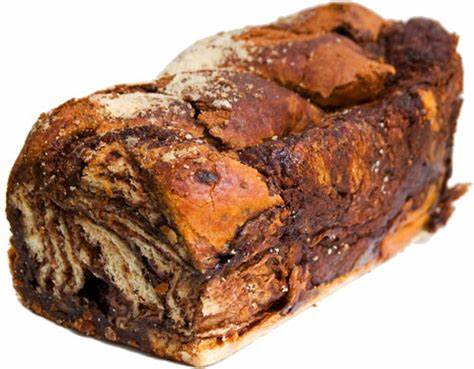
And we heard back from Joey Babka. I posed the question to him — “Joey Babka,” I said, “where are you in the great babka debate — is a babka a cake or a bread?” He gave it some thought. Then, “It’s a babka!” he said. Well put, Joey B!
Let’s close with a poem of Ted Kooser’s from Winter Morning Walks:
Walking by flashlight
at six in the morning,
my circle of light on the gravel
swinging side to side,
coyote, raccoon, field mouse, sparrow,
each watching from darkness
this man with the moon on a leash. -
Little Bubbe
The lavish brunch served up to us by my wonderful Delaware cousins Dayle and Mike this morning included babka. But little did I realize as I bit into a small piece that a raging debate was flaring up in Crossworld over its classification. The clue for BABKA at 20D was “Loaf-shaped cake,” but the question was posed: Is a babka cake or bread? Rex himself notes: Wikipedia calls it a “sweet braided bread,” and specifically states it is not a cake. But Google (Oxford Languages) calls it a loaf-shaped coffee cake and “Spoon University” calls it a dense cake. Authorities can be summoned on either side of the aisle.
Commenter Taylor Slow says: It’s interesting that some people decide whether a baked item is bread or cake based on how it’s served while others decide based on ingredients. I’ve always thought of babka as a sweet bread, because it has the yeasty consistency of bread.
Another note called it a “cake-like bread.”
Airymom said:
I just browsed about a dozen cookbooks compiled by synagogue Sisterhoods. If babka was in the index, then the recipe was in the cakes and pies section. Then I looked in the index of “Spice and Spirit, the Complete Kosher Jewish Cookbook,” a large and comprehensive cookbook which some Jewish women consider the “bible” of cookbooks. If you look up “babka” in the recipe index, it reads, “Babka, see yeast cakes.” In practice, it’s also a cake. If you bake a babka, you serve it for dessert or at Kiddush (collation) after services. No one says, “I think I’ll slice two pieces of babka and make a pbj sandwich.”
And Rebecca said:
I grew up eating BABKA every Saturday morning and consider myself a relative expert on it. The word BABKA comes from the Yiddish word “BUBBE” (or technically “Little Bubbe”) which means “Grandmother.” Traditional BABKA was made from leftover Challah dough that your BUBBE would roll into a long and thin flat dough, spread with chocolate or cinnamon and raisins, and then roll up – for all her grandchildren to eat as sweets. Of course, any BUBBE worth her salt would make sure to make enough Challah dough so that there would be plenty extra. The end product is not all that different from a modern day chocolate danish or cinnamon roll, although instead of being baked as single servings, BABKA is baked as a loaf and the servings are sliced. Cinnamon rolls are formed in almost the exact same way, but they are sliced from the roll into patty shapes before baking. Notably, both cinnamon rolls and danish are made with egg-and-sugar enriched yeasted dough, just like Challah, so they really are the same thing, especially since there are many Challah dough recipes and it would be easy to find the same recipe labeled as Challah dough in one place and Danish dough in another. BABKA is traditionally eaten in the same contexts that one might eat a cinnamon roll or danish. These things are not quite a bread anymore despite having a base of bread dough, but they are somehow acceptable to have for breakfast with a cup of coffee, even though eating a slice of true cake in the same context would not come with the same free pass. So, is BABKA a bread or a cake? It’s a danish. Perhaps this simply semantically passes the buck on the question, because … what is a danish?
Personally, I fall into the cake camp. But I will reserve final judgment until we hear from our friend Joe, whose nickname is Joey Babka! I’ll let you know what he says.
The clue at 49D was “Because of,” and the answer was DUE TO. Innocuous? That’s what I thought. But apparently there is an issue here too.
Mathgent states: I was taught in high school to use “because of” instead of “due to” at all times, but I have heard that “due to” should be used as the beginning of an adverbial phrase and “because of” should be used as the beginning of an adjectival phrase. (Huh? Then someone referred us to the following, which I can follow, but I can’t imagine maintaining the distinction in practice.)
Technically speaking, “due to” should only be used as an adjective and come after a noun. For instance, you could say: The cancellation was due to rain. “Cancellation” is a noun, and “due to” is describing it.
“Because of,” on the other hand, should modify verbs. So you might want to say: The game was canceled because of rain. “Was canceled” is a verb phrase, which makes “because of” the right choice.
Owl chatter has a connection to today’s constructor: Seth Bisen-Hersh. Friends Nancy and Eric (Nancy from Brandeis, and Eric via marriage) have very close friends Wendy and Simon, whom we’ve met, albeit decades ago. And Seth is their son! Mazel Tov, Seth, Wendy, and Simon!
Seth submitted puzzles to the NYT 38 times before having this one accepted. May this be the first of many!

Reaching for a literary figure, Seth didn’t f**k around — he dropped heavy-hitter ANTON Chekhov into his grid at 24D. Chekhov’s big four were The Cherry Orchard, Three Sisters, Uncle Vanya, and The Seagull. Strindberg, Ibsen, and he are often referred to as the seminal figures in the birth of modernism in the theater.
He died of tuberculosis at only 44, and this note appears in Wikipedia: Chekhov’s body was transported to Moscow in a refrigerated railway-car meant for oysters, a detail that offended [the writer] Gorky. Some of the thousands of mourners followed the funeral procession of a General Keller by mistake, to the accompaniment of a military band. Chekhov was buried next to his father at the Novodevichy Cemetery.

Good night everybody — thanks for stopping by!
-
Friends In High Places
Welcome to the first post of the new year, everybody! Broadcasting tonight from the luxurious (sorta) Sheraton Suites in downtown Wilmington with adorable grandson Morris (Mo) safely tucked into his travel crib next to his folks. A lovely time was had by all at the Finkelman’s New Year’s bash, where the Nanaimo bars rocked!
Here’s a panoramic shot of the city.

Local Girl Makes Good. TOBIN Heath made the grid today at 60D: Soccer star ______ Heath. Born and raised in Morristown NJ, right up the road from owl chatter headquarters, Tobin has been described as “perhaps the USA’s most skillful player” by the U.S. Soccer Federation, and she was voted the U.S. Soccer Athlete of the Year in 2016. She has won gold with the U.S. team numerous times.
In June 2022, Heath shared a photo on Instagram of a painting she produced titled Out Now, which depicted the words “I am gay” spelled out in large, multi-colored all caps block letters. Here’s our Jersey girl taking a breather, and that painting.


At 65A, the clue was “‘An empty set exists,’ e.g.,” and the answer was AXIOM. And here’s a comment by T Trimble that I had to read twice and that made my brain hurt a little:
Once upon a time, “axioms” were described as “self-evident truths” from which mathematical arguments proceed. And that’s still the common meaning, as when one says, “it’s axiomatic that…”. In mathematics today, the “self-evident truth” part is dropped, but the idea that axioms are the starting points of theories is retained. So, we can write down axioms for Euclidean geometry, and we can also write down axioms for systems of non-Euclidean geometry. The derived consequences of the first theory will be inconsistent with those of the second theory, but there’s no problem, as long as we don’t claim legitimacy of one over the other, but think of them as pertaining to different mathematical worlds. You could think of axioms as provisional: if we suppose a world where such-and-such axioms are true, then certain consequences follow. Thus “truth” is relative and contextual. It took a very long time for mathematicians to attain that understanding, but it’s a commonplace today (even though the struggle continues at the logical and foundational levels).
Questions, anybody?
The theme of the puzzle was clever today. There was a long answer that you got by solving a clue. Then there were circled letters within that answer that formed another word. Then that “duo” was referred to in the answer to a different clue. WTF!! As I tell my students, maybe an example will help.
The clue for 50A was “Colorado, Idaho, and Wyoming among others,” and the answer was MOUNTAIN STATES. In that answer, the letters M, A, T, E, S, were circled, giving you the word “mates.” Then at 98A the clue was “Useful people to know,” which was FRIENDS IN HIGH PLACES. Get it? “Mates” are friends, and “Mountain States” are high places and the word “mates” was in the words “Mountain States.” (There were four of those.)
Everyone’s favorite clue was “Barely sits still?” Answer: POSES NUDE.
In yesterday’s puzzle (Saturday’s) the clue at 45A was “Didn’t wait for a restaurant job?,” and the answer was BUSED. (Get it? Wasn’t a waiter: was a bus boy.)
Egsforbreakfast had this to say: “I’ve never understood why BUSED is preferable to bussed. Maybe I was abussed as a child. I’m sure I was a bust as a child. Later I was the victim of a bust because I stole a bust from a museum. The lady that arrested me had a bust that I still remember.”
Did you ever make up your own language with your little brother or sister or a school friend? Me neither, but ESPERANTO is the world’s most widely spoken “constructed international auxiliary language.” Created by the Warsaw-based ophthalmologist L. L. Zamenhof in 1887, it was intended to be a universal second language for international communication, or “the international language.” The word esperanto means “one who hopes.”
Esperanto’s vocabulary, syntax and semantics derive predominantly from languages of the Indo-European group. The vocabulary derives primarily from Romance languages, with substantial contributions from Germanic languages. Slavic languages also influenced the grammar and phonology. Prefixes and suffixes may be freely combined with roots to generate words, making it possible to communicate effectively with a smaller set of words.
Esperanto is the most successful of this type of effort. Estimates put the number of people who know how to speak Esperanto at around 100,000. Concentration of speakers is highest in Europe, East Asia, and South America. The language has also gained a noticeable presence on the internet in recent years, as it became increasingly accessible on platforms such as Duolingo, Wikipedia, and Google Translate.
According to Zamenhof, he created the language to reduce the “time and labor we spend in learning foreign tongues,” and to foster harmony between people from different countries: “Were there but an international language, all translations would be made into it alone . . . and all nations would be united in a common brotherhood.”
In 1954, the UN granted official support to Esperanto as an international auxiliary language in the Montevideo Resolution. However, it is still not one of the official languages of the UN. Esperanto has not been a secondary official language of any recognized country, but it entered the education systems of Hungary and China. The U.S. Army has published military phrase books in Esperanto. As the clue at 34D states: it has its own “green star” flag (below).
If someone asks in Esperanto if you speak Esperanto (Ĉu vi parolas Esperanton?), you can say: Mi ne komprenas vin, which means “I don’t understand you.”
One of the comments yesterday was: I bought an Esperanto book back in the 80s and left it on the shelf for about 30 years. Turns out you can’t learn it that way.

Bonan nokton — Good night!
-
Happy New Year!
No chatter today. Distracted by all six gorgeous grandkids visiting. And a dreadful Michigan defeat. Boo hoo.
See you next year!
-
The Pumpkin King
Here’s a text conversation with son Sam this morning:
Sam: The party at the Finkelman’s on Sunday: Is it fancy?
Me: Not at all. Dress for comfort.
Sam: Okay.
Me: Unless you’re chosen Pumpkin King. Then you’ll need a pumpkin suit. I’ll let you know.
Sam: Yikes! I think someone else should have the honor.
Me: No one has ever walked away from it. Don’t disgrace the family.
Sam: Okay, I’ll pack one just in case.
No one was surprised that ALY Raisman nailed her landing today in the grid at 32 across. She still has it, despite retiring from gymnastics three years ago at age 25. After competing in the 2012 and 2016 Olympics, she is the third-most decorated U.S. gymnast in Olympic history behind Shannon Miller and Simone Biles, with six medals.
In the 2012 Olympics in London, in the floor final, Aly placed first with a score of 15.600, becoming the first American woman to win a gold medal on floor. Raisman, who is Jewish, performed to the tune of “Hava Nagila,” and dedicated her floor routine to the 11 Israeli Olympians killed by Palestinian terrorists at the 1972 Summer Olympics in Munich.
In November 2017, Raisman came forward as one of the many victims sexually abused by the former Olympic team physician, Larry Nassar, starting at the age of 15. She was one of victims who read impact statements at Nassar’s sentencing.
Aly is single.

The NYT today had a feature listing many of the obits from 2022. In January alone, we lost Sidney Poitier (94), Ronnie Spector of the Ronettes (78), Don Maynard, HOF receiver for the Jets (86), Meat Loaf (the rocker)(74), Dwayne Hickman (described as TV’s “lovelorn” Dobie Gillis)(87), and the exquisite Yvette Mimieux (80). How depressing to read about the famous personalities who died during the year. I wrote a letter to The Times suggesting that next year they list the famous people who are born in 2023 instead. (Wait, what?)
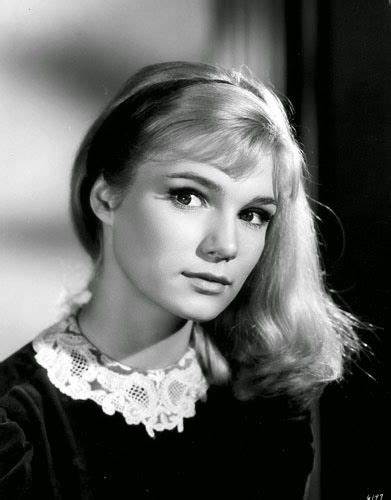
“For every kiss you give me, I’ll give you three.” Here are The Ronettes singing “Be My Baby” back in 1964 (Ouch!), followed by a shot of the young Yvette Mimieux, who was of French and Mexican descent, and who was nominated for three Golden Globe awards during her acting career.
Today’s puzzle was by the wily veteran constructor Brendan Emmett Quigley, who is approaching his 200th NYT puzzle. He was certainly up to his tricks in this one. The clue for SIPHON at 38A was “Secretly pass gas?” (Tee hee.) And his great clue for TV SETS was “Objects thrown out of hotel windows, in a rock ‘n’ roll cliche.” A “metric unit equal to 100 square meters” turned out to be ARE, which was new to me. You may be more familiar with “hectare,” which is 100 ares. And did you know that the world capital whose name means “elephant trunk” in Arabic is KHARTOUM? Well, now you do. You never know when it will come up.
How about “Place to get a platza treatment?” Huh? The answer was SAUNA, but what’s a platza treatment? It’s Russian. You lie on the hottest level of the sauna and are pummeled with a broom-like venik made of oak leaves soaked in olive-oil soap. Then you jump into a cold pool or shower. It opens your pores and removes toxins, dead skin, and $40. At least that’s the cost at the Russia and Turkish Bath House on E. 10th St., in NYC.
“‘The Spoonful of Milk’ painter, 1912” was the clue at 14A, and the answer was CHAGALL. Here’s the painting:
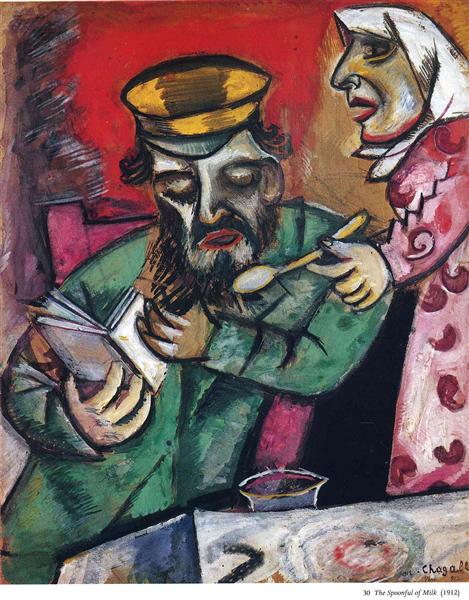
Barbara S. stated that she was aware that Chagall often included Jewish themes in his work and was wondering (as a non-Jew) if milk held any special place in Judaism. MBR responded that the Holy Land was referred to as the “Land of Milk and Honey.” I added the following to the discussion:
“A fundamental tenet of Judaism is the forcing of food onto someone who could probably do without it. Chagall employs milk in this painting, but it could just as well be some lox or a nice blintz.”
“MLB great with a famous ‘unbreakable’ streak, familiarly,” at 39A was JOE D, for Joe DiMaggio. The commentariat was all in a fuss over whether he was actually called “Joe D.” Several felt it was just Joltin’ Joe. Well it was certainly Joltin’ Joe but it was also certainly Joe D. No question about it. (Hrummmmph.) The “streak” is his 56-game hitting streak, i.e., he got at least one hit in 56 consecutive games. It ran from May 15 to July 16 in 1941. The previous record was 44 games by Baltimore Oriole Wee Willie Keeler. Keeler’s record had held for over 40 years (since 1897). Keeler was called Wee Willie because he was only 5′ 4″, and 140 pounds. He was a lifetime .341 hitter, and is in the Hall of Fame.
Getting back to Joe D, the starting pitcher opposing the Yankees in the 40th game of the streak for the Philadelphia Athletics was Johnny Babich, whom DiMaggio had faced during a 61-game hitting streak he put together in the minors. (Wow!) Babich told the local press that he would end DiMaggio’s streak by getting him out in his first plate appearance and not giving him any hittable pitches afterwards. Babich induced a popout in DiMaggio’s first at-bat, and in the third inning started him off with three unhittable pitches. The fourth pitch by Babich was well outside the strike zone, but DiMaggio lunged at it and guided the ball between Babich’s legs; he ended up with a double which he said left Babich “white as a sheet.” DiMaggio later referred to this as “the most satisfying hit of the streak.” His last at-bat (ending the streak) was against Jim Bagby, Jr., who was on in relief for the Indians. After the streak ended, DiMaggio got hits in the next 15 games.
The last player to hit .400 was Ted Williams (.406), and it was also in 1941. But DiMaggio was named MVP due to the streak. (He hit .357 that year.) Since 1941, the closest anyone has come was Pete Rose in 1978, tying Keeler for second place at 44. Here’s an index card signed by Joe D. from my collection.

And here’s the opening verse from Be My Baby by the Ronettes:
The night we met I knew I needed you so
And if I had the chance I’d never let you go
So won’t you say you love me
I’ll make you so proud of me
We’ll make ’em turn their heads every place we go.Yes we will! Thanks for stopping by.
-
Taken By The Wind
There is some fallout from yesterday’s mention of Stevie Nicks. I was intrigued by the comment that when she sang “Rhiannon” in concert it seemed like an exorcism, so I went to Youtube to watch a performance from 1975. It was pretty intense. Sometimes it strained her voice so much that a few shows by the band had to be canceled to allow her to recover.
She introduces the song by saying it’s about a Welsh witch (a good witch). In Celtic religion Rhiannon’s the Welsh manifestation of a goddess. Wikipedia describes her as a strong-minded “Otherworld” woman, intelligent, politically shrewd, beautiful, wealthy, and generous. Nicks’ lyrics include the following lines:
Rhiannon rings like a bell through the night
And wouldn’t you love to love her?All your life you’ve never seen a woman
Taken by the wind.She is like a cat in the dark
And then she is the darkness.Parents started naming their daughters Rhiannon once the song came out: singer/songwriter Rhiannon Giddens, for example, born on 2/21/1977.
Had you heard about this flap back in 2010? (I am so out of this loop.) At the Grammys, Nicks and Taylor Swift sang Rhiannon together as a duet. Nicks originally didn’t want to do the song with Smith. “She’s 20 years old, 5′ 11″ and slender; I’m 40 years older and, to be frank, neither of the other two things. I was not about to stand next to this girl on national television. But her little face just lights up like a star, and I couldn’t say no. Taylor reminds me of myself in her determination and her childlike nature,” and she praised Smith’s singing, songwriting, and musicianship.
But Smith had a rare off-night, and when they sang the song together Tay Tay was badly out of tune. The critics did not hold back. Swift said she appreciated “constructive or professional” criticism, but she was furious that some of it “crossed the line,” and was just plain mean. Bob Lefsetz wrote a particularly vicious review stating, “Taylor Swift can’t sing. Did Taylor Swift kill her career overnight? I’ll argue she did. In one fell swoop, she consigned herself to the dustbin of teen phenoms. Taylor’s too young and dumb to understand the mistake she made.”
Ouch!
As you may recall from earlier owl chatter, Taylor is not a hick from West Virginia. She’s from West Reading PA, and her dad was a stockbroker and her mom a mutual fund marketing exec. She took vocal and acting lessons in New York City from age nine. As Mick Jagger noted after 9/11 — “You don’t fuck with New York.” Swift planned her revenge coldly.

It’s impressive when an artist harnesses his or her artistry to make a point. I remember back in 1979, Reggie Jackson had a famous feud with manager Billy Martin. You could see them on TV, pushing and shoving each other in the dugout after Martin humiliated Reggie by taking him off the field in the middle of an inning. Then Reggie hit three home runs on three consecutive pitches on the grand stage of the World Series to defeat the Dodgers. Case closed. Martin was gone.
Similarly, here, Swift struck back pointedly with her song “Mean.” In the video she references the feelings of the schoolgirl shunned by the popular kids, and the gay kid bullied in the locker room. But the song is mainly Swift herself striking back. I was going to reproduce the lyrics for you but they don’t pack the same power without the music and her performance. Check it out, below — She takes on the look of a flapper from the 1920s for part of it. And she’s playing the banjo.
Someday, I’ll be living in a big old city
And all you’re ever gonna be is mean.
Oh, gosh, I haven’t even gotten to the puzzle yet. Hunker down. Get comfortable. Top off the coffee, or pop open another beer. There’s an awful lot to chatter about today.
The clue at 62A was “Size option at Starbucks,” for VENTI. Here’s LMS on it:
No place can make me feel like an outsider like Starbucks can. I feel like such an imposter that I can’t bring myself to say VENTI. I have to practically whisper medium black coffee, please and even then my face burns with embarrassment that I’m not spouting off VENTI iced skinny hazelnut macchiato, two pump, sugar-free syrup, extra shot, light ice, no whip.
T Trimble chimed in:
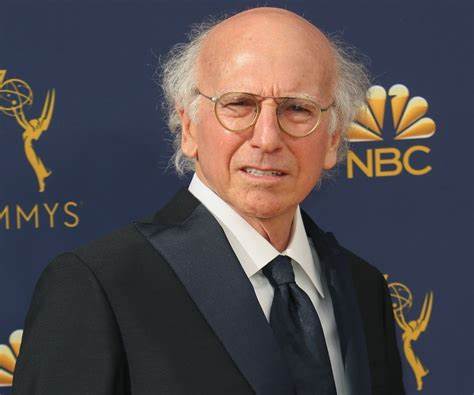
I feel not so much an impostor in a Starbucks (hi @Loren) as I do like Larry David in Curb Your Enthusiasm, who refuses to deal with the stupid lingo. “I’ll have a vanilla……….. one of the vanilla bullshit things, you know, you, whatever you want, some vanilla bullshit latte cappu thing, you know, whatever you got, I don’t care.” Barista guy: “You got it.”
Jackie Mason has some material on the topic too. Those high stools you have to sit on at some Starbucks. “You can’t get down — elderly Jews are sitting up there and they can’t get down. They have to ask for help from the Gentiles, ‘Please, mister, can you help me down from here, I could break a hip.’”
And Bill Maher has noted: The longer the Starbuck’s order, the bigger the a**hole.
SALMA Hayek dropped by the grid, right up there at 8 across. Hi SH!
Salma was born on Sept. 2, 1966 (so she’s 56), in Coatzacoalcos, Veracruz, Mexico and is a citizen of Mexico and the U.S. Her dad’s Lebanese and her mom’s Spanish, and an opera singer.
Hayek’s portrayal of Frida Kahlo in 2002 earned her an Oscar nomination for Best Actress, the first ever for a Mexican actress. On Dec. 13, 2017, Hayek published an op-ed in the NYT stating that she had been harassed and abused by film producer Harvey Weinstein during the production of Frida. She also directs and produces films. She married French billionaire Francois-Henri Pinault in 2009. Their daughter Valentina was born in 2007.
Hayek’s charitable work includes increasing awareness on violence against women and discrimination against immigrants. On July 19, 2005, Hayek testified before the U.S. Senate Judiciary Committee supporting reauthorizing the Violence Against Women Act. She is a board member of V-Day, the charity founded by playwright Eve Ensler, discussed recently in owl chatter.
She’s got serious good looks. If she ever spoke to me (which, fuhgedaboutit), I couldn’t possibly form words. It would take all I’ve got just to make sounds and point.

The clue at 40D was “Euphemism for a lesbian couple.” The answer was GAL PALS, and it generated a bit of controversy, starting with LMS’s ponderings:
“Look. I don’t know what I’m talking about here, but I was brought up short by the clue for GAL PALS. I would think that the creation of a euphemism is born of trying to sidestep saying outright something not so great. You’re like, Excuse me, I’m going to go powder my nose. and not Excuse me, I’m going to go urinate. The very existence, then, of a euphemism implies the existence of something unpleasant. We have euphemisms for peeing, vomiting, mentally challenged people, firing employees, dying, etc. Nowadays do we really have to sugarcoat lesbian couple? I don’t think we have euphemisms for happy things like birthday cake. . . hold on. I’m gonna look into this
…googling…..
Ok, so I’m not quite right. Seems the euphemism doesn’t avoid saying something unpleasant so much as avoids being too direct. Pregnant/expecting. . . problem/issue. . . used/second hand. So never mind.”
Kitshef said:
I’ve heard GAL PALS used a ton, but never as a euphemism for a lesbian couple. I’ve generally heard it to mean a female friend with whom you (you being male or female) have a non-sexual relationship – a ‘girl friend’ but not a ‘girlfriend’.
Weezie then chimed in with this, from the “battlefront:”
Okay, this trans queerdo is here to defend GAL PALS as a totally awesome answer to a great clue and not at all offensive or suggesting erasure or cloaking is good or right. Over the last couple years, there’s been a swelling of critique around how academics, historians, and media seem to be wildly insistent on sticking to the Gal Pals narrative, amounting to lesbian or bisexual erasure. I.e., “Emily Dickinson really wrote to Sue ‘I tore open your letter and licked the envelope’s seal for any lingering taste of you’ and historians thought they were just friends.” #GalPals or #JustGalPals is shorthand for calling out and mocking that tendency. It is very much a current in millennial and Gen Z queer contemporary culture!”
OMG! — a special shout-out to our excellent friend Pam who just let us know that she will be making a batch of Nanaimo bars for our get-together in Wilmington on New Year’s Day! She will be using Joyce Hardcastle’s award-winning recipe we reproduced in yesterday’s chatter. How great is that! Pam — brace yourself for some special bone-crushing owl-chatter hugs. [Pam notes she will be using gluten-free graham crackers, so Jenny and other gluten-shunning revelers will be able to partake. [Darn it — less for me!]]
Here’s a poem by Ted Kooser from Winter Morning Walks, for a graceful ending today:
Older this morning, the moon
hid most of her face
behind a round gray mirror.In a half-hour’s walk, I saw
six shooting stars. Celestial notes,
I thought, struck from the high end
of the keyboard.Thanks for stopping by!
-
Will You Still Love Me Tomorrow?
Happy Chanukah, everybody! — to those among you who are Jewish, and those among you who are Jew-ish. We are having our Chanukah dinner with 83.3% of our grandchildren tonight — on the eleventh night. How’s that for a miracle! It’s all symbolic, right? This year it’s symbolizing the Jews’ inability to get their act together during the regular holiday.
How fitting that today’s puzzle is a NYT debut for a Jewish constructor: Josh Goodman, who cuts right to the chase at 40D with the granddaddy of us all: ABRAHAM, clued with “Isaac’s father, in the Bible.” Goodman includes this sweet note in the “Constructor’s Notes” section of Wordplay in the Times:
“It’s especially exciting to be making my New York Times debut because the Times puzzle holds sentimental value for me. During college, I did the crossword every day at lunch, and in my sophomore year I was joined by another member of my dining co-op. We would solve the puzzle together and then sit and talk, sometimes for hours. Eight years later, she’s now my fiancée (and No. 1 test solver). Love you, Talia!”
It’s a good puzzle. The clue at 32A was “Lowest pitches in chords,” and the answer was BASS NOTES. One comment asked: “Why would chords require that the lowest pitch be in the bass range?”
And the response was: “The lowest note in a chord is called the bass note no matter where it falls pitch wise. If you’re playing a chord all the way to the right on a piano, the lowest note is still called the bass note even though it’s above the treble clef. Often the bass note is the same note as the name of the chord and then it’s also called a root note.”
Music was certainly the order of the day. The theme centered on the only three women to be inducted into the Rock and Roll Hall of Fame twice: Once with a band or partner, and again as a solo artist.
Ready?
TINA TURNER, CAROLE KING, AND STEVIE NICKS…
Goodman noted a “glaring gender inequality” in that 23 men fall into that category.
Nicks, who is 74 now, was born in Phoenix and started singing duets with her grandfather at age 4. She majored in Speech Communication at San Jose State, planning to be an English teacher, but dropped out with her dad’s blessing to pursue a musical career with Lindsay Buckingham, whom she met as a senior in HS. LB was at San Jose State too. On New Year’s Eve, 1974, Mick Fleetwood invited Buckingham to join Fleetwood Mac, and Buckingham insisted that Nicks be welcome too.
In 1975, the album Fleetwood Mac was a hit. Nicks’ “Rhiannon” was voted one of The 500 Greatest Songs of All Time by Rolling Stone. Her live performances of the song took on a theatrical intensity and built to a climax in which Nicks’ vocals were so impassioned that Fleetwood said “her ‘Rhiannon’ was like an exorcism.”
She is unusually pretty, with a soulful look.

Carole King, who is turning 81 in February, was born in Manhattan. Her mom was a teacher and her dad a firefighter and they met in an elevator in Brooklyn College. (Comic Sam Levenson, whose birthday it is today (but who is dead), said, “If you die in an elevator, try to make sure it’s heading up.”)
Carole attended Queens College but at 17 got pregnant and married Gerry Goffin and dropped out to get a job and write songs with him. Good move (the songs part). Earlier, Neil Sedaka dated King in high school and had a hit “Oh! Carol” in 1959.
Among King’s 25 solo albums, Tapestry sold over 30 million copies, was No. 1 for over three months, and remained on the charts for nearly six years.

Here’s a song she wrote over fifty years ago that still moves me to tears. Click on the arrow — you’ll be transported.
I saw James Taylor perform at Tanglewood about five years ago with Sam and Sarah (in the audience — they weren’t performing). As you can see in the video, Taylor is bald now, and he told a story about his recent performance in Jamaica. He hadn’t played there for about 30 years, and at one point he took his cap off and a startled Jamaican fellow in the front row said “Wha hoppin mon?”
Tina Turner, born Anna Mae Bullock in Brownsville TN, is 83. Wikipedia says she is widely regarded as the Queen of Rock and Roll. No argument here.
Impossible to capture the fire in a photo.

Ever hear of NANAIMO? I hadn’t, which made getting 12 down a challenge. The clue was “Vancouver Island city.” It’s in British Columbia, Canada, and used to be called Hub City because of its central location on the island and the way its streets radiate from the shoreline like the spokes of a wagon wheel. The indigenous people of the area are the Snuneymuxw. It’s called Nanaimo because that’s as close as we can come to pronouncing it. Allison Crowe and Dianna Krall come from Nanaimo.
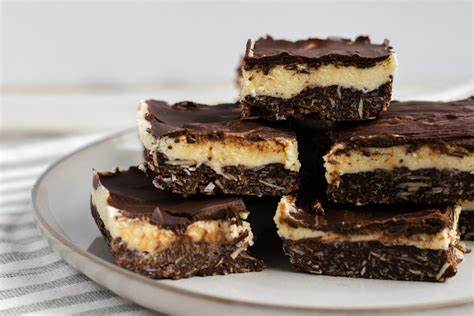
The Nanaimo Bar is a dessert that requires no baking. It’s named after the city (duh). It consists of three layers: (1) a wafer, nut (walnuts, almonds, or pecans), and coconut crumb base; (2) custard icing in the middle; and (3) a layer of chocolate ganache on top. (Ganache is a paste made of chocolate and cream.) Variations are allowed. It’s been associated with the city from as far back as the 19th century.
In 1985, Mayor Graeme Roberts initiated a contest to find the ultimate Nanaimo bar recipe. The recipe submitted by Joyce Hardcastle, a resident of Nanaimo (voo den?), was unanimously selected by a panel of judges. As a service to the readers of owl chatter, it is reproduced below.
The designation “Nanaimo bar” appears in the Canadian Oxford Dictionary.
A U.S. state dinner hosted by the Obamas in honor of Canadian Prime Minister Justin Trudeau in 2016 featured Nanaimo bars as the main dessert.
In 2019, Canada Post issued a booklet of postage stamps dedicated to Canadian desserts and sweets. The booklet of 10 stamps features images of the Nanaimo bar, the butter tart, tarte au sucre (sugar pie), blueberry grunt, and Saskatoon berry pie. [OMG — blueberry grunt!] The booklet of stamps resembled a recipe card. The image of the Nanaimo bar on the stamp received some criticism for its ratio of “the crumbly base, the custard filling, and the chocolate ganache icing.” Seriously.
JOYCE’S OFFICIAL NANAIMO BAR RECIPE
Bottom Layer
½ cup unsalted butter (European style cultured)
¼ cup sugar
5 tbsp. cocoa
1 egg beaten
1 ¼ cups graham wafer crumbs
½ c. finely chapped almonds
1 cup coconutMelt first 3 ingredients in top of double boiler. Add egg and stir to cook and thicken. Remove from heat. Stir in crumbs, coconut, and nuts. Press firmly into an ungreased 8″ x 8″ pan.
Second Layer
½ cup unsalted butter
2 Tbsp. and 2 Tsp. cream
2 Tbsp. vanilla custard powder
2 cups icing sugarCream butter, cream, custard powder, and icing sugar together well. Beat until light. Spread over bottom layer.
Third Layer
4 squares semi-sweet chocolate (1 oz. each)
2 Tbsp. unsalted butter
Melt chocolate and butter over low heat. Cool. Once cool, but still liquid, pour over second layer and chill in refrigerator.(Judy from Lake Havasu says she used egg nog in place of the cream in the custard and it was a huge hit. Just sayin’.)
The clue at 47A completely threw me: “Brit who wrote “The Vanishing Half.” Those of you familiar with the very popular book know how I was led astray. It’s not a British author — it’s an American author whose first name is “Brit.” Brit Bennett. “The Vanishing Half” came out in 2020 and rose to #1 on the NYT best-seller list. It was also named a top ten book of 2020 by the Times. Ms. Bennett is of particular interest to owl chatter because she pursued her graduate studies at UMich — Go Blue!
There’s simply no end to the extraordinary women Josh Goodman was able to cram into the grid today. And JANE ADDAMS takes the cake (or at least the Nanaimo bar). She was born in Cedarville, IL, on Sept. 6, 1860. A lifelong pacifist, in 1931 she became the first American woman to be awarded the Nobel Peace Prize. She co-founded Hull House in Chicago, one of the country’s leading settlement houses providing aid to the poor. She essentially brought into being the field of social work as it is known today, and her work helped establish Sociology as an academic discipline.
Mary Rozet Smith was the love of her life. They owned a summer home in Bar Harbor, Maine, and were together for 40 years until Mary’s death. When apart they wrote to each once or twice daily. “I miss you dreadfully and am yours ’til death,” Addams wrote.
Addams herself died in Chicago on May 21, 1935 at the age of 74. In 1940, a 10c U.S. postage stamp was issued honoring her.

Arggggh!– as ennobling as it would be to close with Jane Addams, I can’t let go of that Blueberry Grunt. Here’s what they look like, said Tom droolingly, with a clump of vanilla on the side.

-
Subscribe
Subscribed
Have a WordPress.com account? Log in now.

