Everybody’s favorite cookie in Crossworld is Oreos, of course. But Erik Agard’s puzzle today included the Oreo breakfast cereal Oreo O’s! (I added the exclamation mark, because it’s exciting.) First, the name is very appropriate because Oreo O’s look just like Cheerios but are chocolate (see below). An employee in an advertising firm came up with the idea and Post Cereals ran with it in 1997. A variation was introduced in 2001 called “Extreme Créme Taste Oreo O’s” which added Oreo-filling-flavored marshmallows. Yum!
Ads were run on TV for Oreo O’s. But Extreme Crème Oreo O’s had its own television commercial starring the “Créme Team,” a troupe of humanoid marshmallows sporting sunglasses. Check it out.
Get this — the cereal was a joint production of Post Cereal and Kraft Foods. But in 2007, both companies ceased “co-branding,” which made the cereal impossible to produce (legally). Kraft owned the rights to the name Oreo, but Post owned the rights to the cereal recipe itself, and neither company wished to give up their rights. Yikes. Due to some weird loophole, it could only continue in South Korea. U.S. buyers could still get it on eBay from third-party sellers for $10 a box. Fast-forward to 2018 — Post resumed co-branding and the original product became available again, thank God! The marshmallow version is only available in Walmart, however, and instead of being labeled “Extreme Créme Oreo O’s,” it is labeled “Mega Stuf Oreo O’s.” Small price to pay.
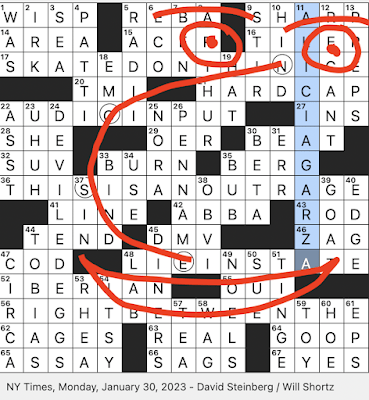
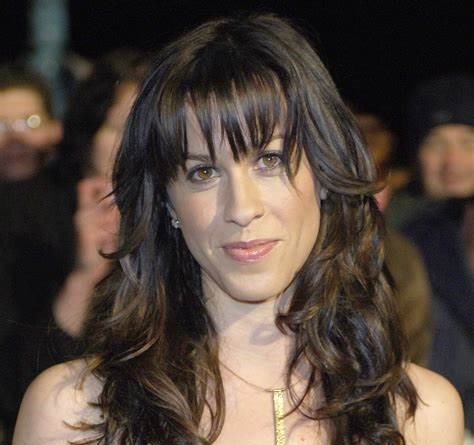
Today’s puzzle theme was MARIAH CAREY. Her full name was the theme answer and four of her “chart-topping” hits “topped off” four other down answers, e.g., her hit “Someday” was in the answer SOMEDAY SOON, clued as “Not long from now.” I listened to a couple of them, but I guess I’m not a fan because none of them grabbed me. (TBH, it wasn’t a fair test.) So I’m just including a photo.

Carey was born in Huntington NY and is 53. Her name was inspired by the song “They Call the Wind Mariah.” She’s been married/divorced twice and has very cute 11-year-old twins, one of each flavor. The girl is named Monroe, and the boy is named Moroccan. I guess his friends call him Morrie or Mo.
Carey’s mom Patricia was Irish, and an opera singer and vocal coach. Patricia’s family was aghast when she married an aeronautical engineer of African-American and Black-Venezuelan descent, and disowned her! (Boo!) What’s more, Huntington was not thrilled at the interracial nature of the family, and neighbors poisoned their dog and set fire to their car. WTF! Mariah’s parents eventually divorced and she was raised by her musical mom.
I knew Mariah’s success was extraordinary, but I had no idea how extraordinary. Just this year Rolling Stone named her the fifth greatest singer of all time. She has the most #1 singles (Billboard) of any solo artist (19). Only the Beatles have more (20). She doesn’t need Owl Chatter to sing her praises, so we’ll leave it at that.
The song “Someday Soon” was written by Ian Tyson of Ian and Sylvia in 1964. It became a big hit when Judy Collins recorded it (which helped pay for needed improvements on Tyson’s ranch, he said). It’s a gorgeous song. I had never heard Ian and Sylvia sing it.
So blow, you old blue northern, blow my love to me
He’s driving in tonight from California
He loves his damned old rodeo as much as he loves me
Someday soon, going with him, someday soon
The clue for HAT was the great Texas expression “All [blank] and no cattle,” for a phony or blow-hard. It led me to post the following on Rex’s blog:
“All hat and no cattle reminded me of Abbie Hoffman’s description of Sen. Gary Hart: ‘A $25 haircut on a $10 head.’ (Needs to be inflation-adjusted.)”
It garnered a nice response from commenter Whatsername:
“Love the haircut quote, gotta remember that one. Seems Congress has no shortage of $10 heads these days.”
I’ll be high for three hours from that — that’s how shallow I am.
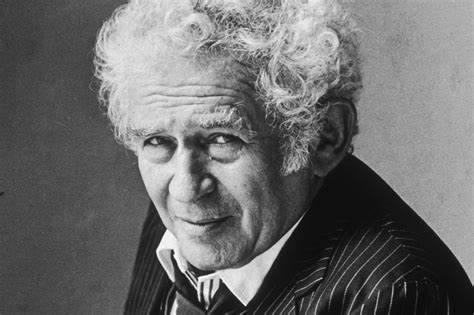
Norman Mailer was born on this day in 1923 – a Jersey boy, born in Long Branch. But he lived and wrote in Brooklyn, in a little studio a few blocks from his house. He said: “There’s an old Talmudic belief that you build a fence around an impulse. If that’s not good enough, you build a fence around the fence. So, no amenities. (But for a refrigerator!) I wrote longhand with a pencil and I gave it to my assistant. She would type it for me and the next day I would go over it. Since at my age you begin to forget all too much, I would hardly remember what I had written the day before. It read, therefore, as if someone else had done it. The critic in me was delighted. I could now proceed to fix the prose. The sole virtue of losing your short-term memory is that it does free you to be your own editor.”
I’m going to repeat my favorite line about memory loss: “I’m at the stage now where I can plan my own surprise parties.” (Needless to say, I can’t remember who said that.) Here’s Mailer:
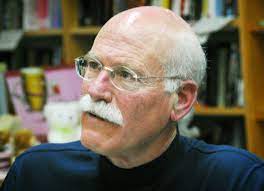
This poem is from Kooser’s Winter Morning Walks:
From high above,
the squeak and whimper
of duck’s wings.
How hurried they seem,
though the pale blue shell of the sky
stays all day long
and has a pearl to finish.
Thanks for popping in. See you tomorrow.































 The Wellington Files